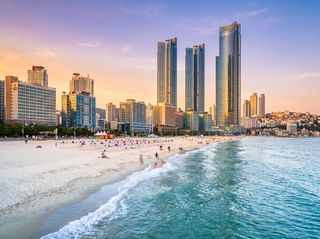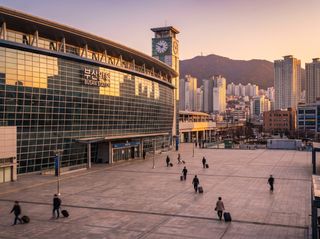
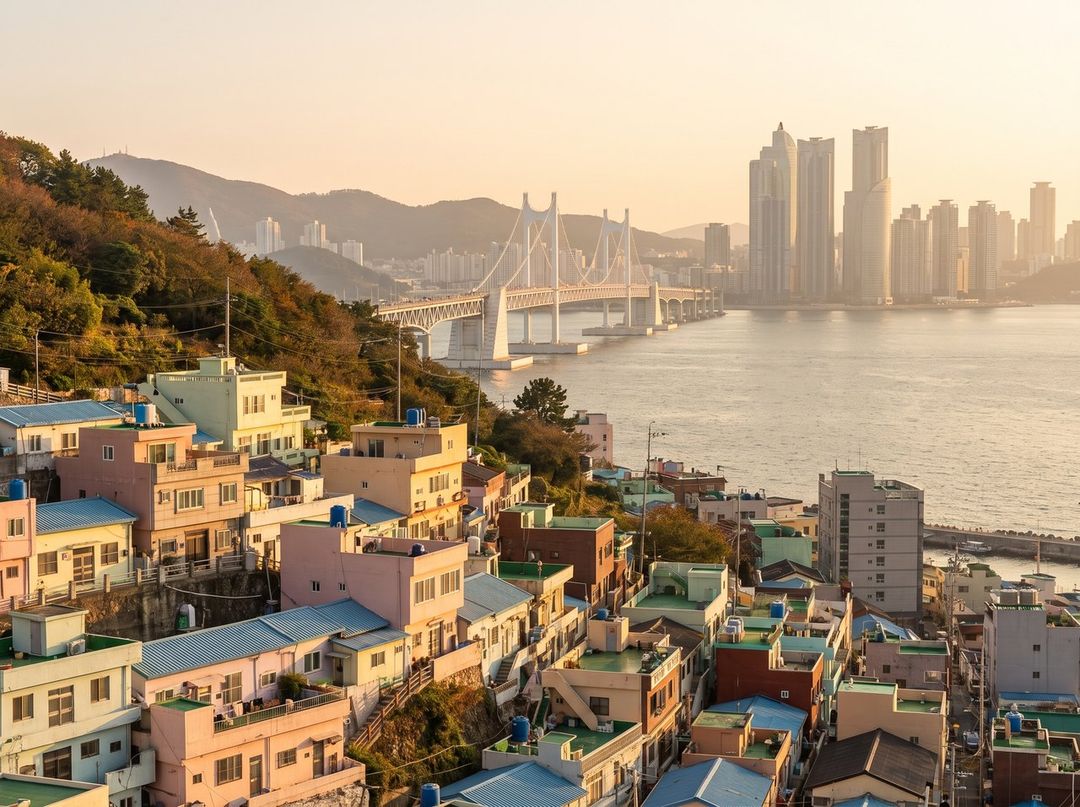
Seomyeon and Busan Station
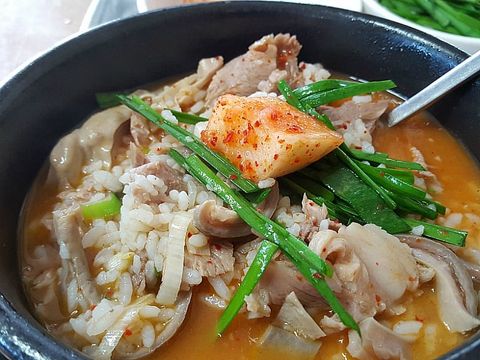
Dwaeji gukbap (pork soup with rice)
Pork bones and meat simmered into a broth served with rice. You season your own bowl with chive salad, salted shrimp and chilli paste.
Written by hand, not generated. Dishes, markets, timing and prices for Busan.
Busan is a port city whose food came out of two things: refugees who moved south during the Korean War, and whatever the boats brought in that morning. Dishes invented here — pork soup rice, wheat noodles — are still the default across the city, and at Jagalchi or Gijang you eat fish landed the same day.
Start with the local defaults
Pork bones and meat simmered into a broth served with rice. You season your own bowl with chive salad, salted shrimp and chilli paste.
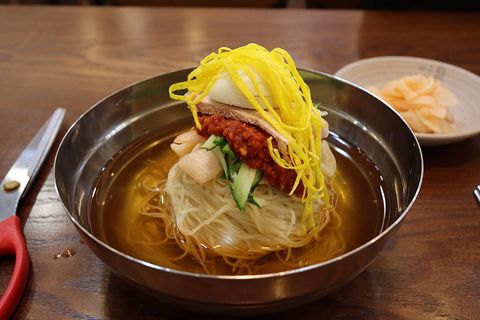
Wartime noodles made with wheat flour when buckwheat ran short. Served in half-frozen broth with a spoon of chilli paste stirred in. A summer dish.
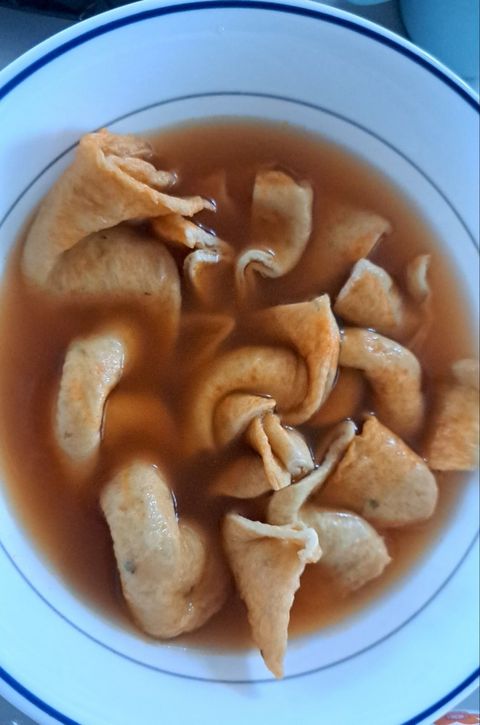
Made with a high proportion of fish, eaten both as a side dish and as a snack. Sold from market stalls and from bakery-style shops alike.
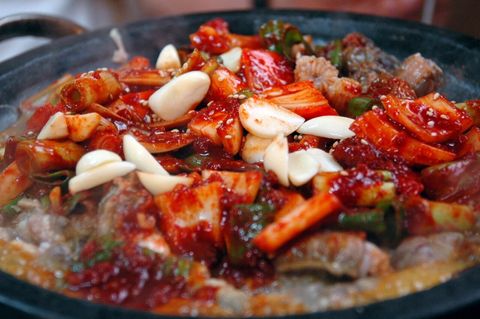
Hagfish grilled with chilli marinade or simply salted. Almost always an evening dish, eaten with drinks.
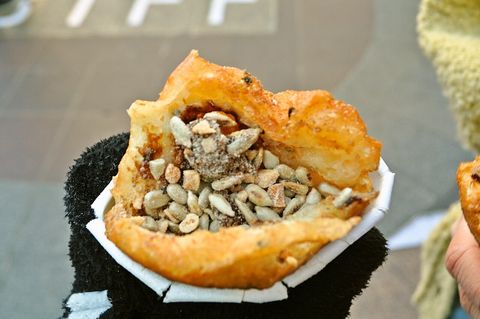
A fried sweet pancake split open and packed with sunflower and other seeds. A street snack that started here.
Markets, streets and harbours
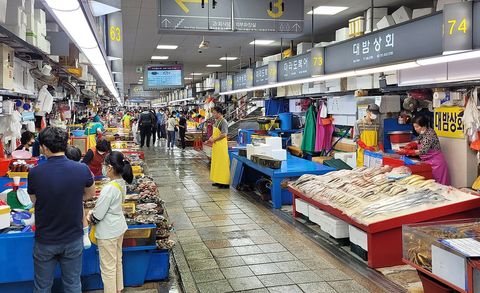
The harbour fish market. Choose your fish downstairs and a restaurant upstairs will prepare and serve it.
Restaurants nearby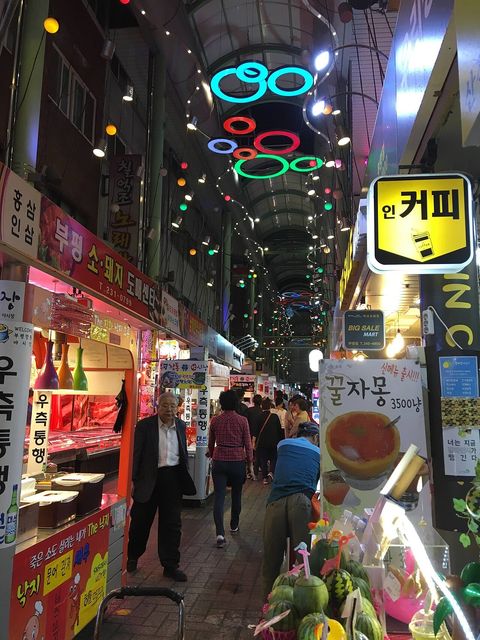
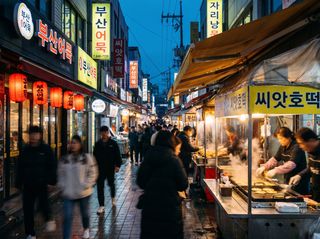
An alley of food stalls that opens in the evening.
Restaurants nearby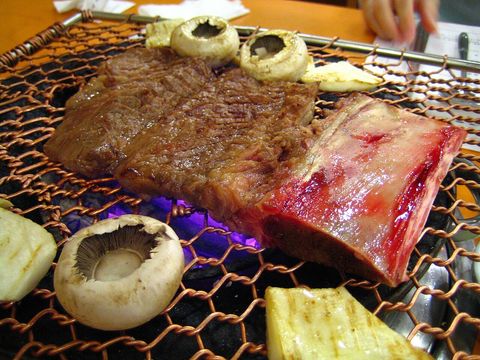
An alley across from Busan Station lined with bulgogi set-meal diners. Briquette-grilled pork comes with rice and stew, a cheap lunch strip.
Restaurants nearby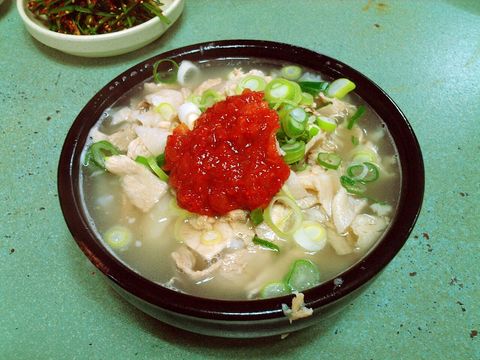
Pork-soup-and-rice houses cluster in and around Seomyeon Market behind the department store. Many stay open until dawn; this is the city benchmark for gukbap.
Restaurants nearby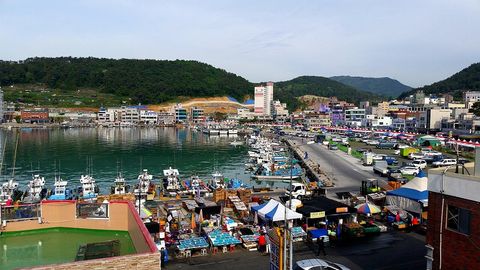
Anchovies in spring, snow crab and conger eel in winter, eaten at the harbour.
Restaurants nearbyPork soup rice runs about KRW 9,000-11,000 and wheat noodles KRW 8,000-10,000; a raw fish spread for two is commonly KRW 50,000-80,000.
Busan
Real visits shared by TastyLog foodies

 11
11 9
9 9
9