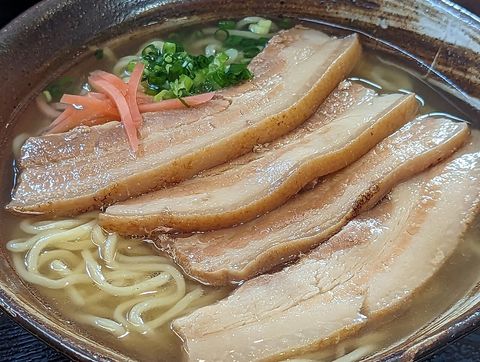
Okinawa soba
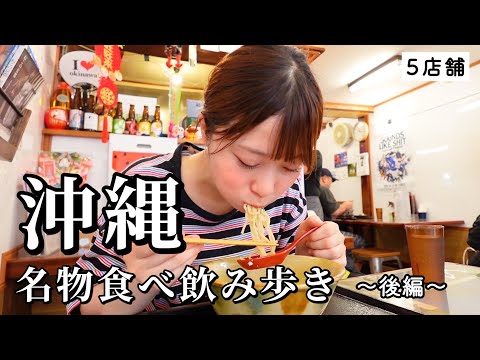
Despite the name, wheat noodles rather than buckwheat, in a pork and bonito broth topped with belly pork or ribs.
Written by hand, not generated. Dishes, markets, timing and prices for Okinawa.
A different climate and a different history from the mainland produced a separate set of ingredients and methods here. Pork used cut by cut, vegetables that stand up to heat, and the postwar American presence combine into pairings you will not find elsewhere in Japan.
Start with the local defaults
Despite the name, wheat noodles rather than buckwheat, in a pork and bonito broth topped with belly pork or ribs.
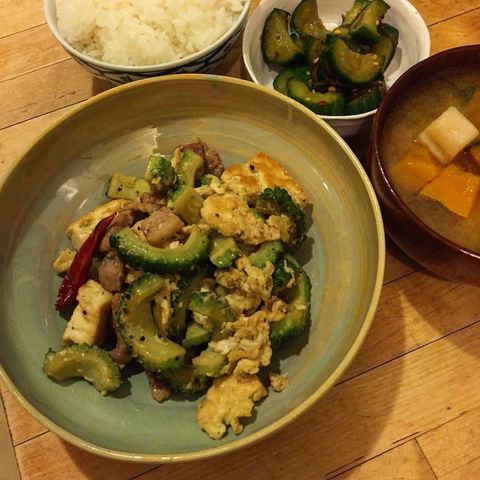
Bitter melon stir-fried with tofu, egg and pork. The bitterness is pronounced and takes getting used to.
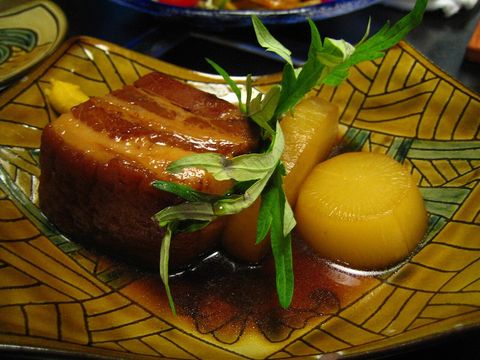
Pork belly simmered long with brown sugar and awamori until soft and faintly sweet.
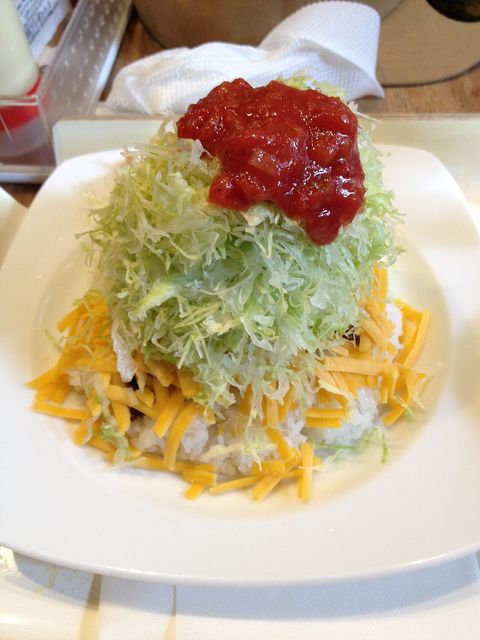
Taco fillings served over rice — a dish that started around the American bases.
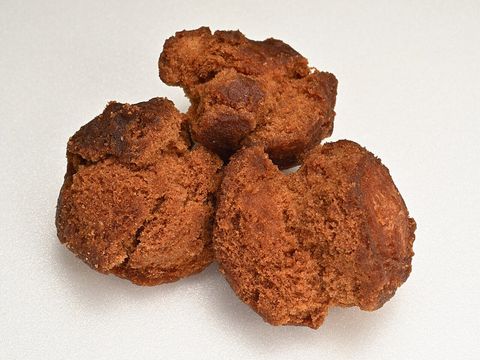
Round fried dough balls, sold from markets and street stalls.
Markets, streets and harbours
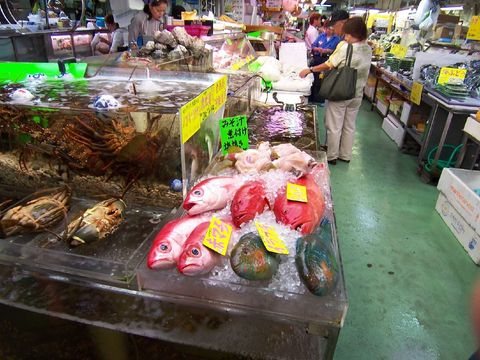
The Naha market, where fish chosen downstairs is cooked for you upstairs.
Restaurants nearby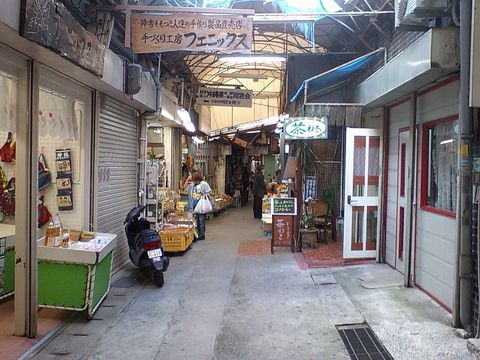
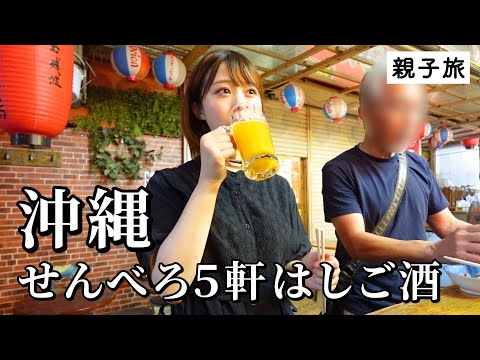
A market beside Asato Station in Naha, built in 1955 on the war-ruined site of a former girls' school. Deli and vegetable stalls by day, tiny bars in the narrow lanes by night, and more locals than tourists come here for an evening drink.
Restaurants nearby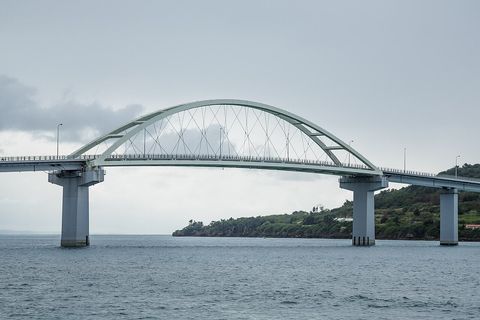
A stretch of prefectural route 84 through Izumi on the Motobu Peninsula, near Churaumi Aquarium, where some twenty Okinawa soba shops cluster, hence the name soba highway. Bonito stock is the local signature, a legacy of the old bonito-flake port; a lunch stop on the way to the aquarium.
Restaurants nearby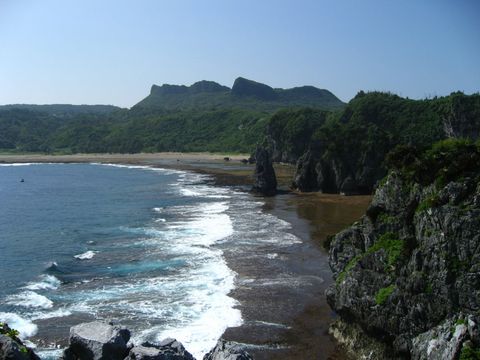
Cafes and soba shops scattered along quiet coastal roads.
Restaurants nearby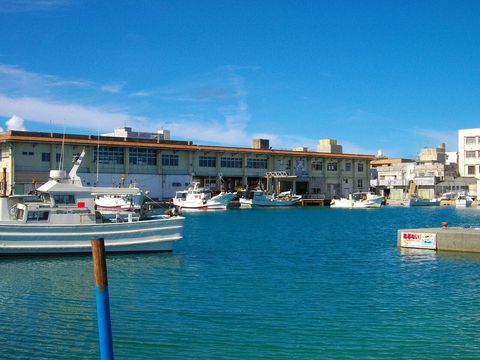
A southern fishing port dealing in fresh fish.
Restaurants nearbyOkinawa soba runs JPY 700-900, a champuru set JPY 900-1,200, and taco rice JPY 800-1,000.
Okinawa
Real visits shared by TastyLog foodies