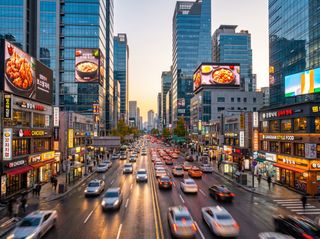
Jongno and Euljiro
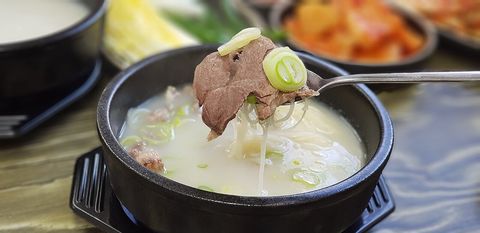
Seolleongtang (ox bone soup)
Beef bones simmered for hours into a milky broth. It arrives unseasoned, so you salt it and add spring onion yourself at the table.
Written by hand, not generated. Dishes, markets, timing and prices for Seoul.
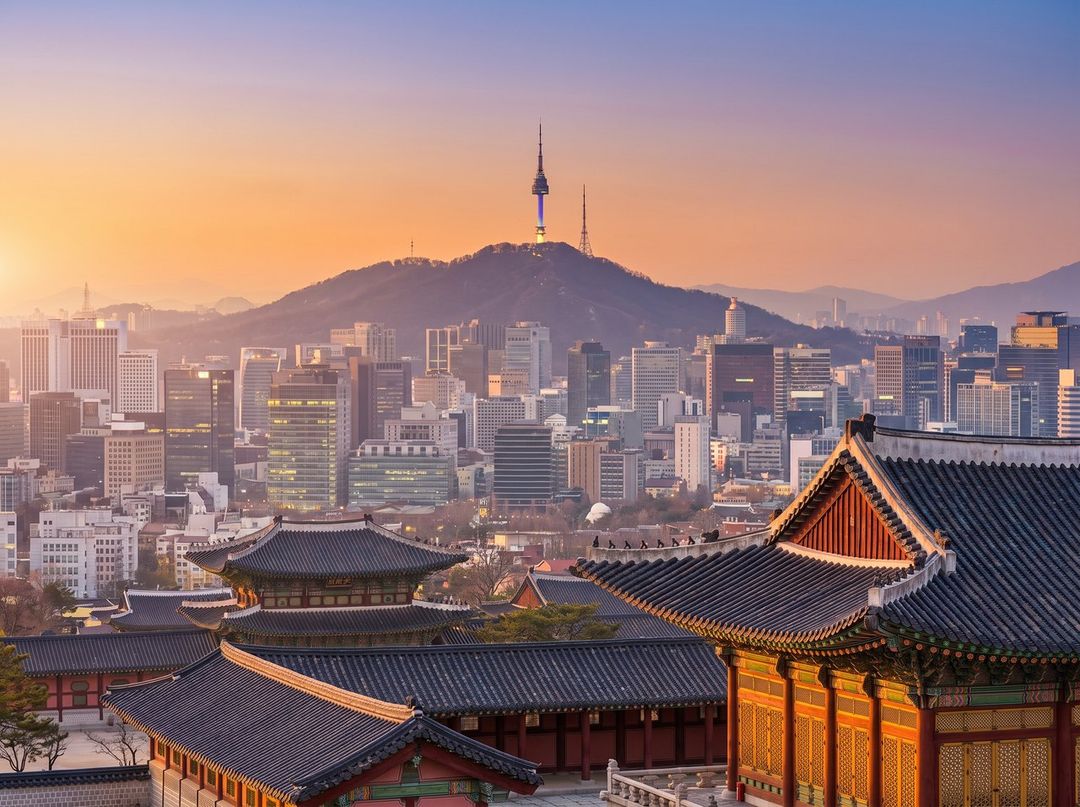
Seoul stacks six centuries of capital-city cooking, postwar alley diners, and food from every corner of the world into one city. What makes it unusual is the range: you can eat at a restaurant that has been open for a century and at a place that opened last month on the same afternoon.
Start with the local defaults
Beef bones simmered for hours into a milky broth. It arrives unseasoned, so you salt it and add spring onion yourself at the table.
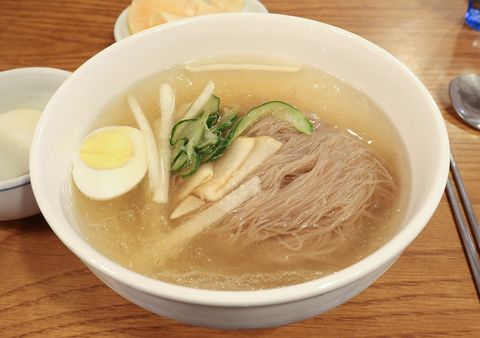
Buckwheat noodles in a deliberately restrained beef broth. Locals add only a drop of vinegar or mustard and drink the broth as it is.
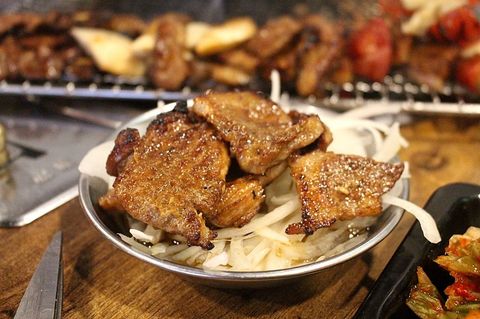
Pork ribs marinated in soy sauce and grilled over charcoal. The meal usually ends with cold noodles or soybean paste stew rather than rice.
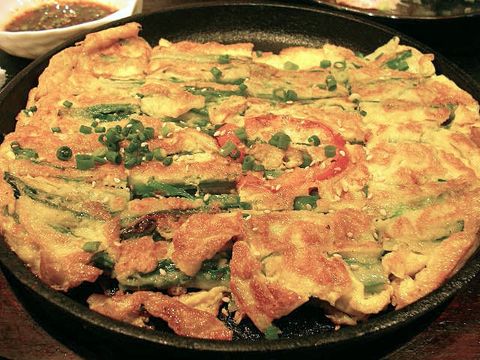
Mung beans ground and fried thick in oil. Eaten at a market counter with makgeolli rice wine.
Dried baby pollack grilled over briquettes, eaten as a beer snack. After dark the alley fills with folding tables on the pavement.
Markets, streets and harbours
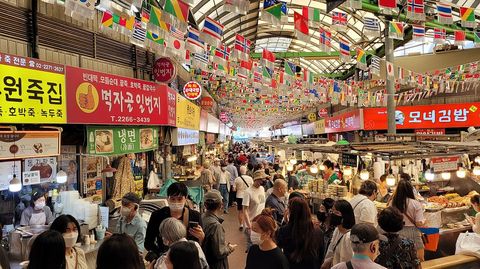
A century-old market of pancake, raw beef and kimbap stalls where you sit and eat on the spot.
Restaurants nearby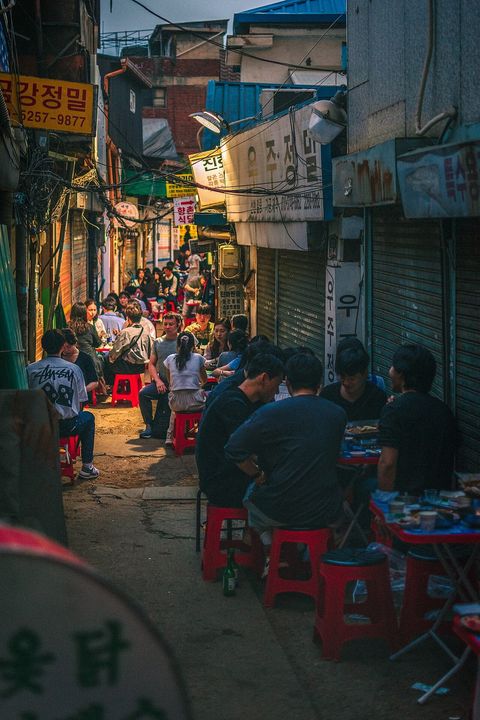
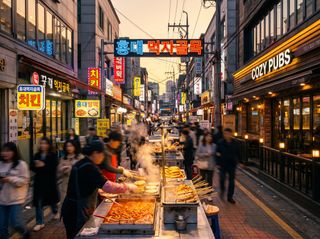
Old bars and rice-and-side-dish diners tucked between print shops. Busiest in the evening.
Restaurants nearby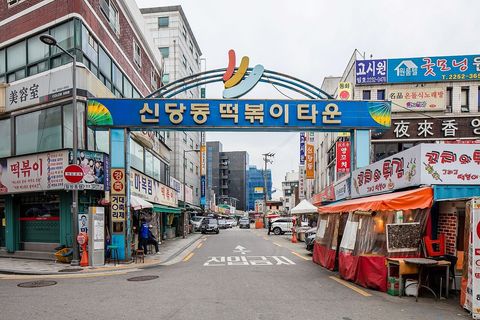
An alley behind Sindang Station devoted to tabletop tteokbokki. You simmer rice cakes with noodles and egg at the table and finish with fried rice in the leftover sauce.
Restaurants nearby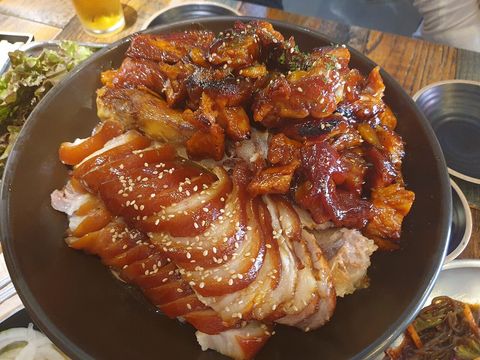
Decades-old braised pig trotter houses stand side by side on the main road in front of Jangchung Arena. Order front or hind leg and eat it with salted shrimp; this is where Seoul jokbal started.
Restaurants nearby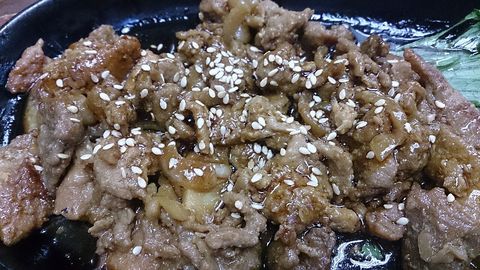
A run of charcoal grill houses specialising in marinated pork.
Restaurants nearby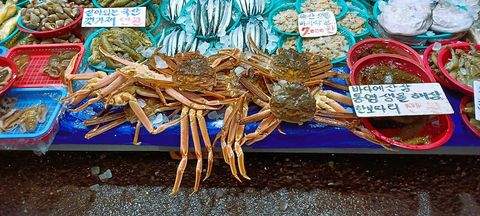
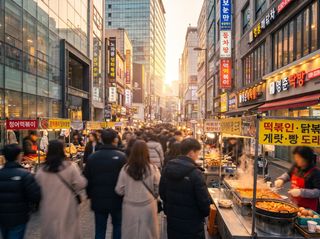
A neighbourhood market for street snacks — fritters, sweet-and-spicy fried chicken — eaten while walking.
Restaurants nearbyA bowl of soup or noodles runs about KRW 9,000-12,000, and grilled pork is roughly KRW 15,000-20,000 per person.
Seoul
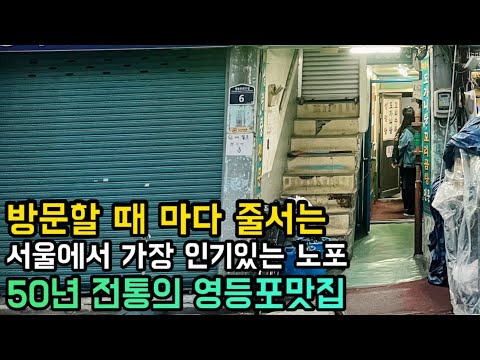
Real visits shared by TastyLog foodies
 7
7 9
9 9
9