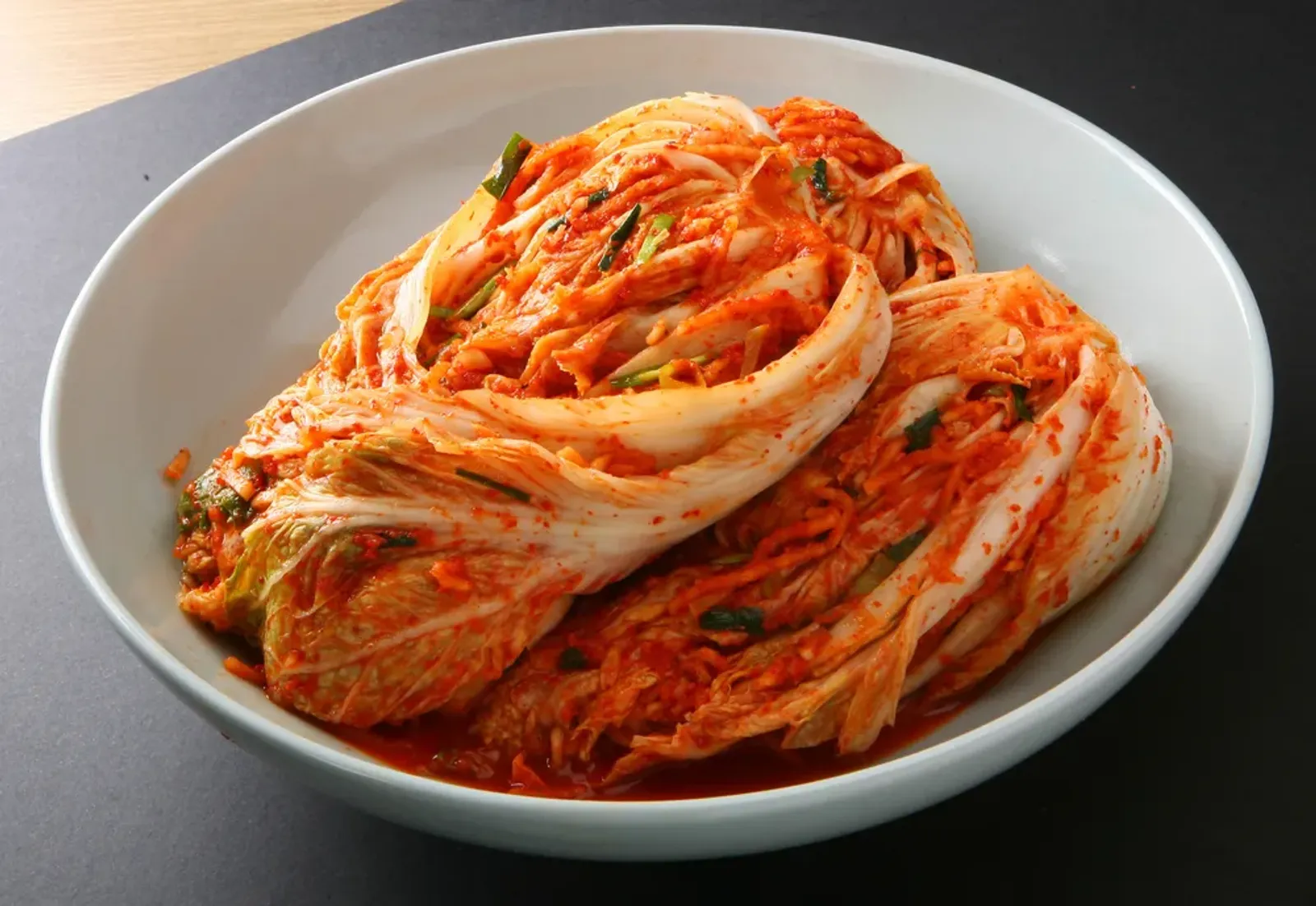
Napa cabbage kimchi
Kimchi Explained: 2,000 Years of Fermentation and Everything Visitors Ask
Before chili arrived, kimchi was a white salted vegetable. From Three Kingdoms records to UNESCO listing and how kimchi is served in restaurants, here is the full picture.
What Kimchi Is
Kimchi is Korea's signature preserved food: vegetables such as napa cabbage or radish are salted, then mixed with chili powder, garlic, ginger, scallion and salted seafood (jeotgal) and left to ferment. Koreans eat kimchi at almost every meal, and restaurants serve it as a free side dish without being asked. Most people picture red cabbage kimchi, but there are more than 200 varieties. Kkakdugi is cubed radish kimchi, chonggak kimchi uses whole young radishes, oi-sobagi is stuffed cucumber, baek kimchi is made without chili powder, and dongchimi is a refreshing water kimchi. Ingredients and flavors vary by region, season and household, which is why Koreans talk about 'my mother's kimchi'.
Origins: Kimchi Before Chili
Salting vegetables to survive winter predates the Three Kingdoms period. The Samguk Sagi records that King Sinmun sent salted seafood as wedding gifts in 683, and the Goryeo scholar Yi Gyu-bo wrote that turnips 'pickled in soy paste are good in summer, and salted they last through winter'. Kimchi at that time was white vegetables preserved in salt, soy paste or vinegar. Chili peppers reached the Korean Peninsula in the late 16th to early 17th century, around the time of the Imjin War. They first appear in the 1614 encyclopedia Jibong Yuseol, and a 1766 farming manual, Jeungbo Sallim Gyeongje, describes making kimchi with chili powder. In other words, the red kimchi we know today is only about 250 to 300 years old.
How Red Cabbage Kimchi Was Born
Chili powder transformed kimchi. Beyond adding heat, it suppressed harmful bacteria so less salt was needed for long storage, and it masked the fishiness of salted seafood. As shrimp, anchovy and croaker jeotgal became standard seasonings, kimchi gained the deep umami it is known for today. The tightly headed napa cabbage now used everywhere was only widely cultivated from the late 19th to early 20th century. Before that, loose-leaf native cabbage, radish, mustard greens and cucumber were the main ingredients. With headed cabbage, 'pogi kimchi' — whole cabbage with seasoning tucked between every leaf — became the standard and the defining image of Korean kimchi.
Kimjang: The Community Tradition UNESCO Recognized
Kimjang is the late-autumn event when families and neighbors gather to make several months' worth of kimchi at once, usually in late November or early December just before the first hard cold. Dozens of cabbages are salted, a filling of radish, chili powder and jeotgal is prepared, every leaf is stuffed, and the finished kimchi is shared among households. In 2013 UNESCO inscribed 'Kimjang, making and sharing kimchi' on its list of Intangible Cultural Heritage. What is recognized is not the dish itself but the communal culture of making and sharing it. When kimjang is done, it is customary to wrap boiled pork (suyuk) in the fresh kimchi, so 'kimjang kimchi with suyuk' is a classic seasonal meal in Korea.
Why It Is Called Healthy: Fermentation and Lactic Acid Bacteria
Kimchi is salted vegetables fermented by lactic acid bacteria. Freshly made, it tastes mostly of the vegetables and seasoning; after a few days, bacteria such as Leuconostoc multiply, creating a light fizz and a refreshing sourness. With more time Lactobacillus takes over and it becomes strongly sour 'mugeunji' (aged kimchi). Koreans use kimchi differently depending on how ripe it is. Fresh geotjeori is eaten as is, moderately ripe kimchi goes with rice, and very sour kimchi is cooked into kimchi stew, kimchi fried rice or kimchi pancakes. If restaurant kimchi tastes sour, it is most likely well fermented rather than spoiled. The kimchi refrigerator, introduced in 1995, is an appliance that developed only in Korea to control this fermentation speed.
Practical Tips for Visitors
In Korean restaurants kimchi is a free side dish, and refills are usually free too. If there is a self-service counter, help yourself; otherwise ask staff for more. Leftover kimchi is not reused for hygiene reasons, so it is polite to take only what you will eat. If spicy food is a concern, look for baek kimchi, dongchimi or mul kimchi (water kimchi), which are made without chili powder and taste mild and refreshing. Note that kimchi usually contains salted seafood, so it is not fully vegetarian; vegetarians should choose kimchi from temple-food or vegan restaurants. For gifts, vacuum-packed kimchi is sold at airport duty-free shops and large supermarkets. Fermentation gas can swell the package, so keep it cool.