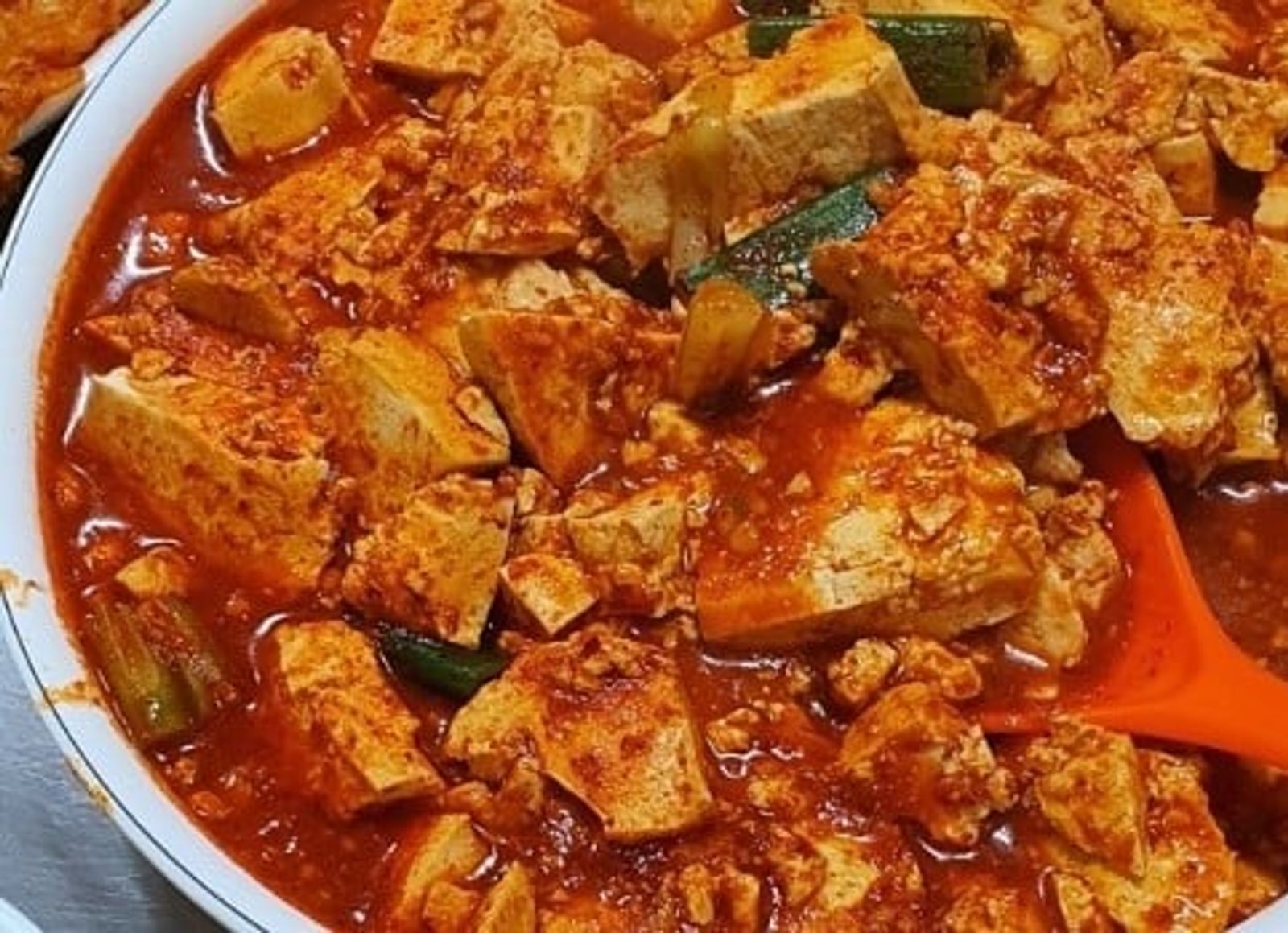
Dubu duruchigi in red chilli sauce · Photo: 이랑이랑 / CC BY 2.0 kr (Wikimedia Commons)
 KoreaDaejeon
Daejeon Dubu Duruchigi: Tofu Instead of Meat, and Noodles in the Leftover Sauce
Tofu simmered down in a fiery red sauce, dubu duruchigi is a working-class dish born in the alleys of old downtown Daejeon. Here is what "duruchigi" means, what makes the Daejeon version distinctive, the local ritual of mixing noodles into the leftover sauce, and how to order.
A Local Dish That Grew Up in Daejeon Itself
In 2026 Daejeon named dubu duruchigi one of its three official "Tastes of Daejeon", alongside bread and kalguksu. The city noted that, unlike the other two, which were shaped by flour from outside, dubu duruchigi is a local dish that arose in Daejeon itself. It began, the city says, in the days when meat was scarce, when cheap tofu simmered in chilli seasoning became a side dish and drinking snack for ordinary people. The Encyclopedia of Korean Culture likewise describes dubu duruchigi as "not an old traditional dish, but known mainly as a local food of Daejeon and the Chungcheong region". It has been part of the history of the old downtown alleys that grew up around Jungang-ro and Daejeon Station since the days when the South Chungcheong provincial government was based in Daejeon, and it remains a favourite of middle-aged and older locals.
What Does "Duruchigi" Mean?
Duruchigi refers to a dish in which meat or shellfish is stir-fried with ingredients such as bean sprouts and mushrooms, then simmered down in a seasoned broth. The name is explained as coming from mixing many ingredients together all round (duru) and "reducing" the liquid, and it is easiest to think of it as something between a stir-fry and a stew. There are many kinds of duruchigi, such as pork duruchigi and kimchi duruchigi, and the one that makes tofu the star is dubu duruchigi. The Daejeon version puts cubed tofu into a spicy seasoning of chilli powder, garlic and soy sauce, adds stock and lets it bubble away until it reduces. The key to the flavour is that jajak consistency: not as much liquid as a stew, but not dry like a stir-fry either.
What Makes the Daejeon Style Distinctive
In Daejeon, dubu duruchigi usually arrives on a wide plate or in a shallow pot, the tofu almost buried in red sauce. The seasoning is spicy, but the mildness of the tofu wraps around the heat, so it is less a dish that is simply hot and more a punchy flavour that makes you reach for rice. Depending on the restaurant, a little pork or seafood may go in, and a generous handful of crown daisy greens or green onion on top adds fragrance. Many dubu duruchigi restaurants in Daejeon also serve "ojingeo dubu duruchigi", with squid added to the basic dish. The chewy texture and savoury depth of the squid make it especially popular with drinks. The heat of the sauce and amount of liquid vary a little from place to place, and "whose duruchigi is best" is a perennial debate even among Daejeon locals.
The Daejeon Ritual: Noodles in the Leftover Sauce
The classic Daejeon way to eat dubu duruchigi is to fish out and eat the tofu first, then add kalguksu noodles to the sauce left on the plate and toss them through. The city itself presents mixing kalguksu noodles into the sauce as the Daejeon way of eating it. In true noodle-city style, the chewy knife-cut noodles soak up the spicy sauce, and some people say they eat duruchigi just for this final plate. Some restaurants use udon noodles instead, and some bring the noodles from the start while others have you order them separately, so check when you order. Some locals insist you have not really eaten it properly until you add crown daisy greens after the noodles go in. It works as a side dish with rice and also pairs well with makgeolli or soju as an evening drinking snack.
Where to Eat It and How to Order
Long-running dubu duruchigi restaurants cluster in the old downtown alleys running from Daejeon Station along Jungang-ro to Eunhaeng-dong and Daeheung-dong. The older the place, the longer the lines at lunch and dinner, and some close early when ingredients run out, so arrive a little before regular mealtimes. It is within walking distance of Daejeon Station, making it an easy stop on a rail trip. The usual way to order is dubu duruchigi for the size of your group, plus kalguksu noodles. For two people, one dubu duruchigi with one serving of noodles, or adding a squid version to share, works well. Many places cannot adjust the heat, so if you are sensitive to spice, have plenty of water or rice on hand. Have kalguksu for lunch and dubu duruchigi for dinner, and you can enjoy Daejeon's noodle culture twice in one day.