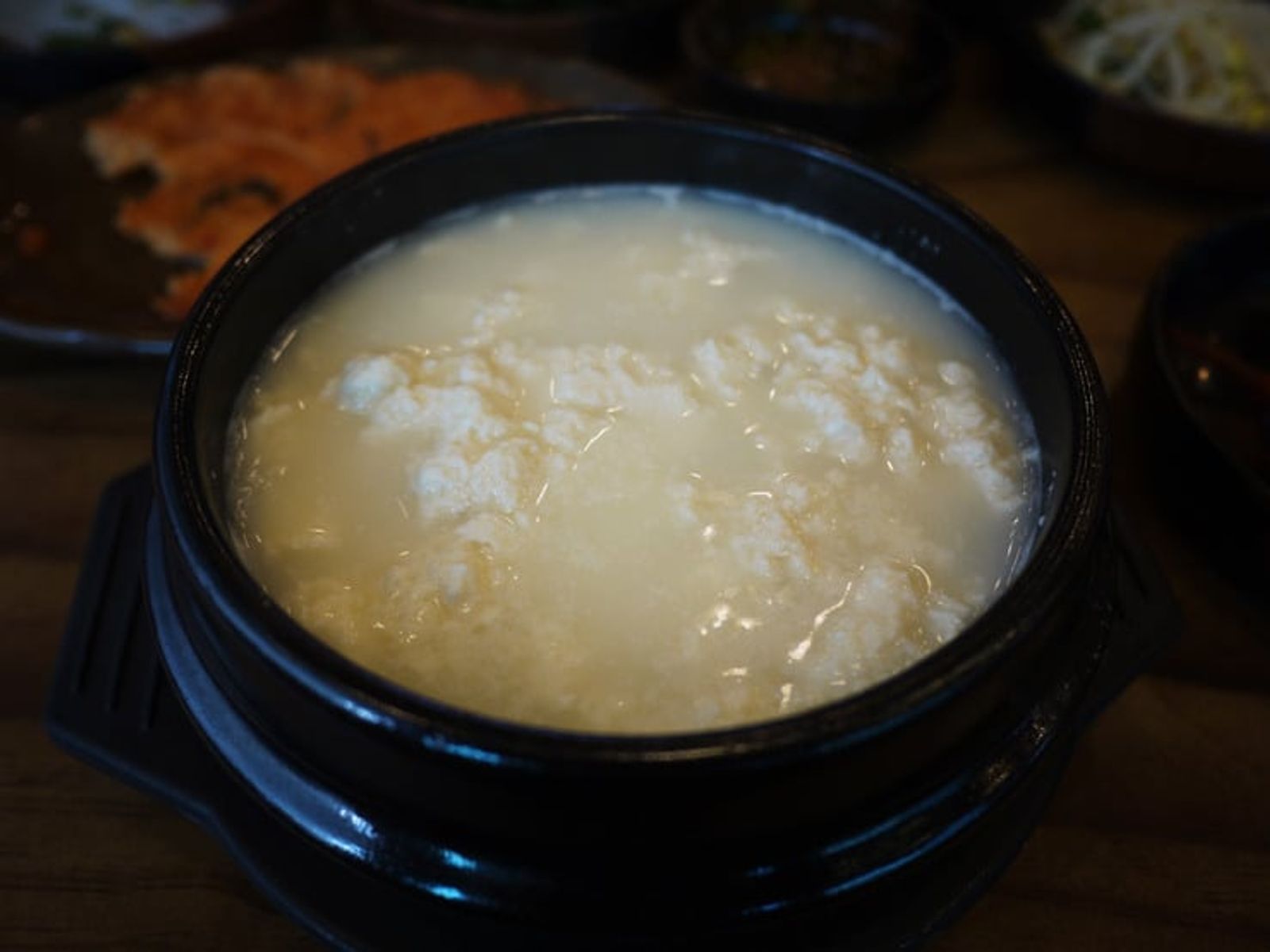
White sundubu in an earthenware bowl · Photo: 맛집마차 / CC BY 4.0 (Wikimedia Commons)
 KoreaGangwon
Gangneung Chodang Sundubu: Tofu Set With Seawater, Named After a Joseon Scholar
The soft tofu of Chodang village in Gangneung is known for being set with East Sea seawater instead of standard coagulant. Here is the story of Heo Yeop, the Joseon scholar whose pen name became the village name, where legend and record part ways, and how to choose between plain white tofu and red, spicy jjamppong sundubu.
What Exactly Is Sundubu?
Sundubu is tofu that has not been pressed. Soaked soybeans are ground, the pulp is strained out, and the soy milk is heated in a pot while being stirred. When a coagulant is added, the soy proteins gather into soft curds. Scoop those curds out together with the liquid and you have sundubu; press them in a mold to drain the water and you get ordinary block tofu. That is why sundubu is even softer than silken tofu and tastes best while still warm. The origin of the name is uncertain. One theory says it comes from "mild tofu," another from sudubu, meaning "water tofu." Some regions call it sumdubu or chodubi. The red sundubu stew that many travelers know is just one of the dishes made with this tofu.
The Name Chodang: Heo Yeop and Gangneung
Chodang (草堂, "thatched hall") was the pen name of Heo Yeop (1517–1580), a mid-Joseon official and Neo-Confucian scholar. He was the father of Heo Gyun, author of The Tale of Hong Gildong, often called the first novel written in Hangeul, and of Heo Nanseolheon, a woman poet whose work became known even in China and Japan. Gangneung tradition holds that his pen name became the name of the village, today's Chodang-dong in Gangneung. A popular story also says Heo Yeop made tofu with excellent spring water in Gangneung, where his wife's family lived, and that this was the beginning of Chodang tofu. Some versions even add that he was criticized at court for selling tofu as a scholar. It is worth knowing, though, that there is no documentary evidence that Heo Yeop invented Chodang tofu. Enjoy it as a legend born where an old village name meets a local food.
Seawater Instead of Standard Coagulant
The defining feature of Chodang tofu is that seawater is used as the coagulant in place of standard brine. In Chodang village, close to the sea, people have long set their tofu by adding water drawn from the East Sea to the soy milk, and many shops still advertise that they use seawater. Fans say the minerals in seawater do the work of the coagulant and leave a faint saltiness, so the tofu tastes nutty and clean without any extra seasoning. As for why seawater, one story says ordinary coagulant was hard to come by, but that too is not confirmed by any record. What is certain is that setting tofu with seawater has become the name tag that sets Chodang tofu apart from tofu made elsewhere.
Chodang Tofu Village and What Is Nearby
Chodang is an old village where people have lived for more than a thousand years, and it became today's Chodang Tofu Village after restaurants specializing in sundubu multiplied from the 1990s onward. Tofu restaurants line the streets, and some occupy renovated hanok houses where you can eat looking out over a courtyard. Chodang-dong is also home to the Heo Gyun and Heo Nanseolheon Memorial Park and museum, so you can visit traces of the people in the tofu story. Walking paths wind through pine woods, and a short walk takes you to Gangmun Beach, Gyeongpo Lake and Gyeongpo Beach. Sundubu for breakfast or lunch followed by a stroll along the sea and the lake is one of the classic day plans in Gangneung. Newer shops even sell desserts such as sundubu gelato and ice cream.
What to Order: From White Sundubu to Jjamppong Sundubu
For a first visit, try sundubu baekban, a set meal of white sundubu in an earthenware bowl with rice and side dishes. The Chodang way is to start with the plain tofu and add seasoned soy sauce a little at a time so you can taste the beans themselves. Freshly made block tofu (modubu) and hot pots of sundubu or tofu with other ingredients are also popular. If you like spice, go for jjamppong sundubu: soft tofu in a red, spicy seafood-and-vegetable broth in the style of Korean-Chinese jjamppong, a novelty you will see all over Chodang village. If you cannot handle heat, stick with the white version, and if you are curious about both, order one of each and share. Some shops open early in the morning, which makes sundubu a great breakfast after watching the sunrise. Popular places get long lines at weekend lunchtime, so arriving a little off-peak helps.