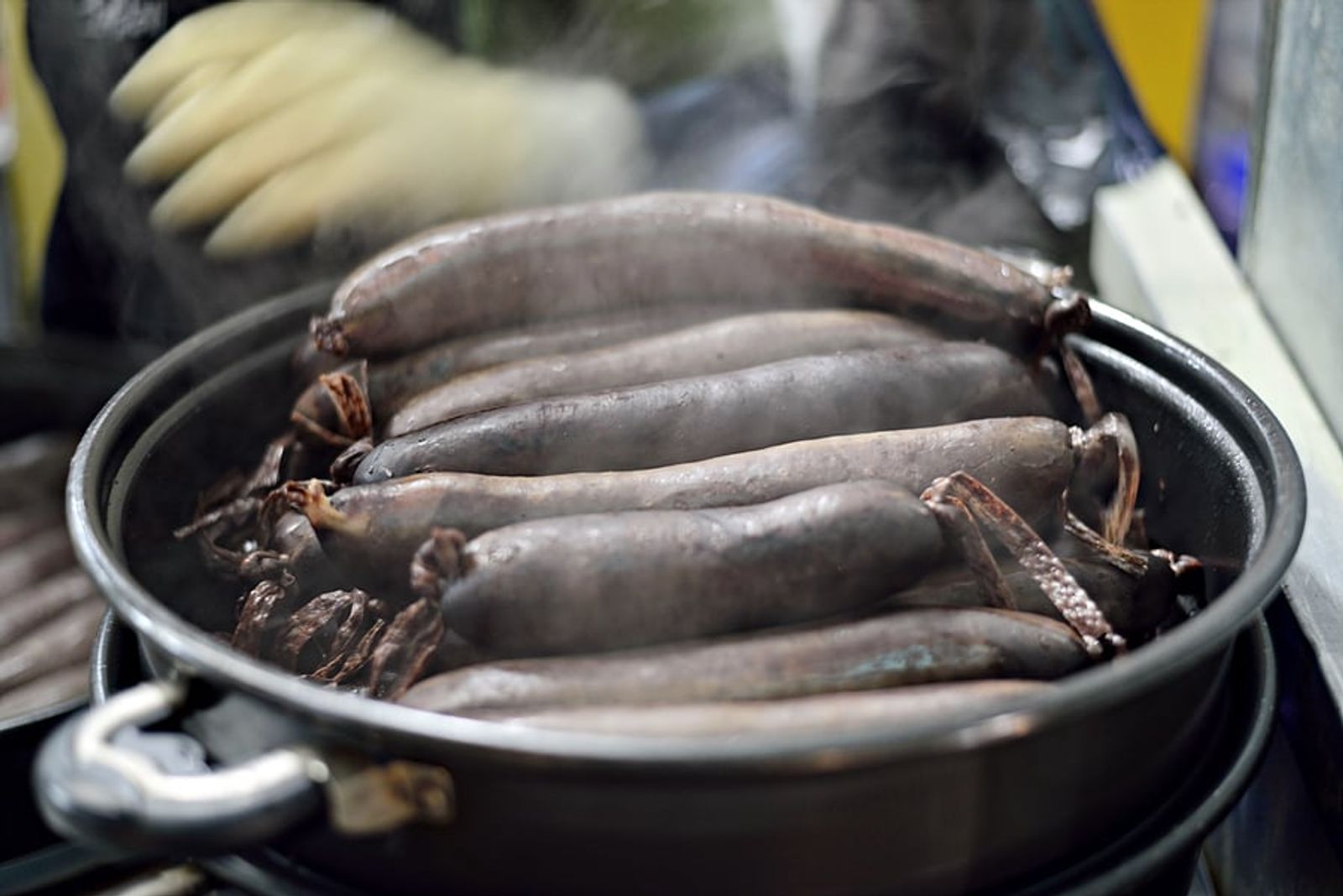
Sundae being steamed · Photo: 삼달 / CC BY 2.0 kr (Wikimedia Commons)
 KoreaSouth Chungcheong
Byeongcheon Sundae: Vegetable-Packed Korean Sausage From the Aunae Market
The Aunae market area in Byeongcheon-myeon, Cheonan, is famous for its sundae (Korean blood sausage) street. Here is what sets Byeongcheon sundae apart, with thin pork casings stuffed with blood and plenty of vegetables, how the sundae shops appeared in the 1960s, the story of the market where Yu Gwan-sun led a 1919 independence protest, and how to eat it.
Korean Sundae Varies by Region
Sundae is a Korean dish made by stuffing pork intestine with fillings such as vegetables, glass noodles or glutinous rice, flavoring and coloring it with blood, then steaming it. The kind you see at snack bars is glass-noodle sundae, which became popular from the early 1970s and is now mostly factory-made. Out in the regions, though, sundae looks very different. Baegam sundae from Yongin in Gyeonggi, abai sundae from Abai Village in Sokcho, and blood sundae from Jeonju and Wanju each use different casings and fillings. Among them, Byeongcheon sundae from Byeongcheon-myeon in Cheonan, South Chungcheong, is stuffed into pork small intestine with blood, perilla, napa cabbage, green onion, chili and glutinous rice. Its generous vegetables give it a clean, chewy character that made it famous.
Thin Casings, Lots of Vegetables
The first thing that sets Byeongcheon sundae apart is the casing. Instead of thick large intestine, it uses slender pork small intestine, so the sausages are thin with a delicate, chewy skin. Inside, vegetables such as cabbage or napa cabbage, green onion, chili and garlic are chopped and mixed with blood, and perilla and glutinous rice add nuttiness and body. Unlike snack-bar sundae, where glass noodles take center stage, the vegetables and blood lead here, so it is known for a clean taste with little gaminess. The mix differs a little from shop to shop, but everyone shares the pleasure of thick slices of freshly steamed sundae eaten while still steaming. You can order sundae on its own or a mixed platter with boiled pork head meat and offal. Sundae-guk, a soup with sundae in it, is the other dish people come to Byeongcheon for.
The 1960s: A Meat Plant and the First Sundae Shops
The most commonly cited reason sundae shops clustered in Byeongcheon is a meat-processing plant in the 1960s. In the early 1960s a ham factory opened in the area, producing plenty of pork by-products, and shops began selling sundae made from them. Another account says that after a pork plant opened nearby, sundae soup restaurants began to settle in around 1968, eventually forming today's sundae street. The exact dates and details are closer to oral history than written record, so they differ slightly between sources. What is clear is that easy access to pork by-products met a big market where people and goods gathered, and the name Byeongcheon sundae was born. Around the same time the government was promoting pig farming, which brought down the price of pork offal and helped sundae spread as everyday food.
The Aunae Market and the 1919 Independence Protest
Byeongcheon's sundae street sits right next to the Aunae Market. Aunae means "where two streams meet," and the Chinese-character name Byeongcheon (並川) means the same. Since the Joseon period, merchants from Cheongju, Jincheon, Jochiwon, Yesan and elsewhere brought their local goods and cattle to trade here, and it is said to have been the busiest market in the area. A five-day market is still held on dates ending in 1 and 6. The Aunae Market also holds an important place in modern Korean history. In 1919, Yu Gwan-sun handed out Korean flags to the crowd here and led cries for independence. Nearby historic sites include Yu Gwan-sun's birthplace and the birthplace of Dr. Cho Byeong-ok, so a bowl of sundae pairs naturally with a history outing. The Independence Hall of Korea in Cheonan is also a short drive away.
How to Eat It and Ordering Tips
For a first visit, order a plate of sundae and a bowl of sundae soup and share them. In Chungcheong people often dip sundae in salted shrimp (saeujeot), so try a little of that instead of salt. Sundae-guk comes in a milky broth with sundae and meat; season it with the salted shrimp on the table, and add spicy dadaegi paste or ground perilla seeds to taste. On market days the street is packed with shoppers, so go a little outside lunch hour or on a weekday for a more relaxed meal. Most shops will pack sundae to go, which is handy for reheating at home. Byeongcheon-myeon is reachable by bus or car from downtown Cheonan, and many travelers make a day of it by combining the Yu Gwan-sun historic sites and the Independence Hall of Korea.