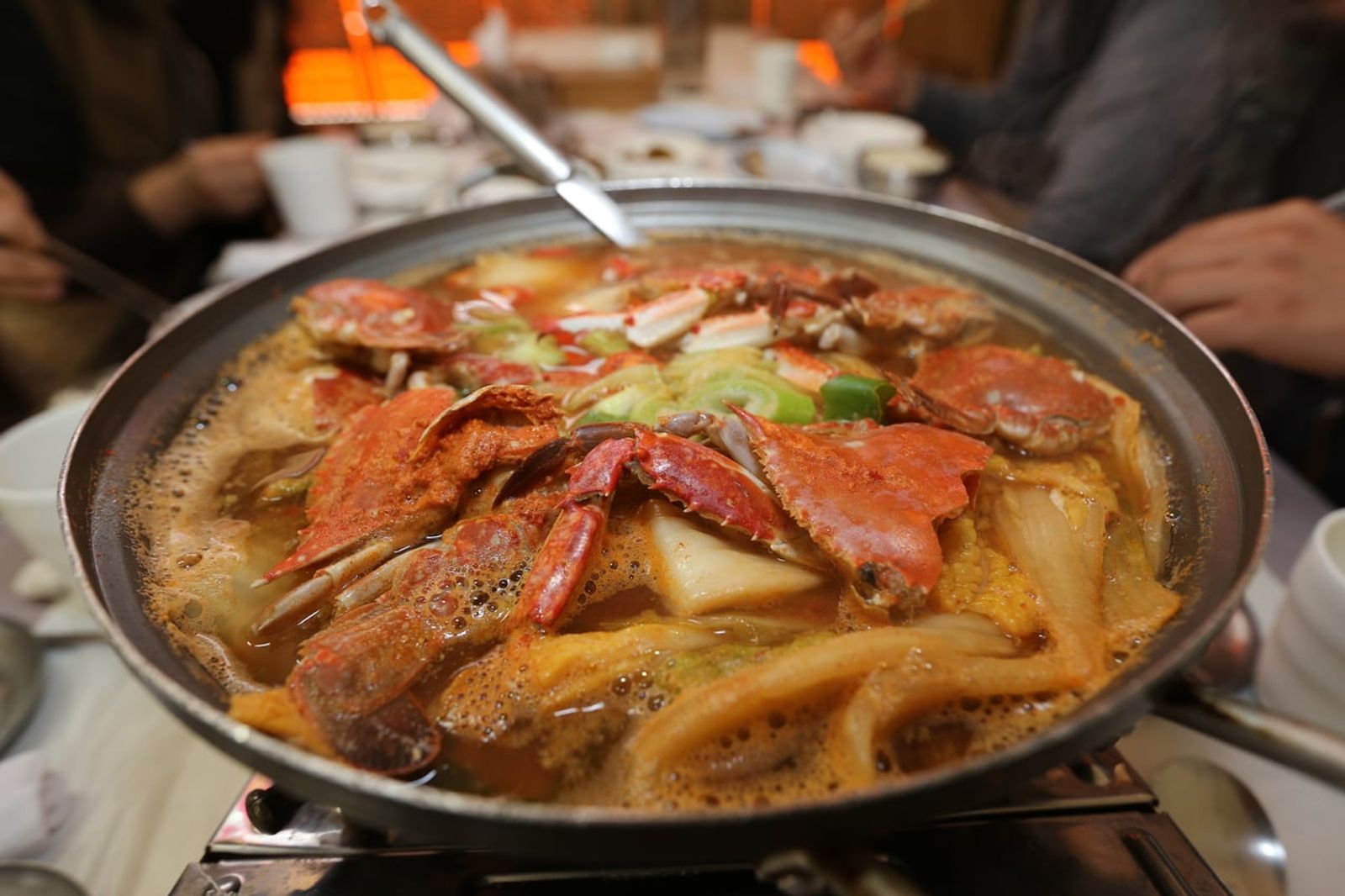
Today's gegukji with blue crab (Seosan) · Photo: Seosan City Government / CC BY-SA 4.0 (Wikimedia Commons)
 KoreaSouth Chungcheong
Seosan and Taean Gegukji: From Leftover Crab-Brine Kimchi to Today's Crab Hot Pot
Gegukji is a local dish of Seosan and Taean in South Chungcheong. It began as humble home cooking, kimchi made with leftover crab-marinade brine and boiled into a stew, but today restaurants mostly serve it as a hot pot of blue crab and aged kimchi. Here is how the two versions differ and how to eat it.
A West Coast Dish With Many Names
Gegukji is a local dish from the Seosan and Taean area of South Chungcheong. Its name changes from village to village: getgukji, gaetgukji, kkaekkukji, kkaegukji and more. The name is explained as kimchi made with gemul, the brine left from marinated crab, or gaetguk, the liquid from salted seafood. In other words, before it was the name of a stew, gegukji was a type of kimchi. Seosan and Taean border the vast tidal flats of the West Sea, where blue crab, octopus, oysters and shrimp are plentiful. Marinated crab was a regular side dish on local tables, and gegukji grew out of the household thrift of using that marinade down to the last drop. Seosan City presents gegukji as one of its "nine flavors of Seosan."
Traditional Gegukji: Leftover Crab Brine Meets Kimchi
Traditional gegukji was made like this. By the time a household was finishing the soy-marinated crab it had made in autumn, kimchi-making season had arrived. The well-aged crab was pounded fine, mixed with napa cabbage and radish, packed into jars and fermented for more than a month. Another method took the less tasty outer cabbage leaves left from kimchi-making and fermented them in the crab marinade instead of fish sauce. The resulting gegukji had such a strong fishy, fermented smell that it was hard to eat as is, so it was boiled in an earthenware pot. From early spring, when the winter kimchi ran out, until early summer, it was cooked with spring cabbage or young napa cabbage and carried families through the leanest stretch of the year. Old-style gegukji did not contain whole crabs, only a few legs that had broken off in the marinade. It was a dish that made full use of ingredients that would otherwise have been thrown away, born of a time when food was scarce.
How Restaurant Gegukji Changed After TV
For a long time, hardly anyone outside the region knew gegukji. It began to gain nationwide fame after appearing on the KBS variety show 2 Days & 1 Night, and it made headlines again when the winner of season one of Netflix's cooking competition Culinary Class Wars earned top marks with a pasta built on gegukji. Most gegukji sold in restaurants today, though, is closer to a blue crab stew made with aged kimchi. As more customers came looking for it, the hard-to-eat traditional version with its strong smell gave way to something more approachable: many places mix crab marinade and cabbage fresh each day, or add whole cleaned crabs for a more appealing look. Some point out that this is far from traditional gegukji. As a traveler, it helps to know there are two kinds, and to think of the roots of the dish as you enjoy today's crab version.
West Sea Blue Crab and Chungnam's Local Food
The star of today's restaurant gegukji is blue crab from the West Sea. Thanks to its tidal flats, the South Chungcheong coast is rich in seafood, from blue crab to octopus, oysters, cockles, webfoot octopus and shrimp, and Seosan and Taean are full of seafood restaurants. Blue crab is said to be best in spring, when the females are full of roe, and in autumn, when the males are meaty, so gegukji tastes a little different from season to season. South Chungcheong Province regards gegukji as one of its signature local foods; in 2017 it even announced plans to put dishes unique to the province, such as gegukji and baksok nakji-tang (octopus soup with gourd), on school lunch menus along with traditional local fermented sauces. With dishes like the spicy salted oysters of Ganwoldo in Seosan and Taean's gourd-and-octopus soup, the area has many foods shaped by the sea and the tidal flats. Try them alongside gegukji for a fuller picture of the coastal Chungnam table.
Ordering Tips and Where to Try It
Restaurant gegukji is usually ordered by the pot for two or more, priced by crab size and number of diners. The broth, cool and peppery from the aged kimchi and sweet from the crab, is worth sipping on its own for the first few spoonfuls before you start picking out crab meat. Many places provide plastic gloves or scissors for the shells, and mixing rice into the leftover broth is a treat in itself. Some restaurants rinse the aged kimchi before cooking so the stew is not too spicy, so ask if you are worried about the heat. You will find gegukji restaurants in downtown Seosan and around Taean, especially at busy beaches such as Kkotji Beach on Anmyeondo Island. If you want to try a version closer to the traditional dish, it is fine to ask how a restaurant makes it. Pairing a gegukji dinner with one of the West Sea's famous sunset spots is a popular plan.