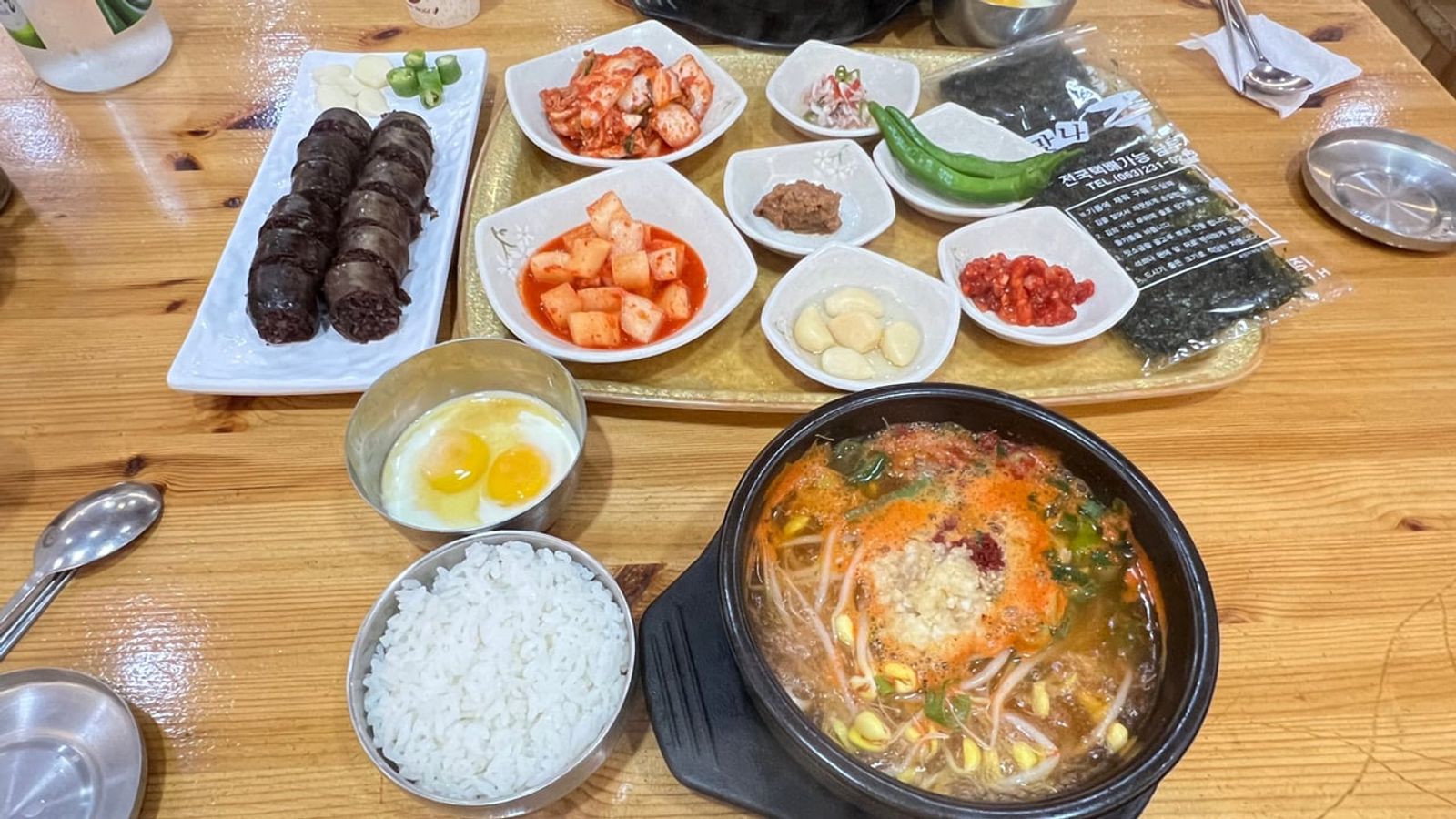
Jeonju kongnamul-gukbap with a poached egg and side dishes · Photo: Jjw / CC BY 4.0 (Wikimedia Commons)
 KoreaNorth Jeolla
Jeonju Kongnamul-gukbap: The Bean Sprout Hangover Soup Recorded in 1929, Plus How to Eat It With a Poached Egg and Moju
If you are having breakfast in Jeonju, kongnamul-gukbap is the answer. Here is Jeonju's bean sprout hangover soup as recorded in a 1929 magazine, the difference between the boiled style and the Nambu Market style, how to eat the poached egg with a few spoonfuls of broth, and the story of moju.
A Handful of Bean Sprouts and a Jeonju Morning
Kongnamul-gukbap is rice in bean sprout soup, seasoned with salted shrimp and topped with green onion and chili. It is sold all over Korea, but the Jeonju style is considered the definitive version. Jeonju may be famous for bibimbap, yet for locals the first thing that comes to mind for breakfast or a hangover cure is a steaming bowl of kongnamul-gukbap. Bean sprouts contain vitamin C and asparagine, a type of amino acid, so the soup is often talked about as a good hangover remedy. Crunchy sprouts, a clean broth and the savory depth of salted shrimp make it light and refreshing, and since many gukbap restaurants open early, it is an easy way for travelers to start a day in Jeonju.
Takbaegi-guk in a 1929 Magazine
Jeonju's ties to bean sprout soup go back a long way. Issue 24 of the magazine Byeolgeongon, published in 1929, records that people in Jeonju made a hangover soup with bean sprouts and called it takbaegi-guk. That soup was a clear broth made without separate meat stock, and it was reportedly eaten with makgeolli to ease a hangover. In other words, more than 90 years ago Jeonju residents were already soothing their stomachs with bean sprout soup the morning after. Bean sprouts have long been a staple in Korean soups and side dishes. A commonly repeated explanation for why they flourished in Jeonju is that the local water was good for growing them, but it is best taken as local lore. What is certain is that the kongnamul-gukbap sold in Jeonju became a regional specialty and then spread across the country.
The Boiled Style and the Nambu Market Style
Jeonju-style kongnamul-gukbap comes in two main styles. The first is boiled: rice, blanched bean sprouts, finely chopped kimchi and stock go into an earthenware bowl and are brought to a rolling boil, with an egg cracked in at the end. It arrives still bubbling in the bowl, and the broth is relatively clear and refreshing. The second is the Nambu Market style, said to have started at Jeonju's Nambu Market. Rice, bean sprouts and kimchi are placed in the bowl and separately simmered stock is poured over them. The flavor is somewhat richer, and because the broth is not boiling, it is at an easy-to-eat temperature right away. Neither is better, it is a matter of taste, and many travelers try both during their stay to compare. If you cannot tell from the sign or menu which style a restaurant serves, just ask.
The Poached Egg, Seaweed and Moju
At Jeonju kongnamul-gukbap restaurants, a poached egg (suran) usually comes on the side. It is a soft-cooked egg, and one way to eat it is not to drop it into the soup but to spoon a few ladles of hot broth over it in its own small bowl and eat it separately. Crumble some toasted seaweed in, stir, and you have a rich, silky little starter that wakes up your appetite before the main bowl. Of course, you can also add it to the soup. Today the broth is usually made from meat stock with garlic, ginger and chili, and it is often served with moju, makgeolli simmered with ingredients such as ginger, jujube and cinnamon to lower the alcohol, giving it a mellow, warming sweetness. Having a drink with a hangover soup may sound odd, but as the 1929 record of takbaegi-guk served with makgeolli shows, they have been partners in Jeonju for a long time.
Ordering Tips and Where to Try It
Ordering is simple, since kongnamul-gukbap is often practically the only thing on the menu. Once you sit down, the soup and poached egg arrive with side dishes such as cubed radish kimchi, and many places keep salted shrimp or chopped chili on the table so you can adjust the salt and heat yourself. If you cannot handle spice, ask them to leave out the chili. With the boiled style, the earthenware bowl is extremely hot, so be careful. To try the Nambu Market style, head to Jeonju Nambu Market, within walking distance of Jeonju Hanok Village. The gukbap restaurants in the market open early, and travelers staying in the hanok village often go there for breakfast. There are well-known kongnamul-gukbap restaurants all over Jeonju, so eating near your accommodation works too. The Nambu Market night market also runs on weekend evenings, so it is worth a look.