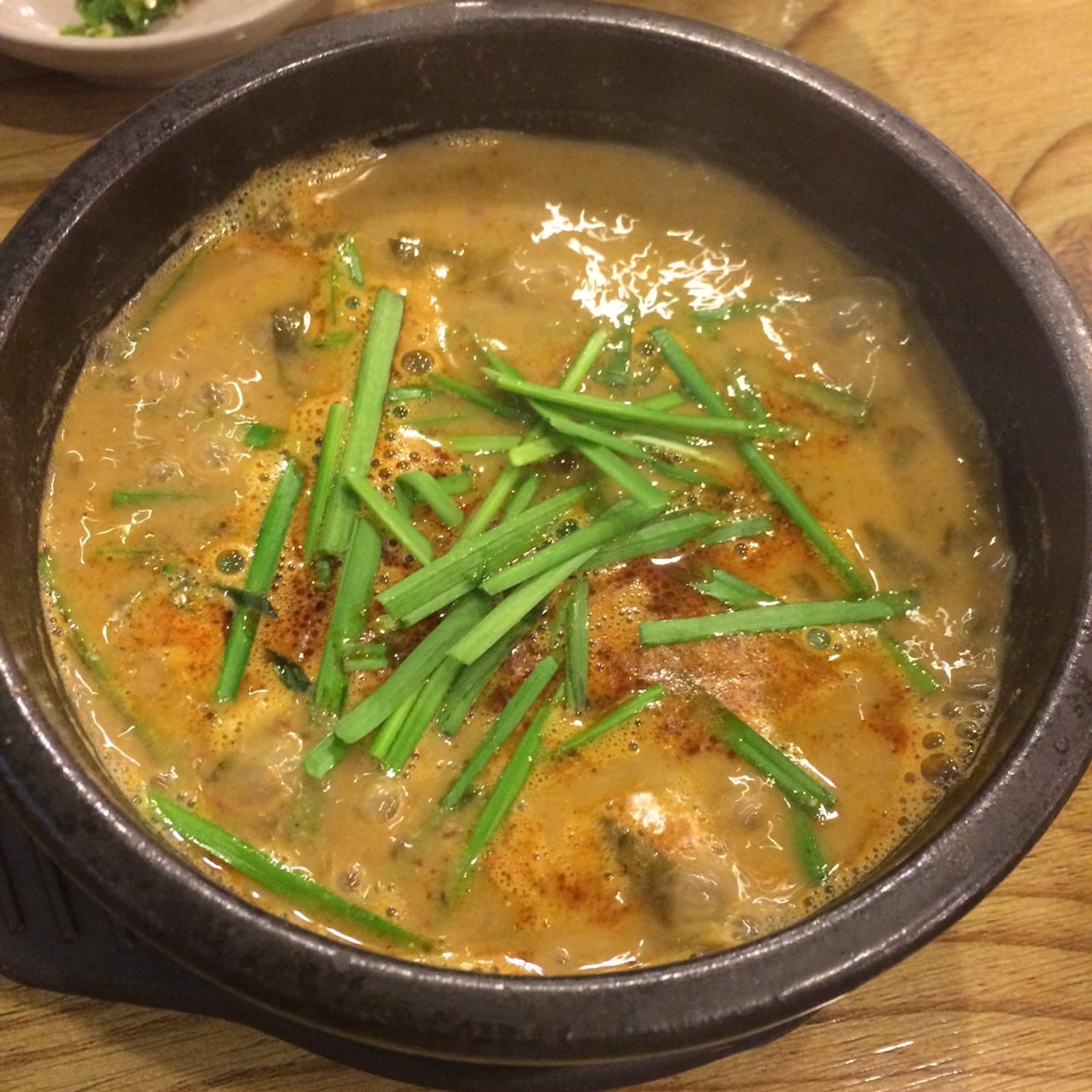
Chueotang made with ground loach · Photo: chomjong / CC BY 2.0 (Wikimedia Commons)
 KoreaNorth Jeolla
Namwon Chueotang: Loach Soup Thick With Dried Greens and Perilla, Next to Gwanghallu
In Namwon, the setting of the Tale of Chunhyang, loach soup restaurants line the streets around Gwanghallu Pavilion. Here is what defines Namwon-style chueotang, made with finely ground loach, dried radish greens and perilla, the history of loach soup in old texts, and how to season it with chopi pepper.
What Chueotang Is
Chueotang (鰍魚湯) is a hearty, spicy soup made with loach. The loach is simmered until soft and strained, and the broth is cooked with vegetables such as napa cabbage leaves, mung bean sprouts, bracken and green onion, seasoned with doenjang and gochujang. Loach live in muddy places like rice paddies and marshes, and the soup is often described as a dish farmers made from paddy fish after the harvest to restore their strength. Today chueotang comes in two broad styles: the Seoul style, with whole loach in the soup, and the Jeolla and Gyeongsang styles, in which the fish are finely ground. If seeing whole fish in your bowl puts you off, the ground style is much easier to eat. Namwon in North Jeolla is the place that made this ground-loach chueotang famous nationwide.
Loach and Loach Soup in Old Texts
Records of eating loach go back a long way. Gaoli tujing, written by Xu Jing, an envoy from Northern Song China who visited Goryeo in 1123, notes that loach, abalone, clams and shrimp were eaten by rich and poor alike. That, however, only shows that loach was eaten, not that a dish called chueotang existed. In the late Joseon period, Yi Gyu-gyeong's Ojuyeonmun jangjeon sango records a loach and tofu soup and how to boil loach. The oldest text with a recipe for soup with whole loach is the 1924 Joseon mussang sinsik yori jebeop, while Jo Ja-ho's 1939 Joseon yoribeop describes deboning the fish and simmering it down. Devised to remove the fish's shape and make it less off-putting, this method has become the most popular way to cook the soup today. And after loach farming techniques spread to farms from the mid-1970s, chueotang made with farmed loach became the norm.
Namwon Style: Dried Greens and Perilla
Namwon chueotang is said to owe its fame to plentiful loach in the Yocheon Stream and other Seomjin River tributaries flowing down from Jirisan, together with ample taro stems and dried radish greens from highland areas such as Unbong. One explanation holds that the name Namwon chueotang began with farmers cooking this loach with dried greens. The hallmark of Namwon-style chueotang is a thick broth made with generous amounts of dried radish greens (siraegi) and ground perilla seeds. The finely ground loach dissolves into the soup, giving it a rich, savory body, and the tender greens add a pleasant bite. Doenjang and perilla take away the fishiness, so even people who are not fond of fish often find it surprisingly easy to eat. Some even say the ground chueotang you see all over Korea is basically Namwon style.
The Loach Soup Street by Gwanghallu
To eat Namwon chueotang, head to the area around Gwanghallu Garden. So many loach soup restaurants cluster around the pavilion that Namwon City developed the area as a dedicated loach soup street. According to a 2011 report, the city also designated restaurants using at least 60 percent Namwon-raised loach as pilot certified Namwon chueotang restaurants. Many places have been around for decades, and one is described as having served loach soup on the same spot since 1959. Namwon has also worked to secure its key ingredient, for example by succeeding in farming native mud loach and passing the technique on to local farms, and in 2024 it was reported that packaged Namwon chueotang would be exported to the United States, Canada and Australia. Gwanghallu Garden is where Yi Mong-ryong and Seong Chun-hyang first meet in the Tale of Chunhyang, so a stroll through the garden followed by a bowl of chueotang is the classic Namwon itinerary.
How to Eat It and Ordering Tips
When the soup arrives, add chopi pepper powder (Korean prickly ash), ground perilla seeds, minced garlic, chopped garlic chives or chili from the table to taste. Chopi has a distinctive aroma that makes your tongue tingle slightly; it cuts the fishiness and sharpens the broth, but first-timers should start with a pinch and work up. Rice usually comes on the side, so taste the broth first and then add your rice. If you are in a group, see whether there are sides such as loach suhoe (blanched loach) to go with your soup. Some restaurants in Namwon have long served suhoe made from loach caught in streams on the slopes of Jirisan. If you want whole-loach soup, check whether the menu offers tong-chueotang. Lunchtime gets busy with visitors to Gwanghallu Garden, so go a little early, and many shops sell takeout packs if you want to bring some home.