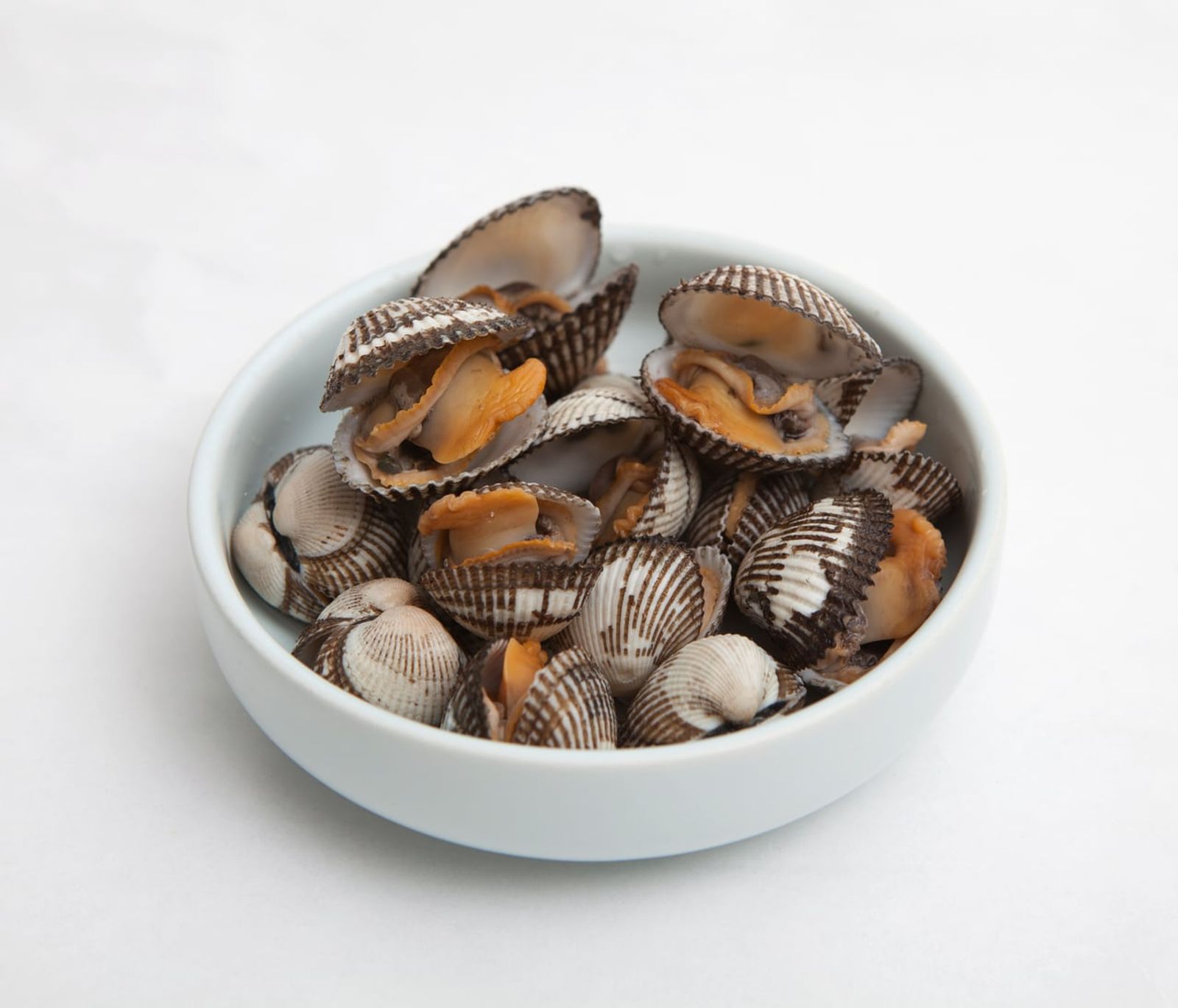
Blanched cockles with shells opened · Photo: 국립국어원 / CC BY-SA 2.0 kr (Wikimedia Commons)
 KoreaSouth Jeolla
Beolgyo Cockles: Mudflat Sleds, Chamkkomak vs Saekkomak, and How to Eat Them
When the cold wind arrives, cockles from Beolgyo in Boseong, South Jeolla, come into season. Here is what to know before you go: the World Heritage mudflats, sled-based harvesting, the difference between scarce chamkkomak and common saekkomak, how to eat them, and the cockle festival.
Why Beolgyo Means Cockles
Kkomak are small cockles that live in tidal mud, with tightly packed fan-like ridges on the shell and red blood in the flesh. Yeoja Bay, off Beolgyo in Boseong County, South Jeolla, is lined with wide mudflats where they grow well, so the town has long been known as cockle country. In 2021 the Boseong-Suncheon mudflats, which include this area, were inscribed as a UNESCO World Natural Heritage site together with the Gochang, Shinan and Seocheon flats under the name "Getbol, Korean Tidal Flats." "Beolgyo kkomak" is also registered as Korea's first geographical indication for a seafood product. Beolgyo is the setting of Jo Jung-rae's epic novel Taebaek Mountains, where cockles appear, and that helped make them famous too.
Ppeolbae: The Sled That Glides Over Mud
The Beolgyo mudflats are so deep and soft that your leg can sink to the knee. So locals gathered cockles using the ppeolbae, a wooden board sled. You rest one knee on the board and push off the mud with the other foot, gliding forward. On flats this deep, it was practically the only way to move around. This "Boseong ppeolbae fishery" was designated a National Important Fisheries Heritage in 2015, in the first round alongside Jeju's haenyeo divers and Namhae's bamboo weir fishing, as No. 2 on the list. The sled is also a symbol of the hard work of mothers who raised their children by digging cockles. Today travelers can try it themselves in mudflat programs and in sled races at the festival.
Chamkkomak vs Saekkomak
When a restaurant says "kkomak," think of two kinds: chamkkomak and saekkomak. Chamkkomak are dug by hand from a ppeolbae sled and are considered the best for their chewy texture and deep sweetness. Saekkomak are hauled in by boat with nets, so they are cheaper and sold all over the country. In 2025 close to 4,000 tons of saekkomak were produced around Yeoja Bay, including Beolgyo, Goheung and Yeosu. The problem is that chamkkomak have declined sharply. According to 2026 reports, the Beolgyo chamkkomak harvest fell from 8,500 tons in 2010 to about 26 tons recently, and Boseong County is releasing seed cockles and managing habitats to bring them back. That makes chamkkomak rare and expensive. Check which kind the menu lists, and if it is unclear, ask before you order.
Boiled or Seasoned?
There are two main ways to eat cockles. One is to blanch them briefly and serve them in the shell: push your thumbnail into the hinge at the back, twist it open and eat the meat with the salty juice inside. Cook them too long and the meat toughens and the juice runs out, so the trick is said to be pulling them out just as the shells are about to open. The other is kkomak muchim, where the cockles are taken out as the shells start to part, then shucked or left on the half shell and topped with a sauce of soy sauce, chili flakes, scallion and garlic. Cockle restaurants in Beolgyo often serve a kkomak jeongsik, a set meal that puts boiled cockles, seasoned cockles, pancakes and other cockle dishes on one table. The best season is generally known to be from November to March.
The Beolgyo Cockle Festival and Travel Tips
In late autumn, when cockle season begins, the Beolgyo Cockle Festival is held along Beolgyocheon stream. The 21st festival in 2025 ran for three days from November 21 to 23, with cockle food booths, ppeolbae sled experiences, performances and events such as making cockle rice balls. The 2026 dates have not been confirmed yet, so check Boseong County's announcements before you go. Cockle restaurants cluster on the cockle street in town, not far from Beolgyo Station, so it is easy to visit by train. Pairing a meal with the literary museum dedicated to the novel Taebaek Mountains and the old streets is a popular plan. Many travelers also combine it with Suncheon Bay Wetland, which faces the same Yeoja Bay, for a day trip.