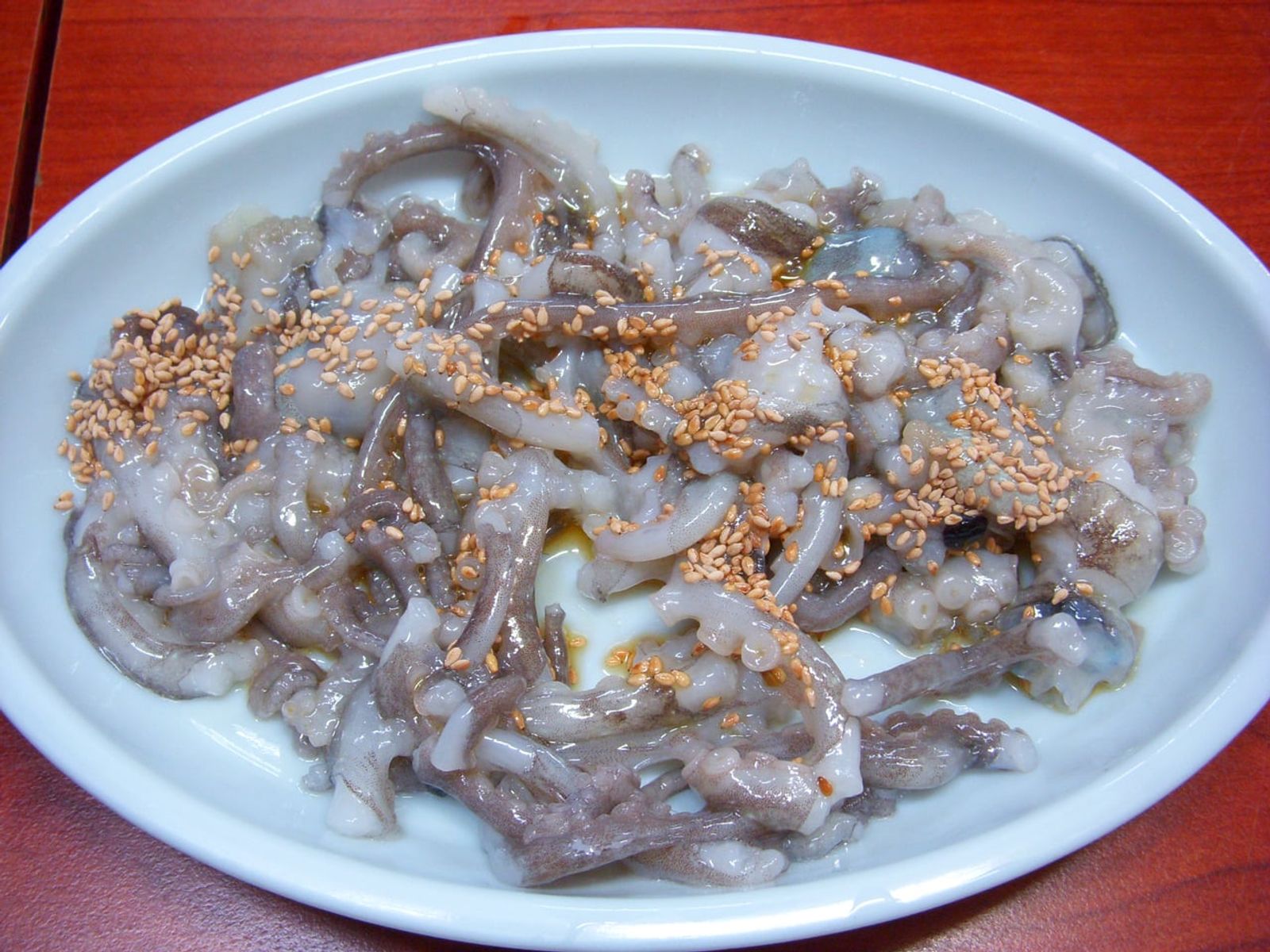
Sannakji dressed with sesame oil and seeds · Photo: LWY (Flickr) / CC BY 2.0 (Wikimedia Commons)
 KoreaSouth Jeolla
Mokpo's Sebal Nakji: A Guide to Live Octopus, Tangtangi, Yeonpotang and Galnaktang
"Sebal" does not mean three legs. Here is what sebal nakji, first on the list of Mokpo's Nine Flavors, really is, when it is in season, how to eat live octopus safely, and the southwestern octopus dishes worth trying, from tangtangi to galnaktang.
Does Sebal Nakji Have Three Legs?
Many people assume "sebal" means three, but the "se" here is the character 細, meaning thin. Sebal nakji is the name for young long-arm octopus with thin, long arms, and it has eight arms like any other. It is not a separate species, just an octopus that has not finished growing. Octopus in the southwest mostly hatch in June and July, and fishermen start catching the young ones from around late October, when the cold wind comes. So sebal nakji is considered best from autumn into winter. Mokpo promotes nine signature dishes as the "Nine Flavors of Mokpo," and sebal nakji heads the list, together with hongeo samhap, raw croaker (mineo), seasoned blue crab, braised hairtail, raw pomfret, seasoned shad, monkfish stew and rockfish soup.
Mudflat Octopus: Ppeol Nakji
The wide mudflats of the southwest coast are full of octopus that dig burrows in the mud. They live close enough to shore to be caught by hand at low tide, so they have long been a prized source of nourishment for coastal people. In the southwest, this "ppeol nakji" dug from mud burrows is rated the best, said to grow nuttier and deeper in flavor the more you chew. Octopus from places with large flats, such as Muan, Hampyeong and Shinan, is especially well known. There is an old saying that "even dogs won't eat octopus in the fifth and sixth lunar months." Octopus in the June and July spawning season lose strength while guarding their eggs, and the saying is also read as a bit of wisdom to avoid catching them then. In fact, according to a 2023 Ministry of Oceans and Fisheries announcement, South Jeolla bans octopus fishing from June 21 to July 20, so domestic octopus is hard to find around that time.
From Live Octopus to Yeonpotang
In the southwest, people may wind a whole fresh sebal nakji around chopsticks and eat it in one bite, or eat it as sannakji, chopped and dressed with sesame oil and sesame seeds. Tangtangi is octopus minced by tapping it rapidly with a knife, then mixed with egg yolk and sesame oil, and many places serve it to wrap in laver. In Muan there is gijeol nakji, "fainted octopus," washed many times in clean water, torn by hand into strips and dipped in vinegared gochujang. The classic cooked dish is yeonpotang, a clear soup of octopus, garlic and scallion in kelp broth. Add beef short ribs and it becomes galnaktang, and the octopus food street in Dokcheon, Yeongam, is especially known for it. Spicy stir-fried nakji bokkeum or nakji bibimbap are easy choices if you are new to octopus.
Eating Live Octopus Safely
Even after it is cut, sannakji keeps twitching for a while because its nerves still react. If the suckers stick to the inside of your mouth or throat, it can lead to choking, and choking accidents have actually been reported in Korea. Swallowing a whole octopus wound on chopsticks is hard even for locals, so travelers are safer choosing finely chopped sannakji or tangtangi. Coat the pieces well in sesame oil so the suckers stick less, and always chew thoroughly before swallowing. Be especially careful after a lot of drinking. If you are with children or older people, cooked dishes such as yeonpotang or nakji bokkeum are a better choice. During the closed season or when prices spike, some restaurants substitute imported octopus, so check the origin label if you want domestic.
Where and When to Eat It
The easiest place is Mokpo. Plenty of restaurants serve octopus around Mokpo Station, the harbor and the newer Hadang district, so you can try it the day you arrive by train or ferry. Muan, introduced as the home of sebal nakji, is close to Mokpo and easy to combine, and Dokcheon in Yeongam has an octopus food street that the Ministry of Culture, Sports and Tourism designated as a notable food street in 2015, reportedly with around 15 octopus restaurants. The best time is from late October, when young octopus start coming in, through winter. Some people order a plate of live octopus, eat some raw and ask the kitchen to make the rest into yeonpotang. Prices swing with the market, so for items marked "market price," ask before you order.