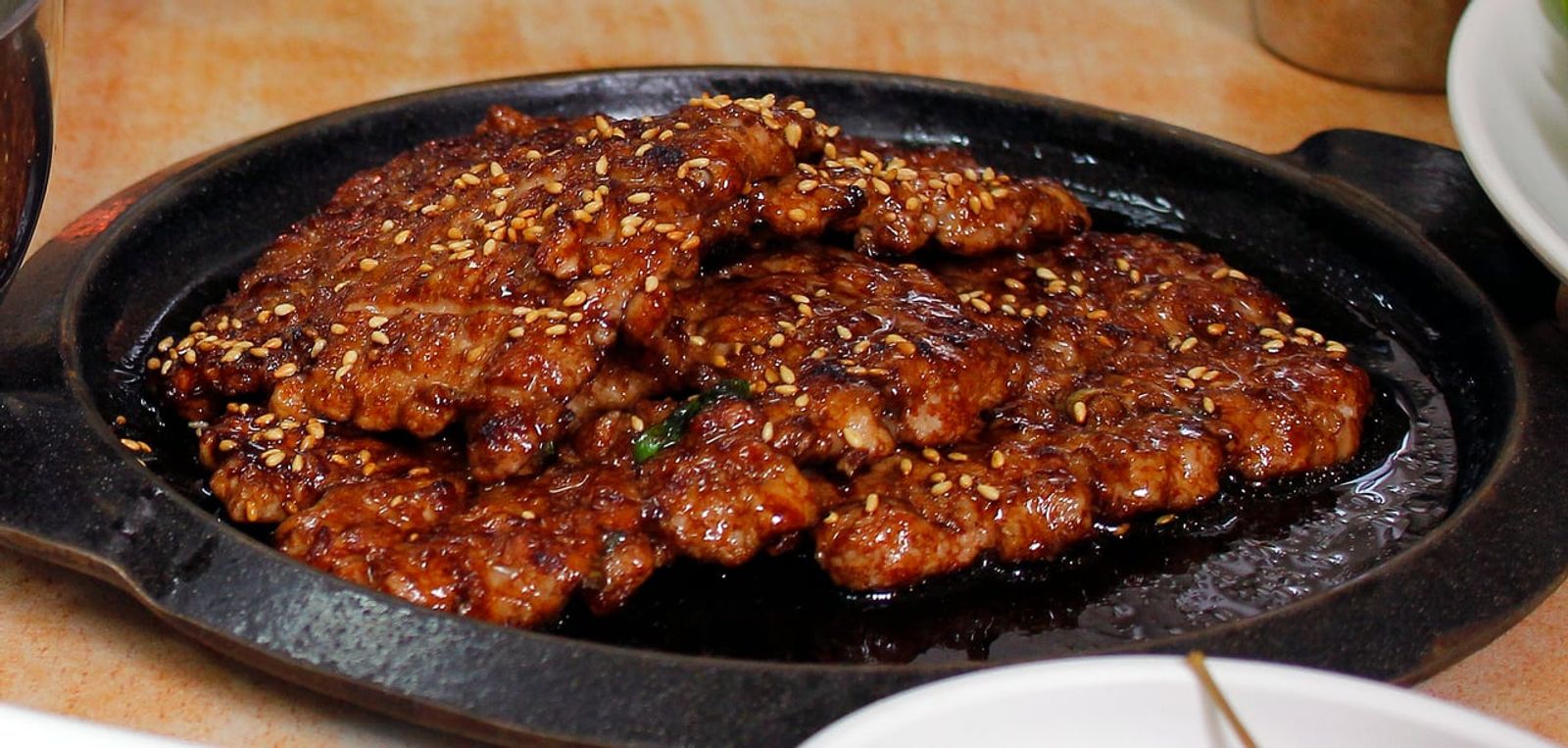
Charcoal-grilled Songjeong tteokgalbi · Photo: Minseong Kim / CC BY-SA 4.0 (Wikimedia Commons)
 KoreaGwangju
Songjeong Tteokgalbi: Why Gwangju's Grilled Rib Patties Mix Beef and Pork
Right outside KTX Gwangju Songjeong Station is a street lined with tteokgalbi restaurants. Here is how Songjeong tteokgalbi is said to have started in a 1950s market eatery, the differing accounts of its beef-and-pork blend, and the bone broth served alongside.
What Is Tteokgalbi?
Tteokgalbi is made by finely mincing rib meat, seasoning it, shaping it into flat patties and grilling it. The kneading and shaping is similar to making rice cakes (tteok), and the finished texture is soft like tteok, which is how it got its name. It is easy for older people with weak teeth and for children to eat, so it has long been loved. You often hear that it was created at the royal court because the king could not be seen holding a rib in his hand, but that story only spread from the late 1990s and is not confirmed history. In Jeolla, Damyang tteokgalbi and Gwangju's Songjeong tteokgalbi are especially famous. Damyang style presses the minced meat back onto the rib bone before grilling, while Songjeong style is shaped into boneless square or round patties.
It Began at a 1950s Market Eatery
Songjeong tteokgalbi is traced back to the Songjeong five-day market in what is now Songjeong-dong, Gwangsan-gu, Gwangju. Newspaper articles and other sources tell how, in the 1950s, a woman named Choi Cheo-ja (written as Choi Jeo-ja in some sources), who ran an eatery at the market, minced and grilled meat for an elderly in-law with weak teeth, and that was the start. She is said to have set tables and chairs in the market and served charcoal-grilled tteokgalbi with bibimbap. Because the market drew crowds on every market day, word of the tteokgalbi spread from that corner of the market, shops opened one after another, and today's tteokgalbi street took shape. Gwangju included Songjeong tteokgalbi when it named the "Five Flavors of Gwangju" in 2003, and it is also among the "Seven Flavors of Gwangju" chosen around 2019.
Beef and Pork: Accounts of the Blend Differ
The defining feature of Songjeong tteokgalbi is that it mixes pork into the beef. The ratio and when it started, however, differ by source. Local cultural archives on Gwangju and Wikipedia describe a half-and-half mix, explaining that beef alone is too dry, so pork is added for richness. A 2020 newspaper article, on the other hand, says it was originally made from beef alone and grilled over briquettes, and that around the IMF financial crisis of the late 1990s, restaurants began mixing in pork rather than raise prices, with some places now using roughly 3 parts beef to 7 parts pork. It is most accurate to say that the blend and seasoning vary a little from shop to shop. Either way, everyone agrees that because it has no rib bone attached, it is easier on the wallet than Damyang-style tteokgalbi.
The Bone Broth First, Then the Patties
Sit down at a Songjeong tteokgalbi restaurant and a bowl of clear soup often arrives before the meat. Locals call it ppyeotguk, a pork-bone broth that tastes clean and light like Korean beef-and-radish soup, perfect for warming up while you wait. Some people come specifically for this broth. For the patties, the minced meat is mixed with pear, green plum, onion and medicinal herbs, kneaded for a long time and rested, then grilled over charcoal while being brushed with sauce. The outside turns glossy, sweet and salty while the inside stays juicy. It comes with Gwangju's famously generous side dishes, so eat it with rice, alternating with the banchan.
Where to Eat: The Street by Songjeong Station
Songjeong tteokgalbi restaurants cluster in Songjeong-dong, Gwangsan-gu, right in front of Gwangju Songjeong Station, where KTX and SRT trains stop. It is within walking distance, so it makes an easy meal before or after your train. Nearby are the 1913 Songjeong Station Market and the Songjeong five-day market that still opens on market days, so you can browse after eating. There are tteokgalbi restaurants downtown and elsewhere in Gwangju, but this street is the surest place to taste the real "Songjeong tteokgalbi." Some places have lines at lunch and dinner, so if your train time is tight, arrive early or get takeout. Besides Songjeong tteokgalbi, the Seven Flavors of Gwangju include hanjeongsik (full-course Korean meals), Mudeungsan barley rice, duck soup, jumeokbap rice balls, lettuce-wrapped twigim and yukjeon (beef jeon).