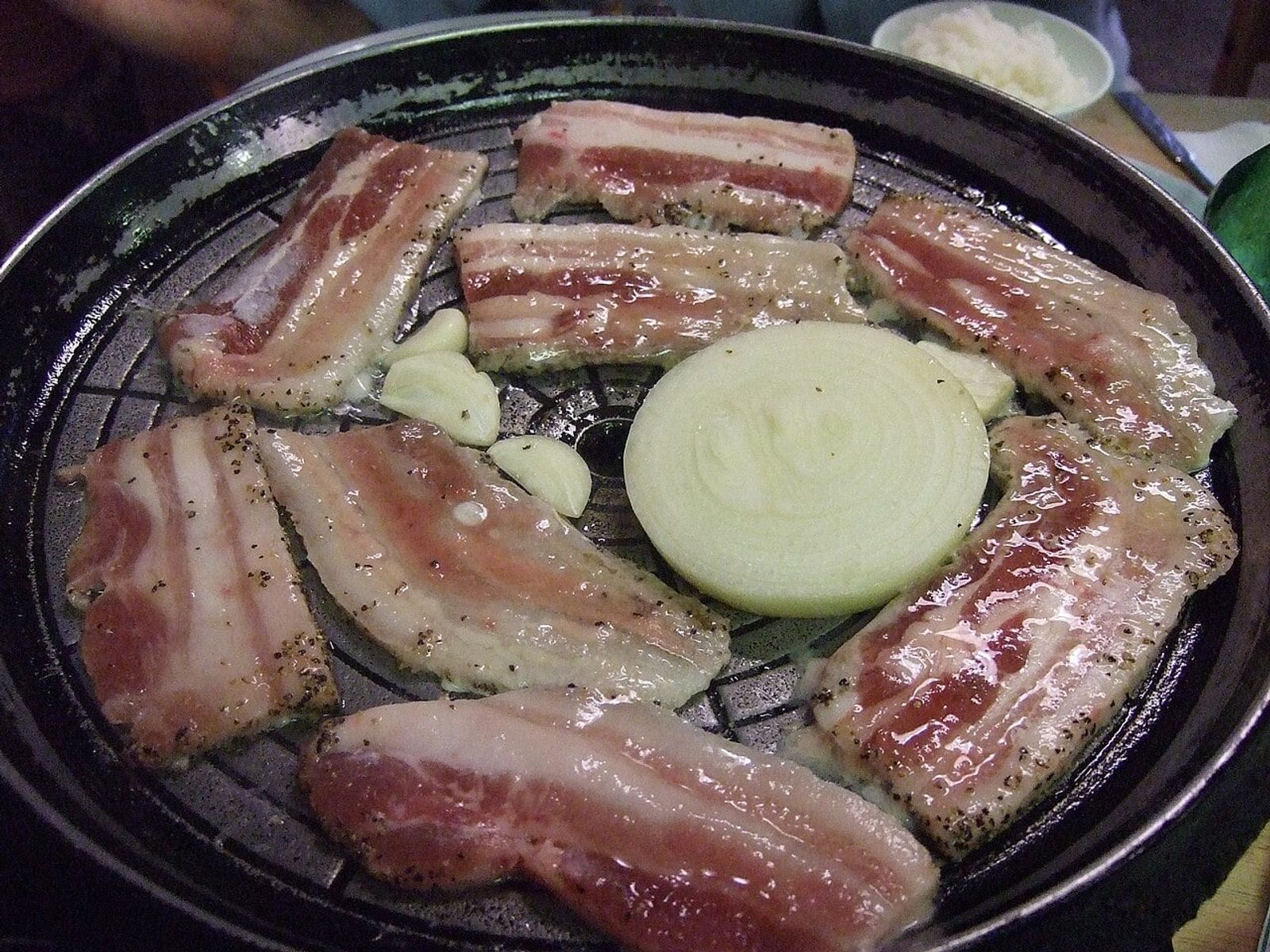
Grilled samgyeopsal
Samgyeopsal: Why Pork Belly Became Korea's National Dinner and How to Grill It Right
200 grams per person, a hot grill, lettuce and a bottle of soju. When did pork belly become the symbol of a Korean night out? From its origins to the order of wrapping a ssam and who does the grilling.
What Samgyeopsal Is
Samgyeopsal is pork belly — literally 'three-layer meat', named for its alternating layers of lean meat and fat. It is the same cut used for bacon in the West, but in Korea it is neither smoked nor cured: it is sliced thick, grilled unseasoned at the table, and dipped in salt with sesame oil or in ssamjang paste. It is by far the most consumed pork cut in Korea. Demand is so high that domestic supply cannot keep up, and belly alone is imported from Germany, Spain, Chile and elsewhere. Company dinners, family meals out, camping trips, university retreats — whenever Koreans gather, someone is grilling samgyeopsal.
When Koreans Started Grilling Pork Belly
Koreans have eaten pork for centuries, but grilled belly became a national dish only in the 1970s and 80s. The most widely told explanation is that Korea exported pork to Japan in the 1970s, Japan wanted the tenderloin and loin, and the leftover belly flooded the domestic market cheaply, becoming the people's meat. In the 1980s portable gas burners and grill plates spread, so meat could be grilled anywhere, and the soju-and-samgyeopsal company dinner became a fixture. The 1990s brought thin-sliced frozen 'daepae samgyeopsal', and from the 2000s thick-cut fresh belly, dry-aged belly and Jeju black pork each had their moment. Since 2003 the livestock industry has marked March 3 as 'Samgyeopsal Day', when supermarkets and restaurants run discounts.
Ordering, Prices, and Who Does the Grilling
At a samgyeopsal restaurant you order by the 'portion' (inbun), usually 150 to 200 grams. In Seoul in 2026 one portion runs about 15,000 to 20,000 KRW. Most places require a minimum of two portions; the usual pattern is to order the meat first and add one portion at a time. Rice, soybean-paste stew, cold noodles and fried rice are separate menu items. Customers grill the meat themselves. In Korea the youngest person at the table, or whoever is best at it, typically takes the tongs and scissors and grills for everyone. If you feel unsure, ask the staff — most will happily grill for you. The technique: wait until the plate is fully hot, lay the meat down, flip once one side is golden, then cut into bite-size pieces with scissors. Do not flip too often, and if fat pools, tilt the plate or blot it with a paper towel. Kimchi, garlic and mushrooms grilled at the edge of the plate taste far better.
How to Wrap a Ssam: Order and Combinations
Samgyeopsal is complete only as a ssam (wrap). Lay a lettuce leaf on your palm (add a perilla leaf on top if you like), place a piece of grilled meat lightly dipped in sesame-oil salt, add a dab of ssamjang, then garlic, chili, seasoned green onion or grilled kimchi as you wish, and eat it in one bite. Koreans do not eat a ssam in two bites. It helps to know the standard sides. Ssamjang is a salty blend of soybean paste and gochujang; gireumjang is sesame oil with salt and pepper; pajeori is shredded green onion in a tangy dressing that cuts the fat. If pickled wild garlic leaves (myeongi-namul) are served, wrap the meat in them. The classic finish is fried rice made on the same grill with kimchi and rice, or a bowl of cold noodles or soybean-paste stew.
Samgyeopsal's Companions: Other Cuts and Soju
The menu lists other cuts beside belly. Moksal (pork neck/shoulder) is leaner with more chew and is often ordered half-and-half with belly. Hangjeongsal, a special cut between the neck and shoulder, is springy and rich and costs a bit more. Gabrisal, a thin layer above the loin, is tender, and ogyeopsal is belly with the skin still on, giving a chewy texture. On Jeju black pork ogyeopsal, the dark follicle marks on the skin are said to prove it is the real thing. Soju goes with samgyeopsal. A bottle of 16 to 17 percent diluted soju costs 4,000 to 6,000 KRW and is drunk from small glasses. Etiquette with elders: receive your glass with both hands and turn slightly away as you drink, and pour for one another rather than filling your own glass. If you do not drink, ordering a cider or zero-sugar cola is perfectly normal.