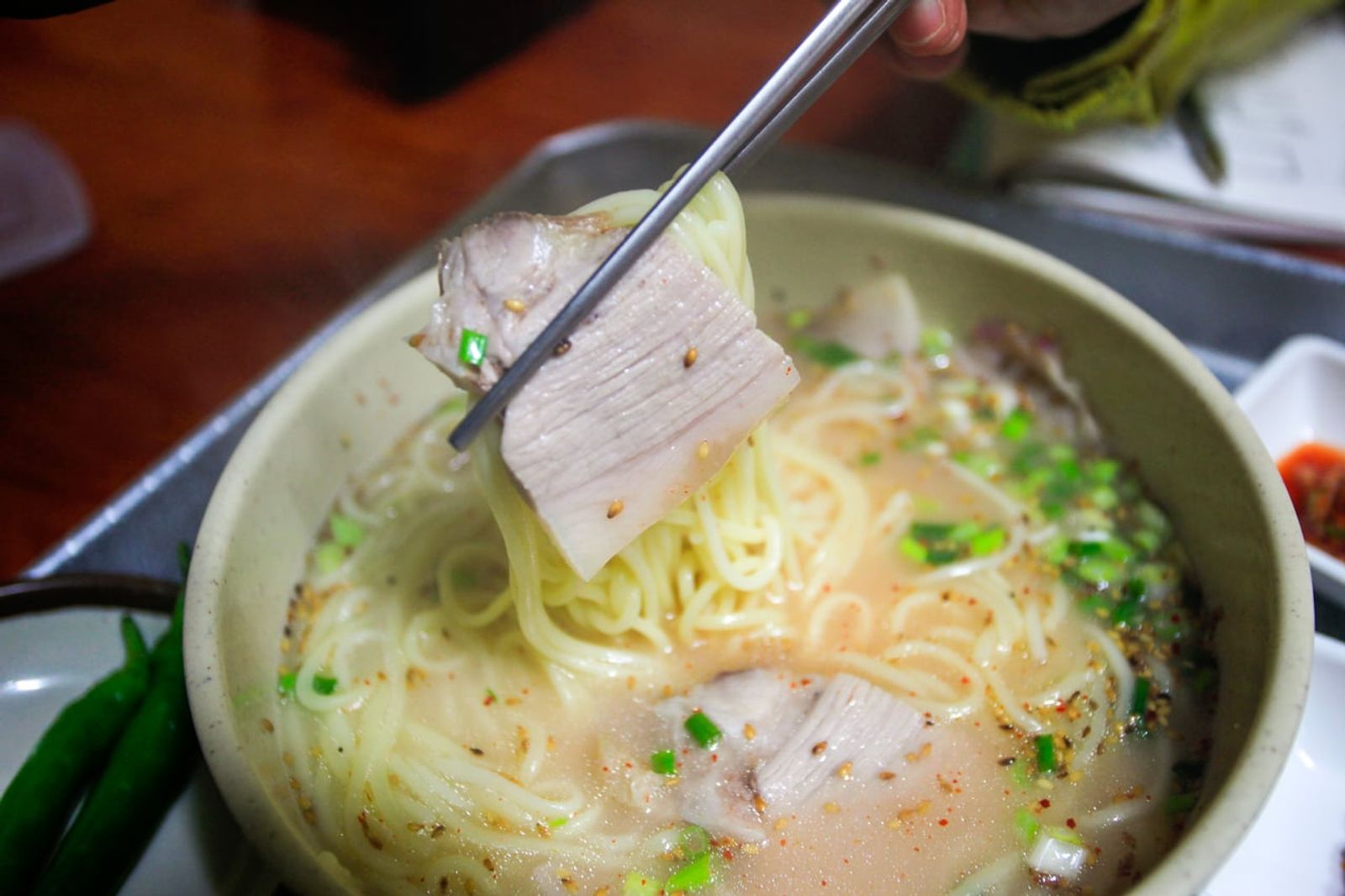
Gogi guksu served in Jeju · Photo: 채지형 / CC BY 4.0 (Wikimedia Commons)
 KoreaJeju
The Roots of Jeju Gogi Guksu: A Noodle Bowl Born From the Feast-Day Pig
Gogi guksu, noodles in milky pork-bone broth topped with thick slices of boiled pork, is Jeju's signature bowl. Here is how the island's wheat-based food culture, its custom of slaughtering a pig for feasts and the birth of Noodle Culture Street shaped it, plus how to enjoy it.
What Is Gogi Guksu?
Gogi guksu is a Jeju dish of noodles served in broth made by long-simmering pork meat and bones, topped generously with slices of boiled pork. The broth is milky and rich but less greasy than you might expect, and Jeju people describe this rich yet deep flavor with the dialect word "bejigeunhada." Because it uses long-simmered pork bones, it is often compared to dwaeji gukbap (pork and rice soup) from Busan and South Gyeongsang, or to Hakata tonkotsu ramen in Japan. Commonly cited differences are that it holds noodles rather than rice, and that it is seasoned more simply and tastes cleaner than tonkotsu ramen. The pork on top is thick and plentiful, so one bowl leaves you feeling you have truly eaten meat, and that is its charm.
An Island Short on Rice, Where Noodles Took Its Place
The soil of Jeju has always made rice paddy farming difficult. For a long time islanders ate grains such as barley, wheat, buckwheat and millet instead of rice, and dishes based on noodles and barley developed as a result. Noodles were a precious staple that stood in for rice, and it is said that in some rural areas people still hand out noodles as a thank-you gift at weddings and funerals. Korea has a long custom of serving janchi guksu, "feast noodles," to guests on happy occasions. While mainland feast noodles use anchovy broth, in Jeju the noodles were served in broth from the pig slaughtered for the feast. That is why many see gogi guksu as a descendant of Jeju's own feast noodles.
Using the Whole Pig: Jeju's Feast Culture
In Jeju, pork was an essential ingredient for big occasions such as weddings and funerals. When one came up, a pig was slaughtered: the lean meat went to the guests' table as boiled pork, the blood and innards became sundae (sue in Jeju dialect), and the remaining bones and parts were simmered into a rich broth for noodles or soup. This culture of sharing a whole pig, leaving nothing behind, is said to have bound together neighbors, relatives and villages. Jeju's native black pig was designated a Natural Monument in 2015 and is conserved by the Jeju Livestock Institute. Until the 1970s many households raised pigs in a "dottongsi," a combined toilet and pigsty, which disappeared with tourism development. Dombe gogi, boiled pork sliced and served on the cutting board and dipped in salted anchovy sauce, is another Jeju way of eating that grew out of this pork culture.
How Noodle Culture Street Came to Be
Today the best-known place for gogi guksu is Noodle Culture Street in Ildo 2-dong, Jeju City, near Samseonghyeol. According to a 2019 report, a shabby gogi guksu shop opened here in the early 1990s; taxi drivers came for lunch and late-night drinkers came to cure their hangovers, and noodle shops slowly multiplied. As tourists began to pour in, the owners joined forces in April 2009 to create the street, with Jeju City supporting signs and promotion. As of that report, a little over 20 gogi guksu shops operated on the street. Gogi guksu's nationwide fame is said to owe much to a few long-running noodle shops that made a name for themselves. Jeju is also often described as a place that eats a lot of noodles, and neighborhood noodle shops are common all over the island.
How to Eat It and Ordering Tips
Jeju gogi guksu stands out for its thicker noodles compared with feast noodles elsewhere. Some shops once used noodles as thick as udon, but today most use medium-thick noodles or thicker. Thick noodles soak up the rich pork broth well, so taste a spoonful of broth first, then pick up noodles and pork together. Some shops use only pork-bone broth, but many blend in anchovy or chicken stock for a cleaner savory taste, so the broth varies a little. Some people add the chili seasoning or kimchi on the table for a spicier kick. If you want more meat, ordering a plate of dombe gogi to share is a very Jeju thing to do.