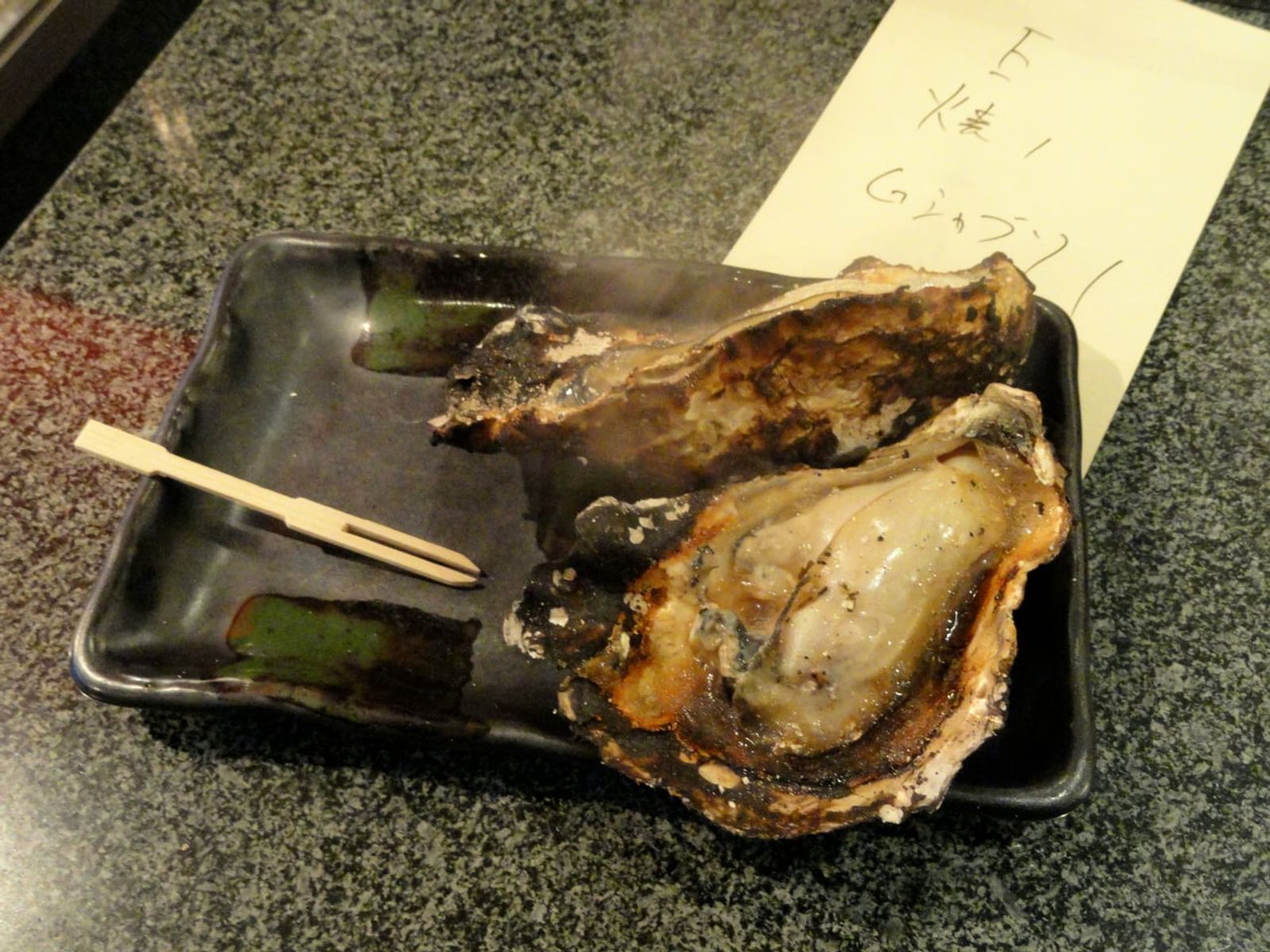
Grilled oysters on Miyajima · Photo: Daderot / Public domain (Wikimedia Commons)
 JapanHiroshima
Hiroshima Oysters: Why More Than Half of Japan’s Oysters Come From Hiroshima Bay
Hiroshima produces about 60% of Japan’s oysters, making it the country’s biggest oyster region. Here is why Hiroshima Bay suits oysters so well, the 400-plus-year history of farming and the oyster boats that sailed to Osaka, how to eat them grilled, fried or in dotenabe, and news of the recent mass die-off.
About 60% of Japan’s Oysters Are From Hiroshima
Hiroshima Prefecture is Japan’s largest oyster producer. Most Hiroshima oysters on the market are farmed Pacific oysters (magaki), making up 50 to 60 percent of national production, and about 60 percent based on 2024 output. Within the prefecture, Kure City is the top producer among municipalities. Hiroshima oysters are often described as having relatively small shells but large, rich-tasting meat. The oyster is designated the prefecture’s official fish, and "Hiroshima kaki" is a regional collective trademark managed by the Hiroshima Prefectural Federation of Fisheries Cooperatives. With a system that can supply the market year-round, you can find oyster dishes almost everywhere, from izakaya in Hiroshima City to street stalls on Miyajima.
Why Oysters Thrive in Hiroshima Bay
Hiroshima Bay is largely enclosed by islands and capes such as Nomijima, Kurahashijima and Itsukushima (Miyajima), and many rivers, including the Ota, flow into it. The rivers steadily carry in phytoplankton, the oysters’ food, along with the nutrients plankton need to grow, and because the bay is enclosed, oyster larvae and food do not drift off to other waters. From the rainy season into summer, when oysters spawn, lots of river water flows in and forms the low-salinity layer oysters like. The water tops 20°C in summer and drops below 20°C in autumn, the growing season, which suits oysters well. Gentle waves and moderate currents also mean the oyster rafts rarely break. It is a sea of oysters made by nature and human skill together.
Over 400 Years of Farming, and the Oyster Boats of Osaka
One theory says oyster farming in Hiroshima began around the end of the Muromachi period, while another says it began in the Kan’ei era (1624–1643), so sources differ. At first the main method was planting bamboo branches in tidal flats for oysters to attach to. After the prefectural fisheries station developed wave-resistant rafts in 1953, raft-hung farming spread rapidly from the mid-1950s. The famous part of the story is the kakibune, "oyster boat." It is said to have begun in the 1660s with boats carrying oysters from Kusatsu in Hiroshima to sell in Osaka, and from the 1810s they started serving oyster dishes on board. An 1832 menu records oyster rice, oyster dotenabe, vinegared oysters and clear oyster soup. Fried oysters appeared after the Meiji era. Oyster-boat restaurants still float on rivers such as the Motoyasu in Hiroshima City.
Grilled, Fried or in Dotenabe
The easiest place for travelers to try them is Miyajima’s Omotesando shopping street, with its grilled oysters (yaki-gaki). They are cooked in the shell over charcoal, so you get the hot juices and the full scent of the sea. Fried oysters (kaki fry) are a staple at restaurants and izakaya in Hiroshima City. A Hiroshima local specialty is kaki no dotenabe. Miso is spread around the inside rim of the pot like an embankment (dote), and oysters, tofu and vegetables are simmered in it; just before eating you break down the miso wall bit by bit to season the broth to your taste. If you want them raw, look for the "for raw consumption" label on the menu. Hiroshima designates which waters may supply oysters for eating raw and requires packaging to distinguish raw-eating oysters from those for cooking.
Season and Recent News
Pacific oysters are considered in season from autumn into winter, when glycogen builds up in their bodies. The Western saying not to eat oysters in months without an R in their English name (May to August) is linked to this spawning season. In Hiroshima, too, harvesting usually starts in autumn, and winter is when you can enjoy the most oyster dishes. There is recent news worth knowing, though. In the autumn 2025 harvest season, farmed oysters in Hiroshima died off in large numbers, and the Ministry of Agriculture, Forestry and Fisheries cited high water temperatures, high salinity and lack of oxygen among the causes. Ministry interviews around March 2026 reported that in the central waters of the prefecture, 40 to 90 percent of two-year oysters and 80 to 90 percent of three-year oysters had died. Shipment conditions for the autumn 2026 season have not been confirmed, so if oysters are the goal of your trip, check local information before you go.