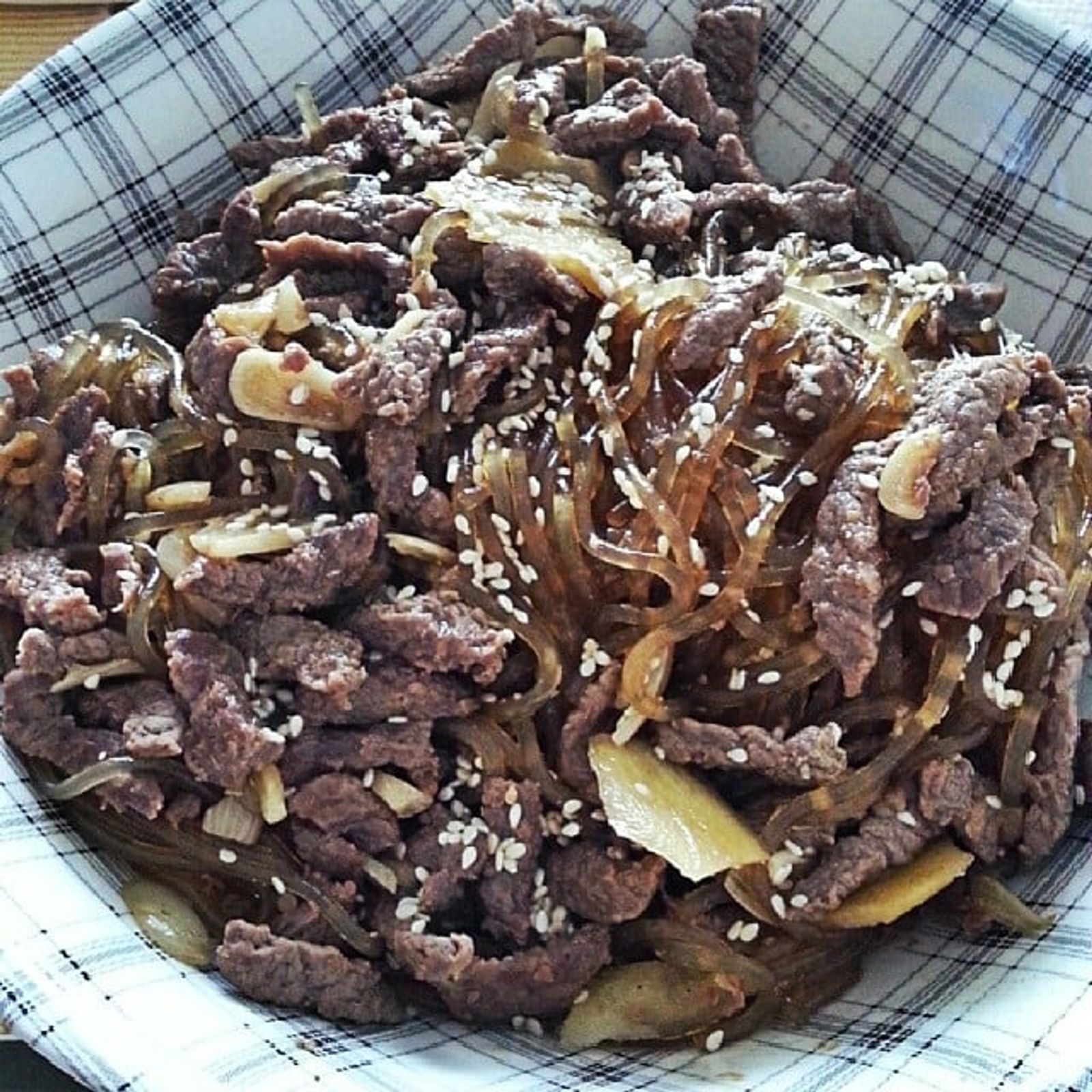
Eonyang bulgogi
The History of Bulgogi: From Goguryeo's Maekjeok to Seoul-Style Bulgogi
Bulgogi means 'fire meat', yet in Seoul it arrives as a brothy hot pot while Eonyang and Gwangyang grill it over charcoal. Trace 1,500 years of history, regional differences, and how it differs from galbi.
What Bulgogi Is: Korea's Signature Marinated Grill
Bulgogi is thinly sliced beef marinated in soy sauce, sugar (or pear juice), minced garlic, sesame oil and pepper, then grilled. The name is native Korean for 'fire' plus 'meat', a term used in the Pyongan region in the early 20th century that later spread nationwide. Its sweet-savory flavor and tender texture make it the Korean dish foreigners take to most easily. Abroad it is often lumped in as 'Korean BBQ', but in Korea bulgogi means marinated beef only. Pork in a gochujang marinade is 'jeyuk-bokkeum' or 'dwaeji-bulgogi', and marinated rib meat is 'galbi'. Remember that thin slices plus a sweet soy marinade define bulgogi, and menus become much easier to read.
Maekjeok and Seolyamyeok: 1,500 Years Ago
The distant ancestor most often cited is 'maekjeok' of the Goguryeo kingdom. The Chinese text Soushen Ji notes that maekjeok was a food of the northern peoples enjoyed by aristocrats, and 'Maek' refers to a Goguryeo tribe. It is thought to have been meat marinated in soy paste, skewered and grilled — pre-seasoning being the link to today's bulgogi. Meat eating declined under Buddhist influence in the Goryeo period, then revived under Mongol rule. In the Joseon era the name 'seolyamyeok' appears: beef grilled over charcoal on a snowy night, dipped in cold water and grilled again to lock in the juices, as recorded in texts such as Sallim Gyeongje. The royal court and noble households enjoyed 'neobiani', thin marinated slices grilled on a wire rack — the direct forerunner of bulgogi.
Seoul-Style Bulgogi: Why There Is Broth
The version visitors most often meet is Seoul-style bulgogi. Marinated beef is placed on a domed brass grill, broth is poured into the channel around the edge, and glass noodles, mushrooms, onion and scallion cook in it. Juices and marinade run down from the meat into the broth, making a sweet soup that people spoon over rice or fish the noodles out of. This style took hold at upscale Seoul restaurants in the 1950s and 60s. Beef was precious, so slicing it thin stretched the portion, and adding broth and vegetables made it easy to share. Even today, ordering a 'bulgogi set' at a first meeting between families or a meal with elders is considered a safe, respectable choice. Prices range from 15,000 to 30,000 KRW per portion (150 to 200 grams), varying widely with the grade of beef.
Eonyang and Gwangyang: Bulgogi Grilled on a Rack
Bulgogi grilled directly on a rack without broth survives in the provinces. Eonyang bulgogi from Ulsan uses finely minced or thinly sliced beef, marinated, spread flat on a wire rack and grilled crisp over charcoal. It became famous among highway construction crews in the 1960s, and Eonyang-eup still has a street of specialty restaurants. The marinade is light, so the beef's own flavor and the smoke come through. Gwangyang bulgogi from South Jeolla is seasoned only after you order: thin slices are tossed with marinade, laid on a copper rack and grilled over oak charcoal. Because it is not pre-marinated, the meat stays tender and juicy. Restaurants cluster around the market in Gwangyang-eup. Both towns often use hanwoo (Korean native beef), so prices can exceed Seoul's, but the taste is close to bulgogi's original form.
How It Is Made at Home, and Tips for Eating
The basic marinade ratio is 3 parts soy sauce, 1 part sugar, half a part minced garlic, half a part sesame oil and a pinch of pepper; grated pear or onion tenderizes the meat and rounds out the sweetness. Use beef sirloin or chuck sliced 2 to 3 millimeters thin, marinate from 30 minutes to a day, then stir-fry or grill quickly over high heat. Korean supermarkets sell meat labeled 'for bulgogi' ready to go. At restaurants, bulgogi is eaten with rice, kimchi and side dishes, and wrapping it in lettuce is also popular. The broth of Seoul-style bulgogi is meant to be spooned over rice or to have rice mixed in, so do not leave it. Leftover meat can be finished as fried rice with rice and kimchi, and the 'bulgogi burger' found at every Korean fast-food chain is a national favorite.