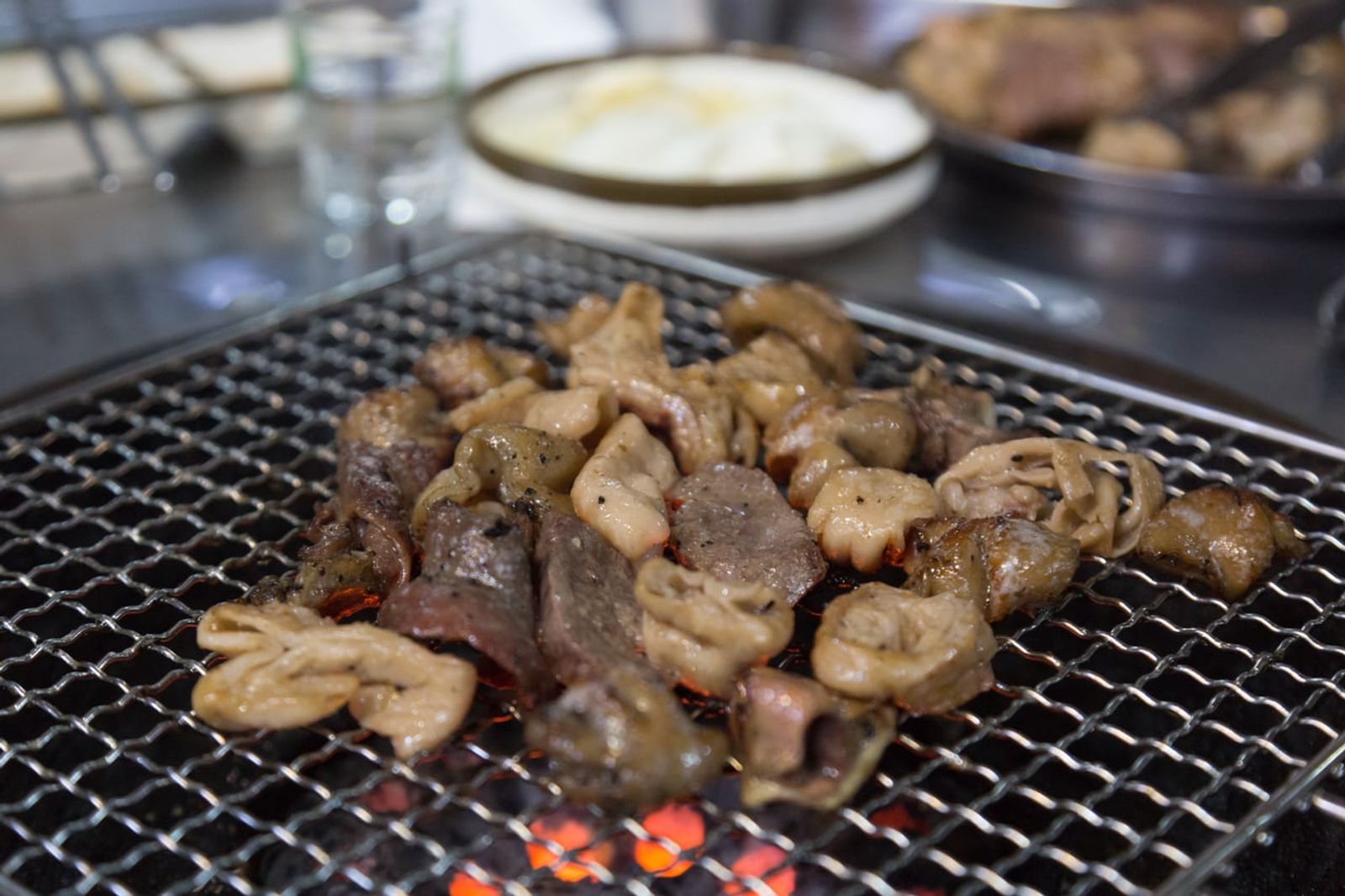
Makchang grilling on a grate · Photo: 채지형 / CC0 (Wikimedia Commons)
 KoreaDaegu
Daegu Makchang: Grilled Offal Born Over Coal Fires Near the Slaughterhouse
In Daegu, makchang is the food of the night, eaten with a glass of soju. Here is the difference between beef and pork makchang, how grilled makchang took off around the city's slaughterhouse in the 1970s, how Anjirang Gopchang Alley grew, and how to eat it Daegu-style with a soybean-paste dip.
Not Always Intestine: Beef Versus Pork Makchang
The name suggests intestine, but beef makchang is actually the abomasum, the cow's fourth stomach, also called hongchang. It is distinct from yang (the first stomach), gopchang (small intestine) and daechang (large intestine). In Daegu, though, pork offal grilled the same way is also called makchang and is just as popular, and the two differ in cut and texture despite sharing a name. Preparation makes or breaks makchang. The outer fat and any parts with off-odors are trimmed, then it is turned inside out and scrubbed with flour and coarse salt. Grilled hard over high heat, it turns crisp outside and chewy inside, with the nutty flavor of rendered fat. Many Daegu restaurants list beef makchang (so-makchang) and pork makchang (dwaeji-makchang) separately, so check the menu before you order.
Grilled Makchang and the Slaughterhouse
Daegu's offal-grilling culture reportedly spread outward from the slaughterhouse. According to a local newspaper, a slaughtering company opened in 1969 on the site of today's Duryu Swimming Pool, and when it became the municipal slaughterhouse the following year, the era of grilled makchang and gopchang began. The slaughterhouse moved to Jungni-dong in 1981 and to Geomdan-dong in Buk-gu in 2004; after the move to Jungni-dong, street stalls gathered nearby and formed a gopchang village. The same article says an elderly restaurant owner in Daemyeong-dong, Nam-gu, first served makchang in the early 1970s. Her makchang soup did not go down well, but once she grilled it on a grate over a coal briquette fire, it became, along with mungtigi (Daegu-style raw beef), the drinkers' favorite snack. It is also described as working-class food made from cheap offal that would otherwise have been thrown away.
Alleys and Franchises: How Makchang Grew
In the 1980s makchang restaurants multiplied across Daegu, and around 1987 a style of grilling raw beef makchang without boiling it first reportedly appeared. In the 1990s a makchang brand emerged and grew to around 150 franchise outlets nationwide by 2002, spreading the name "Daegu makchang" across Korea. Restaurants kept innovating after that with pre-grilled makchang, crystal grill plates and aged makchang. Anjirang Gopchang Alley in Daemyeong-dong, Nam-gu, is the street that symbolizes Daegu's makchang and gopchang culture. A market formed in the 1970s when the Anjirang stream at the foot of Apsan was covered over, the first shop opened in 1979, and today about 60 restaurants make up a designated seasoned-gopchang district. It drew laborers and students with low prices, and newer dishes such as cheese gopchang appeared in the 2010s.
Grill It Crisp, Dip It in Doenjang Sauce
The classic partner for Daegu-style makchang is a dipping sauce based on doenjang, Korean soybean paste. It is often mixed with ssamjang or gochujang and roasted soybean powder, but every restaurant has its own recipe, and some people choose their regular spot by the sauce alone. It is usually loaded with chopped scallions, green chili and garlic, which you scoop up with each piece. Makchang used to be grilled over coal briquettes, but complaints and hygiene concerns mean most places now use gas, though some use charcoal. Onions, potatoes and garlic are often grilled in the rendered fat alongside it. Grilled makchang was also named one of the "Daegu 10 Flavors," chosen by the city in 2006 after evaluating 76 local dishes, alongside ttaro-gukbap, mungtigi and napjak-mandu.
Tips for Eating Makchang in Daegu
For a first visit, Anjirang Gopchang Alley, where makchang and gopchang restaurants cluster, is the easiest place to go. It is close to Anjirang Station on Daegu Metro Line 1, and in the evening the whole alley fills with grill smoke and people. Specialist makchang restaurants around the city each have their own character, from beef makchang to aged makchang, so comparing a few is part of the fun. When ordering, first decide between beef and pork makchang, and between seasoned and salt-grilled. Makchang needs to be cooked through to be tasty and safe, so wait until the outside is golden and crisp. Many places have staff grill it for you, so leave it to them if you are unsure. It is rich, so it goes well with soju or beer; for something lighter at the end, finish with the doenjang stew or fried rice that many places offer.