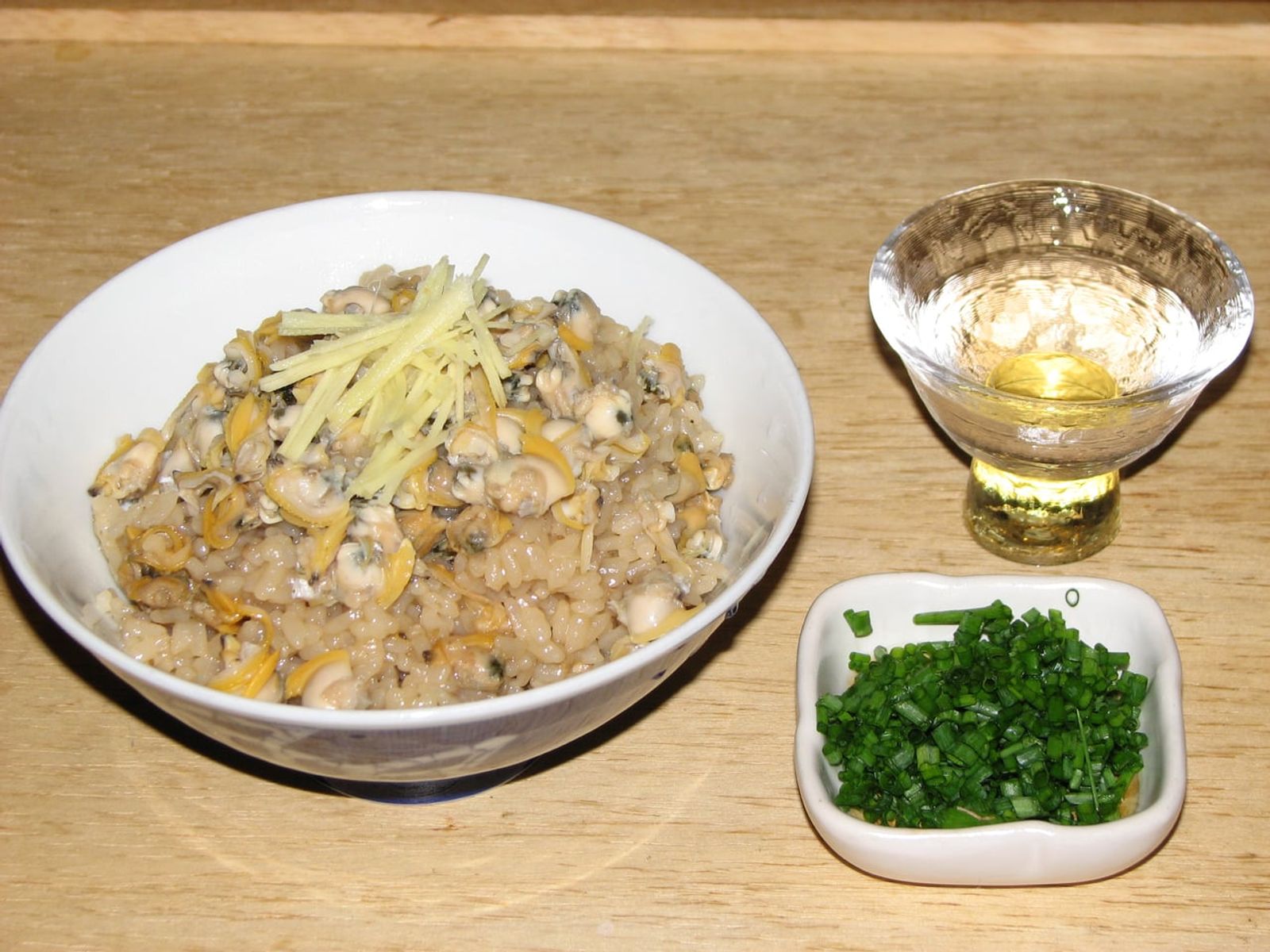
Takikomi-style Fukagawa-meshi · Photo: Almandine / CC BY-SA 3.0 (Wikimedia Commons)
 JapanTokyo
Fukagawa-meshi: The Edo Fishermen's Clam Rice, Poured Over or Cooked In
Fukagawa, east of the Sumida River, was a fishing town in Edo times, and the quick clam-and-rice meal its fishermen ate between jobs became today's Fukagawa-meshi. Here is how the clams changed, the two styles, what a Meiji-era record says and how to try it from a station kiosk.
Fukagawa, the Fishing Town Across the Sumida
Fukagawa is the old name of a district in what is now northwestern Koto City, Tokyo, on the east side of the Sumida River mouth. In Edo times it faced Edo Bay (today's Tokyo Bay) directly, fishing thrived and shellfish were plentiful. Fukagawa-meshi is said to have begun as the fishermen's makanai, a quick working meal, specifically a "bukkake-meshi" with broth poured over rice. The dish is named after Fukagawa as its representative home and is also called Fukagawa-don or asari-meshi (clam rice). Land reclamation pushed the sea far away, but the bowl remains a taste that recalls the working-class Edo neighborhood of Fukagawa.
Bakagai in Edo, Asari Clams Later
Fukagawa-meshi is usually made with asari (Manila clams) today, but it originally used a different shellfish. The first clam was bakagai, also called aoyagi (surf clam), which was caught in large quantities off Fukagawa in the Edo period. Asari reportedly took over in the Meiji and Taisho eras. Aoyagi is better known now as a sushi topping. Simmering this cheap, abundant clam with green onion in miso broth and pouring it over rice made a filling meal that busy fishermen could slurp down even standing up. The switch in clams most likely reflects which shellfish were easiest to get as the bay and the times changed.
Two Styles: Bukkake and Takikomi
Fukagawa-meshi comes in two main styles. The "bukkake" type, considered the original, simmers clams and green onion in miso broth and pours it, liquid and all, over hot rice. It is a homey dish you eat with a spoon, a bit like rice in soup. The "takikomi" type cooks the rice in the clam broth and mixes or tops it with the clam meat, like a clam pilaf. According to Japanese Wikipedia, most Fukagawa-meshi restaurants that opened from around 2000 serve the takikomi style. Some places offer a half-and-half set so you can compare both, which is a good choice on a first visit. It often comes with shredded ginger or green onion.
A Meiji-Era Record: Fast Food for Rickshaw Pullers
Records from the Meiji era confirm that Fukagawa-meshi was everyday food for working people. "Saian-koku no Tokyo" (Darkest Tokyo), an 1893 reportage on life in the city's slums, describes it as a cheap meal favored by laborers such as rickshaw pullers, an instant dish in which white rice was scooped into a bowl and broth poured over it as soon as a customer arrived. In modern terms it was fast food: quick, cheap and filling. It went from a fisherman's staff meal to a city worker's lunch, and today it is treated as a local specialty that carries the taste of Edo. It is also listed among the "100 Local Dishes of Farming, Mountain and Fishing Villages" chosen by Japan's Ministry of Agriculture, Forestry and Fisheries.
Where to Try It: Old Fukagawa and Station Bento
Restaurants serving Fukagawa-meshi can be found mainly around Monzen-nakacho and Kiyosumi-shirakawa, which correspond to the old Fukagawa area. It makes an easy lunch on a route that takes in temples and shrines such as Fukagawa Fudo-do and Tomioka Hachimangu, or the Kiyosumi Gardens. Short on time? Try an ekiben. According to Japanese Wikipedia, kiosks of the JR Central group sell a takikomi-style Fukagawa-meshi bento at Tokyo, Shinagawa and Shin-Yokohama stations, while another maker's version sold at JR East stations switched from takikomi to bukkake style in 2013. Products change often, so check at the shop. Eating Fukagawa-meshi on the shinkansen is a pleasant experience in itself.