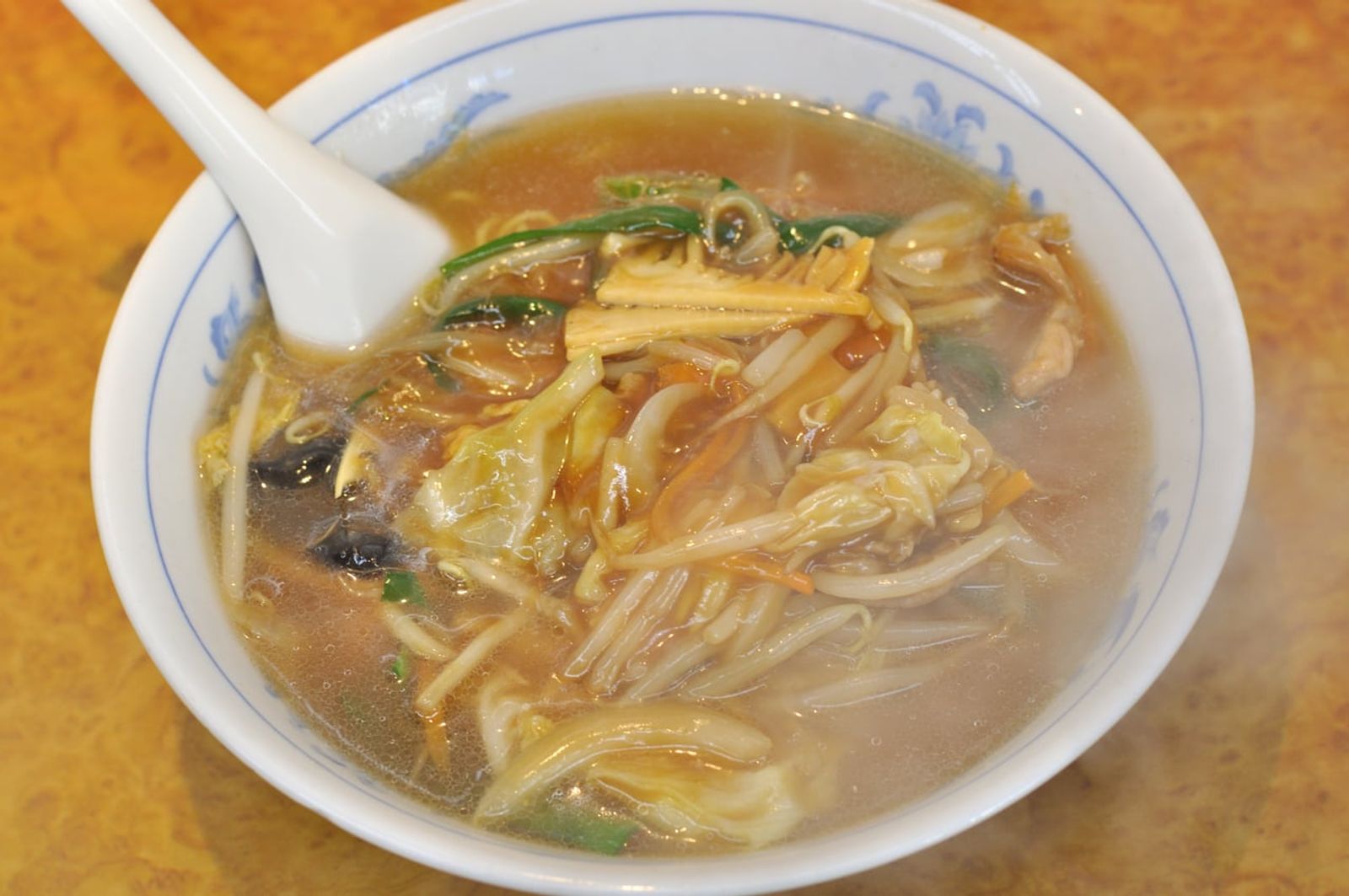
Sanmamen topped with bean sprout ankake · Photo: Ocdp / CC0 (Wikimedia Commons)
 JapanYokohama
Sanmamen: Yokohama's Bean Sprout Noodle Soup That Has Nothing to Do with Saury
Sanmamen shows up on the menus of Chinese restaurants all over Yokohama and Kanagawa. Its name makes people think of sanma (Pacific saury), but it is actually noodle soup topped with a thick, bean sprout-laden sauce. Here is what the name means, how it was born and why it is hard to find outside Kanagawa.
What the Name Means: 生馬麺 and 生碼麺
Sanmamen is written 生馬麺 or 生碼麺. Because "sanma" is also the Japanese word for Pacific saury, many people assume it is a fish ramen, but it has nothing to do with saury. According to the Japanese Agency for Cultural Affairs' "100-Year Food" profile, the name comes from a Cantonese reading. There are several explanations of the meaning. The main one says "生" refers to fresh, crisp ingredients and "碼" to toppings placed on noodles. Another derives it from "三碼," meaning three toppings: bean sprouts, pork and bok choy. Most agree that "馬" (horse) is used only for its sound, and some link the name to the Chinese word for wharf, "碼頭," calling it a fitting name for the port city of Yokohama.
From a Chinatown Kitchen to a Dockworker's Meal
Sanmamen has roots in Cantonese cooking and is described as having been born from exchanges between Chinese and Japanese people around Chinatown in Yokohama's Naka Ward. Before the war it was a thickened noodle dish eaten by restaurant staff. Around 1930, the head chef of a long-established Chinatown restaurant is said to have turned it into "生碼麺," and the name appears on that restaurant's early Showa menus. It spread after the war. Around 1947 to 1948 it began to be sold cheaply to laborers at the Port of Yokohama. It was more filling than ordinary ramen, and the layer of thick sauce acted like a lid that kept it hot even in the cold of winter. The tough daily life of a port city helped this noodle dish grow.
What It Looks Like: No Bean Sprouts, No Sanmamen
Sanmamen is medium-thin straight noodles in a soy or salt broth, generously topped with stir-fried vegetables and meat in a cornstarch-thickened sauce (ankake). Bean sprouts are considered essential, and depending on the shop it may also contain pork, cabbage or bok choy, carrot, onion, wood ear mushrooms and fish cake. The topping resembles the sauce on Nagasaki's sara udon, and some shops serve the same ankake over rice as "sanma-don." The sauce is extremely hot, so take the first bite carefully. The crunch of the sprouts against the silky broth is what makes it a modest but crave-worthy neighborhood noodle.
A Name That Only Works Inside Kanagawa
In the 21st century sanmamen has spread little by little from the Yokohama area to other parts of the Kanto region, but it still feels very much like Kanagawa food. As of May 2024, 24 shops belonging to the Kanagawa Chinese restaurant association, covering Yokohama, Kawasaki, Yokosuka and other areas, were members of the promotional group Kanagawa Sanmamen-kai. Yet it is rarely eaten around Odawara or Sagamihara in the same prefecture, so it is really a dish of Kanagawa's eastern port side. In 2009 it won the top prize in the noodle category at a national Chinese restaurant association contest, and in fiscal 2021 (announced in March 2022) it was certified as a "100-Year Food" by the Agency for Cultural Affairs, which recognizes regional foods handed down over generations.
Where and How to Eat It
You are more likely to find sanmamen on the menus of modest neighborhood Chinese diners (machi-chuka) than in Chinatown's upscale Cantonese restaurants. Look for "サンマーメン" or "生馬麺" on the menu boards of station-front Chinese diners not only in Yokohama but across eastern Kanagawa, in Kawasaki, Yokosuka or Ofuna near Kamakura. Shops differ in whether the broth is soy or salt and in the mix of vegetables, so comparing them is part of the fun. To order, "Sanmamen kudasai" is all you need. Many menus list the name in Japanese without a photo, so it helps to remember the characters above. Add a plate of gyoza and you have a classic Yokohama neighborhood-diner meal.