Tteokbokki
The Two Faces of Tteokbokki: From Royal Soy-Sauce Rice Cakes to Sindang-dong's Gochujang Classic
Korea's favorite snack was not always red. Follow the story of the Joseon court's soy-sauce rice cakes meeting gochujang in 1950s Sindang-dong, plus how to order at a bunsik shop and choose your spice level.
What Tteokbokki Is: Stir-Fried Rice Cakes?
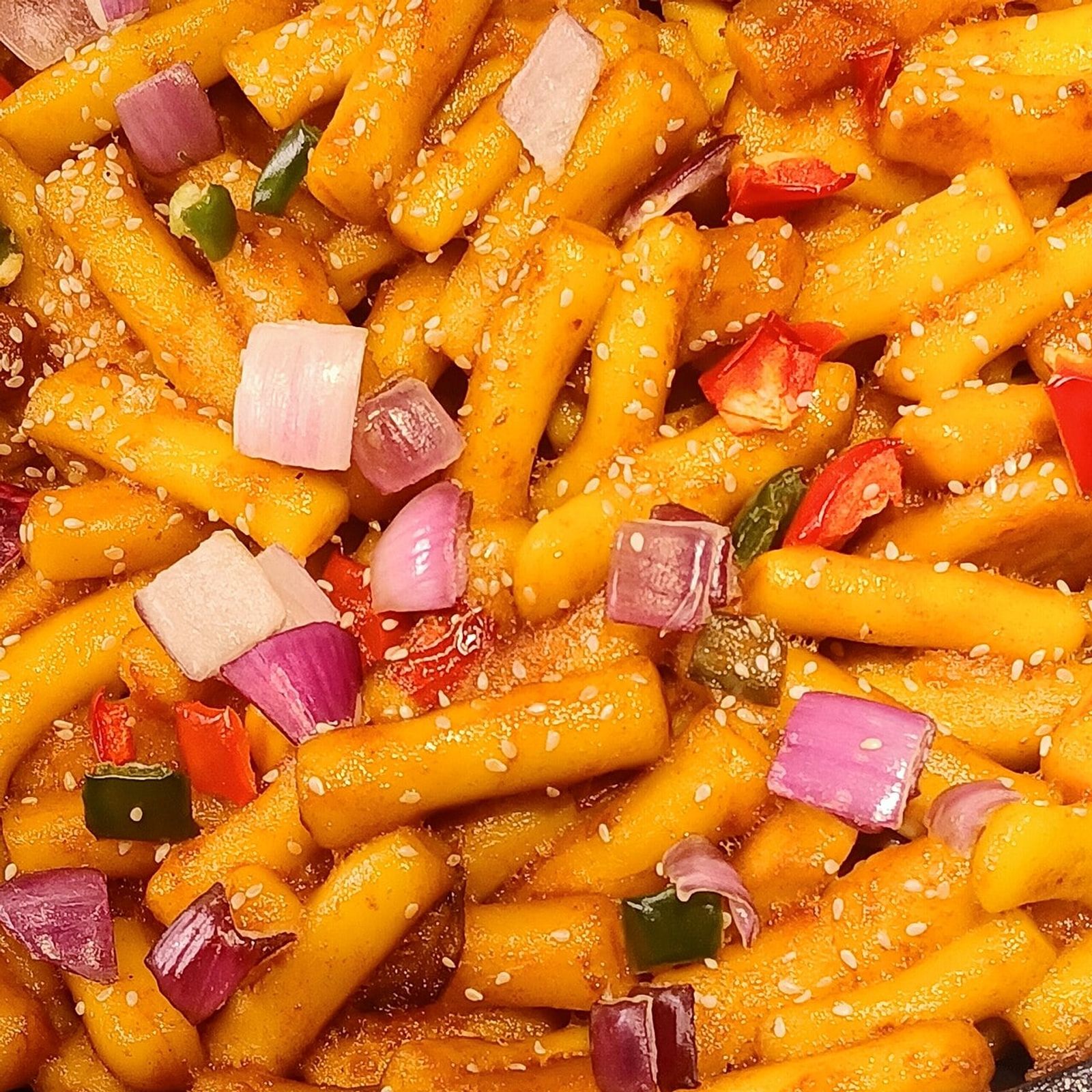
Tteokbokki is finger-length cylinders of rice cake simmered in a gochujang-based sauce with fish cake, scallion and boiled egg. The name joins 'tteok' (rice cake) and 'bokki' (stir-fried), but today's version is braised in a little sauce until it soaks in rather than truly stir-fried. It is Korea's national snack, found everywhere: bunsik (snack) shops near schools, market stalls, street tents and even instant cups at convenience stores. A portion costs about 3,000 to 5,000 KRW, and the sweet-spicy sauce with chewy rice cakes is addictive once you acquire the taste. For Koreans it is close to soul food, tied to memories of school days.
The Joseon Court's Soy-Sauce Tteokbokki
Tteokbokki appears by name in the 19th-century cookbook Siuijeonseo as white rice cakes stir-fried in a soy-sauce seasoning with beef, shiitake and bean sprouts. At the palace it was called 'gungjung (royal) tteokbokki' and served at banquets; it is also on the list of court dishes handed down by the last royal kitchen matron of Joseon. It is brown in color and tastes much like sweet-savory bulgogi marinade. Even after gochujang spread widely in the late Joseon period, tteokbokki long remained a soy-sauce dish. You can still find this version at traditional Korean set-menu restaurants and holiday tables, and it is the first kind recommended to children and visitors who cannot handle spice. On a menu, 'gungjung tteokbokki' or 'ganjang tteokbokki' means the non-spicy kind.
1953, Sindang-dong: Meeting Gochujang
Red tteokbokki was born in Sindang-dong, Jung-gu, Seoul. As the story goes, in 1953 a woman named Ma Bok-rim dropped a rice cake into a bowl of jajangmyeon at a Chinese restaurant's opening, tried it dipped in gochujang, and got the idea to stir-fry rice cakes in a mix of gochujang and black bean paste. Sindang-dong still has a 'Tteokbokki Town' lined with the original shops. Cheap wheat-flour rice cakes made from 1950s U.S. flour aid, plus increasingly common fish cake and gochujang, turned tteokbokki into an instant working-class snack. In the 1970s and 80s, Sindang-dong shops created 'jeukseok (cook-it-yourself) tteokbokki', a tabletop pot of rice cakes, fish cake, ramen, dumplings, egg and chewy noodles, and the shops with resident DJs were teen hangouts of the era.
Wheat vs. Rice Cakes, Soupy vs. Oily: The Varieties
Tteokbokki divides first by the rice cake itself. Wheat-flour cakes (miltteok) are soft, absorb sauce well and stay tender when cool, so snack shops and stalls favor them. Rice cakes (ssaltteok) are chewier and bouncier, preferred by franchises and home cooks. Neither is 'correct'; Koreans themselves split into wheat and rice camps. Cooking styles vary too. Soupy tteokbokki uses plenty of broth to spoon up; oil tteokbokki, a specialty of Tongin Market, stir-fries rice cakes alone in chili powder and oil for a crisp, spicy bite. Rosé tteokbokki, a 2020s trend, blends cream with gochujang; rabokki adds ramen noodles; jjajang tteokbokki uses black bean paste. Cheese, cream, mala and curry versions keep appearing.
Ordering at a Bunsik Shop and Choosing Your Heat
You eat tteokbokki at a 'bunsik' shop. Bunsik originally meant flour-based food, but now refers to casual eateries selling tteokbokki, gimbap, sundae (blood sausage), fried snacks and ramen. The classic order is one portion of tteokbokki with a few fried items (squid, sweet potato, seaweed roll, dumpling) and sundae on the side; the key move is dipping the fried snacks in the tteokbokki sauce. Add a roll of gimbap and it becomes a full meal. Heat levels vary by shop. Franchises such as Yupdduk, Sinjeon and Jaws let you pick a level — 'mild, gentle, regular, spicy' — so choose the lowest if it is your first time. When it burns, milk, cheese, boiled egg or gimbap helps more than water. Stalls sell single portions, while cook-it-yourself shops start at two, and frying rice in the leftover sauce is the essential finale there.