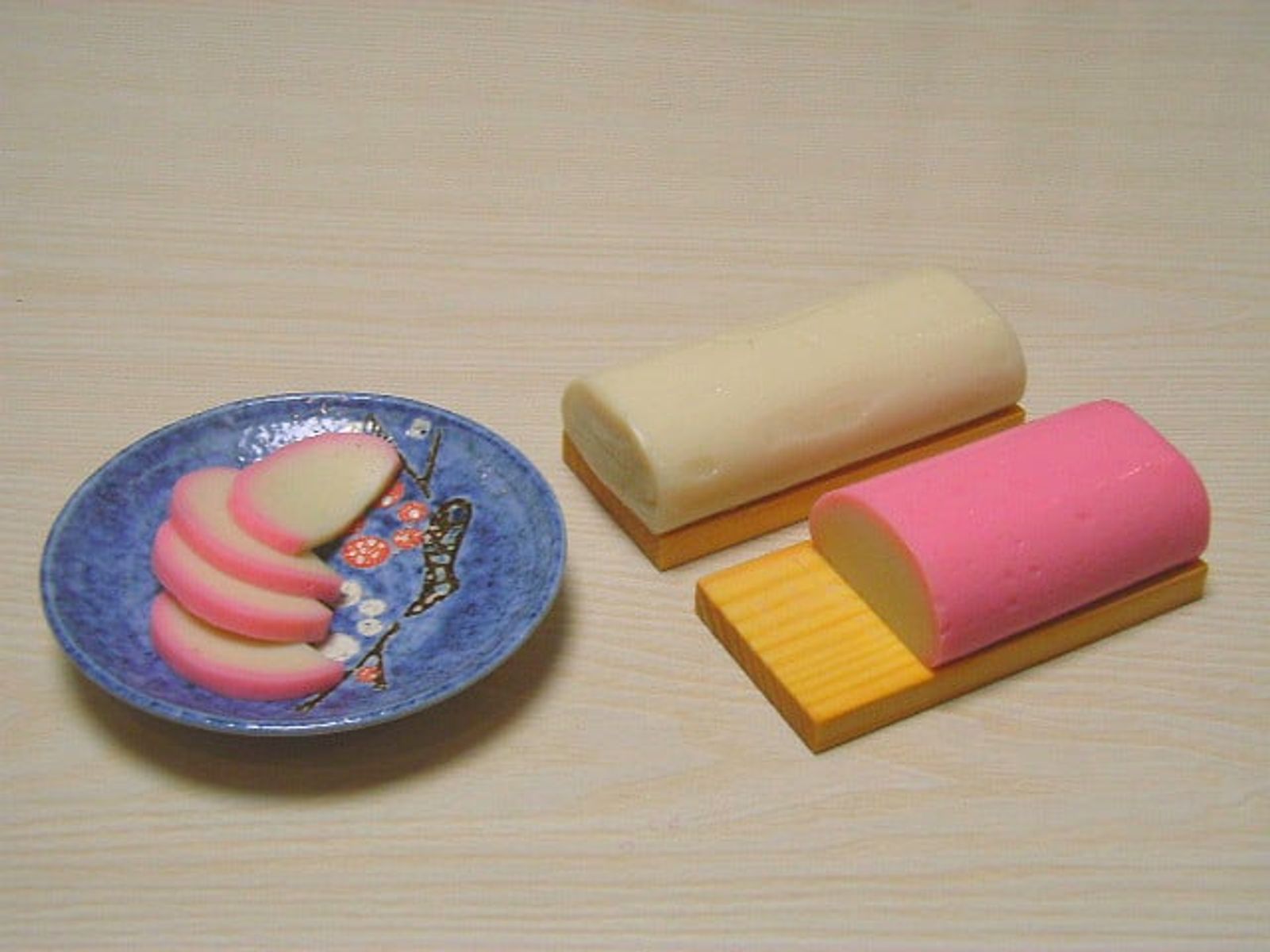
Red and white kamaboko on wooden boards · Photo: Andy king50 / Public domain (Wikimedia Commons)
 JapanHakone
Odawara Kamaboko: The Board-Steamed Fish Cake That Greeted Travelers on the Road to Hakone
Odawara, the gateway to Hakone, is one of Japan's best-known homes of kamaboko, steamed fish cake on a wooden board. Here is the more than 900-year history of kamaboko, why it flourished in Odawara, how it differs from the Kansai style and how to enjoy it the Japanese way.
Kamaboko in a 900-Year-Old Record
Kamaboko is a Japanese fish cake made by grinding white fish with salt into a paste, shaping it and then steaming or grilling it. The name is said to come from the original form, fish paste wrapped around a bamboo skewer and grilled, which resembled the seed head of a cattail (gama). The oldest confirmed record is the Heian-period text Ruiju Zatsuyosho, which notes that skewered kamaboko was served at a banquet held by Fujiwara no Tadazane in 1115. Based on this record, the industry chose November 15 as "Kamaboko Day." The board-mounted form we know today came later, and the original skewered, grilled version looked more like today's chikuwa.
Why It Flourished in Odawara: The Sea and the Hakone Pass
Facing Sagami Bay, Odawara has long had active coastal fishing, and kamaboko is described as having developed as a way to preserve abundant catches. According to Japan's Ministry of Agriculture, Forestry and Fisheries, kamaboko was made in Odawara from the Muromachi period, and production grew in earnest in the late Edo period. Kanagawa's official tourism site cites a theory that kamaboko making took off about 220 years ago. The road was the big catalyst. Odawara was a castle town and post town at the eastern foot of the rugged Hakone Pass on the Tokaido highway. Feudal lords and their retinues traveling to and from Edo under the alternate-attendance system stayed in Odawara or Hakone and were served kamaboko, which then became a travel souvenir and made the town's name known nationwide.
Smooth Surface, Springy Bite: The Odawara Style
Odawara kamaboko is mushi-kamaboko, steamed kamaboko: white fish ground with salt into a paste, shaped into a half-moon on a wooden board and steamed. Japan's Ministry of Agriculture notes that unlike Kansai-style kamaboko, whose surface is grilled, Odawara kamaboko has a smooth surface. It is prized for its fish flavor and springy texture, a chewiness the Japanese describe as having good "ashi" (literally "legs"). When the Agency for Cultural Affairs certified Odawara kamaboko as a "100-Year Food" in fiscal 2021, it described it as a food made with fish from Sagami Bay and water from the Hakone and Tanzawa mountains. Because catches have fallen, however, some of the fish now comes from other regions.
How to Enjoy It: Itawasa and New Year Osechi
Kamaboko is usually eaten sliced and unheated. Take it off the board, cut it about 1 cm thick and serve it with grated wasabi and soy sauce, and you have "itawasa," a classic snack at Japanese pubs and soba shops. Thicker slices let you appreciate the springy texture more. Kamaboko is also a fixture of osechi, the Japanese New Year feast. Red and white kamaboko often go into the osechi boxes because red and white are considered auspicious and look festive. It also turns up every day as a slice on udon or soba and as a bento side dish. As a fish-based product it generally needs refrigeration, so check the expiry date and storage instructions when buying it as a gift.
Stopping in Odawara on the Way to Hakone
Traveling from Tokyo to Hakone, many visitors pass through or change trains at Odawara Station on the shinkansen or the Odakyu line. If you have a little time, get off and stroll the street lined with kamaboko shops. Kanagawa's tourism site notes that Odawara has a "kamaboko street" where many shops stand side by side, ideal for comparing products. The flavor changes with the fish used, so tasting samples as you choose is part of the fun. Odawara is a city with a special affection for kamaboko. According to the Ministry of Agriculture, many public elementary and junior high schools serve kamaboko at lunch around November 15, Kamaboko Day, and in late March Odawara Castle hosts the Odawara Kamaboko Sakura Festival with activities such as kamaboko making. It fits nicely into a visit to Odawara Castle.