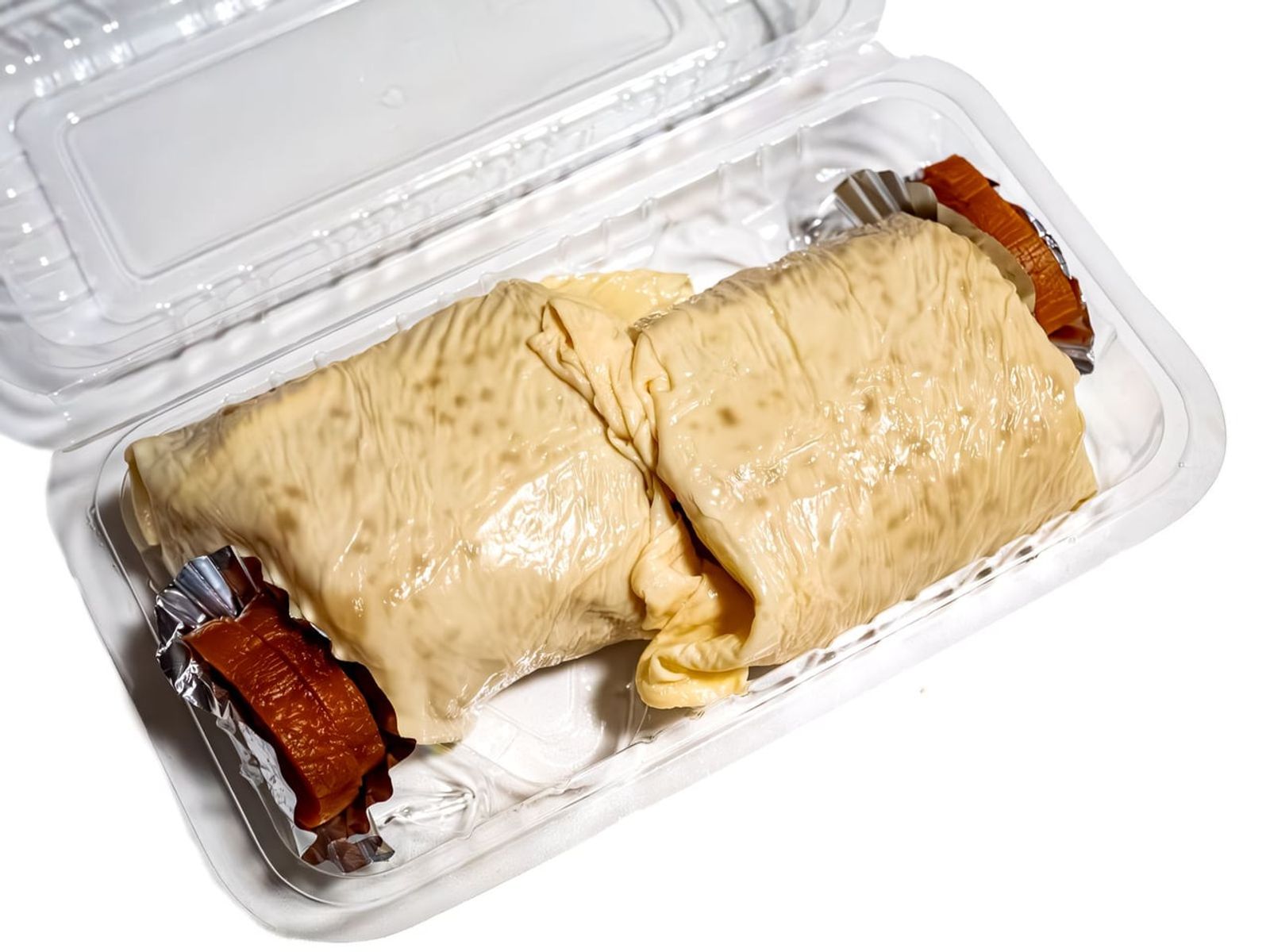
Yuba-wrapped rice balls from Nikko · Photo: くろふね / CC BY 4.0 (Wikimedia Commons)
 JapanNikko
Nikko Yuba: Not Kyoto's 湯葉 but 湯波, Lifted Double-Layered
In Nikko you will see the characters 湯波 all over town. Both refer to yuba, but Kyoto writes it 湯葉 and Nikko 湯波, and they look different too. Here is what yuba is, what makes the Nikko style distinctive, its link with mountain asceticism and how to eat it.
What Is Yuba?
Yuba is the thin film that forms on the surface of heated soy milk, lifted off with something like a bamboo skewer. It works the same way as the skin on warm milk: proteins and fats in the soy milk set with heat. Unlike tofu, it uses no coagulant such as nigari at all. It belongs to the same family of foods known in China as fupi (tofu skin) or, dried, fuzhu. The usual account says Zen monks who had studied on the continent brought it to Japan in the Kamakura period and used it in shojin cooking. There is also a story that the monk Saicho brought it from China in the Heian period, but Japanese Wikipedia considers that incorrect, and the oldest confirmed written record is a diary entry from 1597.
Kyoto Writes 湯葉, Nikko Writes 湯波
Yuba is usually written 湯葉 in Japan, but in Nikko it is generally written 湯波. There are several theories about the name, including one that the surface ripples like waves (波), hence 湯波. The bigger difference is how it is lifted. Kyoto yuba is lifted from the edge of the film as a single sheet, so it is thin. Nikko yuba is lifted by inserting a skewer into the middle of the film so that it folds in half, making it two layers thick. As a result, Nikko yuba is thick and voluminous, with soy milk held between the layers for a rich, soft flavor. Try both and the difference is obvious.
A Precious Food for Mountain Ascetics
Nikko, home of Toshogu Shrine, Rinno-ji Temple and Futarasan Shrine, is a sacred center of mountain worship and long drew shugendo ascetics (yamabushi) who trained in the mountains. In a life of austerity without meat or fish, yuba made from soybeans was a valuable source of protein, and this is described as the reason it became a staple of shojin cooking in Nikko. Some travel media describe Nikko yuba as having a "thousand-year" history, but no source confirms exactly when it began, so treat such figures as tradition. What is certain is that yuba has been a beloved specialty on Nikko's streets since the Edo period, when the town bustled with pilgrims to Toshogu.
How to Eat Nikko Yuba
Nikko offers yuba in many forms. The simplest is "sashimi yuba" (hikiage yuba), freshly lifted yuba dipped like sashimi in soy sauce or wasabi soy sauce, which lets the nutty soy milk flavor shine. You may see shops selling yuba for sashimi at the counter. A signature Nikko specialty is "agemaki yuba": yuba rolled into a log, sliced into rounds and deep-fried, then simmered in a sweet-savory broth. There are also plenty of light options, such as rice bowls and soba with yuba, or rice balls wrapped in yuba. A shojin course lets you sample many different yuba dishes at once.
Where to Try It
Yuba shops and restaurants cluster along the main street from Tobu-Nikko and JR Nikko stations toward Shinkyo Bridge and Toshogu, and in the surrounding area. Walking before or after visiting Toshogu, you will easily spot 湯波 signs and restaurants serving yuba dishes. Long-established yuba shops, including one described as founded in the first year of the Meiji era, line this street. Popular souvenirs include dried yuba and vacuum-packed agemaki yuba. Fresh yuba is perishable, so eat it on the spot, and for gifts choose dried or shelf-stable products. Even for soy products, check your country's import rules before flying home. Thanks to its shojin cooking, Nikko is also an easy town for vegetarian travelers to find meals.