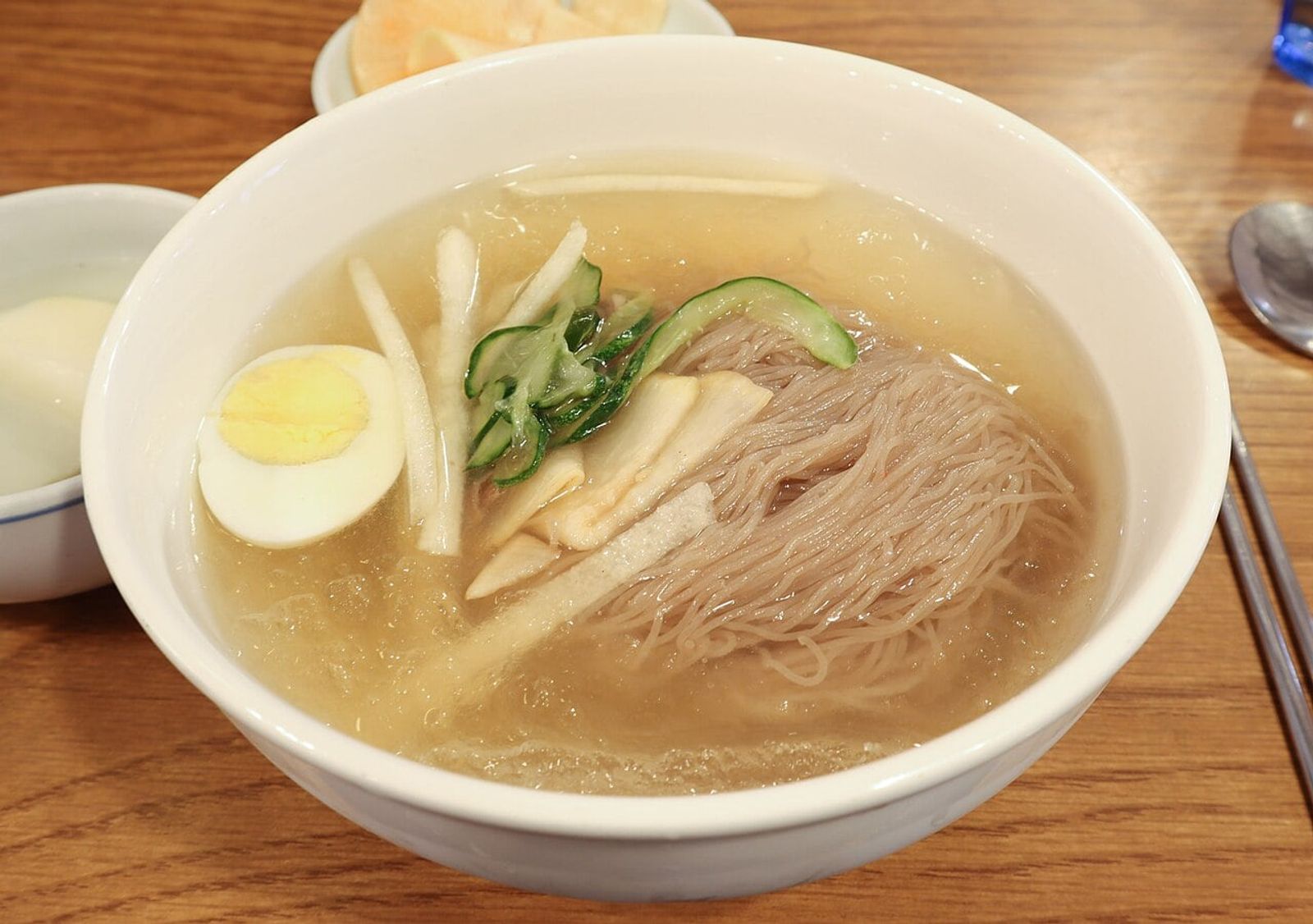
Pyongyang naengmyeon
A Beginner's Guide to Naengmyeon: Why Pyongyang and Hamhung Cold Noodles Are So Different
Pyongyang naengmyeon sits somewhere between 'bland' and 'addictive'; Hamhung naengmyeon comes topped with spicy raw fish. Learn the history of the two cold noodles that came down from the North, how to add vinegar and mustard, and whether cutting them with scissors is okay.
What Naengmyeon Is: A Winter Dish That Became a Summer Staple
Naengmyeon means 'cold noodles': buckwheat or starch noodles served in a chilled broth or tossed in a spicy sauce. Today it is the quintessential midsummer dish, but it began as winter food. After the buckwheat harvest, people in Pyongan and Hamgyong provinces ate noodles in icy radish-water kimchi broth while sitting on heated ondol floors. The Joseon text Dongguk Sesigi lists naengmyeon as a seasonal food for the eleventh lunar month. That makes sense: without refrigeration, ice was hard to come by in summer. Once refrigerators spread in the mid-20th century, naengmyeon shifted to summer, and today 'finishing with naengmyeon' after samgyeopsal or galbi is a fixed ritual at Korean barbecue restaurants.
Pyongyang Naengmyeon: The World of Subtle Flavor
Pyongyang naengmyeon uses noodles high in buckwheat, served in a cold broth that blends beef stock (sometimes pheasant or pork) with radish-water kimchi liquid. Toppings are minimal: sliced boiled beef, half an egg, pickled radish, cucumber. The first sip can seem to taste of almost nothing, but the buckwheat aroma and the broth's quiet umami build until many people are hooked. Koreans call these devotees 'pyeongnaeng maniacs'. Northern refugees who came south during the Korean War opened the Seoul institutions that carry the lineage — Woo Lae Oak (1946), Eulji Myeonok, Pildong Myeonok, Eulmildae — and a bowl runs 13,000 to 17,000 KRW, the priciest among cold noodles. Because buckwheat noodles break easily, eating them uncut is considered proper, but you may cut them if you wish. Taste the broth first before adding vinegar and mustard, then adjust a little at a time.
Hamhung Naengmyeon: The Original Spicy Bibim
Hamhung naengmyeon is a 'bibim' (mixed) style: thin, very chewy noodles made from potato or sweet-potato starch tossed in a chili seasoning and topped with spicy marinated raw flounder or skate. The Hamhung area of Hamgyong Province grew more potatoes than buckwheat, so starch noodles developed there, and East Sea fish dressed in seasoning became the signature topping. Because the noodles are so tough, cutting them with scissors is entirely natural. In Seoul, the Hamhung naengmyeon alley in Ojang-dong is famous. It began in the 1950s with refugees from Hamhung, and shops such as Ojang-dong Heungnamjip and Ojang-dong Hamhung Naengmyeon still operate. Pouring warm beef broth over the noodles partway through, turning it into a soup, is a common move; the broth sits in a kettle on the table or comes on request. A touch of sesame oil and sugar mixed into the spicy sauce softens the heat.
Mul, Bibim, Milmyeon, Makguksu: Sorting Out the Menu
Most restaurants list two kinds: mul-naengmyeon in cold broth and bibim-naengmyeon tossed in red sauce. Barbecue-house naengmyeon is usually a 'popular' style that follows neither Pyongyang nor Hamhung strictly — a sweet-tangy broth with chewy noodles containing starch — and costs a modest 5,000 to 9,000 KRW. The bowl after samgyeopsal is almost always this kind. Regional variants are worth knowing. Busan milmyeon recreated naengmyeon with wheat flour during the Korean War, with softer noodles and a sweeter broth. Gangwon makguksu is a rustic dish of buckwheat noodles mixed with kimchi liquid or seasoning. Jinju naengmyeon uses a seafood broth topped with yukjeon (pan-fried beef). Hoe-naengmyeon is bibim noodles topped with raw fish in the Hamhung manner, and yeolmu-naengmyeon is a summer bowl in young-radish kimchi broth.
The Best Order of Operations for Eating Naengmyeon
When the bowl arrives, sip the broth first to register the base flavor. Then drizzle vinegar over the noodles — on the noodles, not the broth, which firms them up — and stir a small dab of mustard from your chopstick tips into the broth. Add both gradually until you find your balance. Old Pyongyang-style houses often recommend eating it plain, so try it as served first. If the noodles are long and tough, one or two snips with the scissors provided is fine. Lift noodles with chopsticks and slurp them with broth, taking bites of egg and boiled beef in between; some say to eat the egg first to line the stomach. The warm broth served in a cup before the meal is meant to be drunk as a starter, and the pickled radish and kimchi can be refilled.