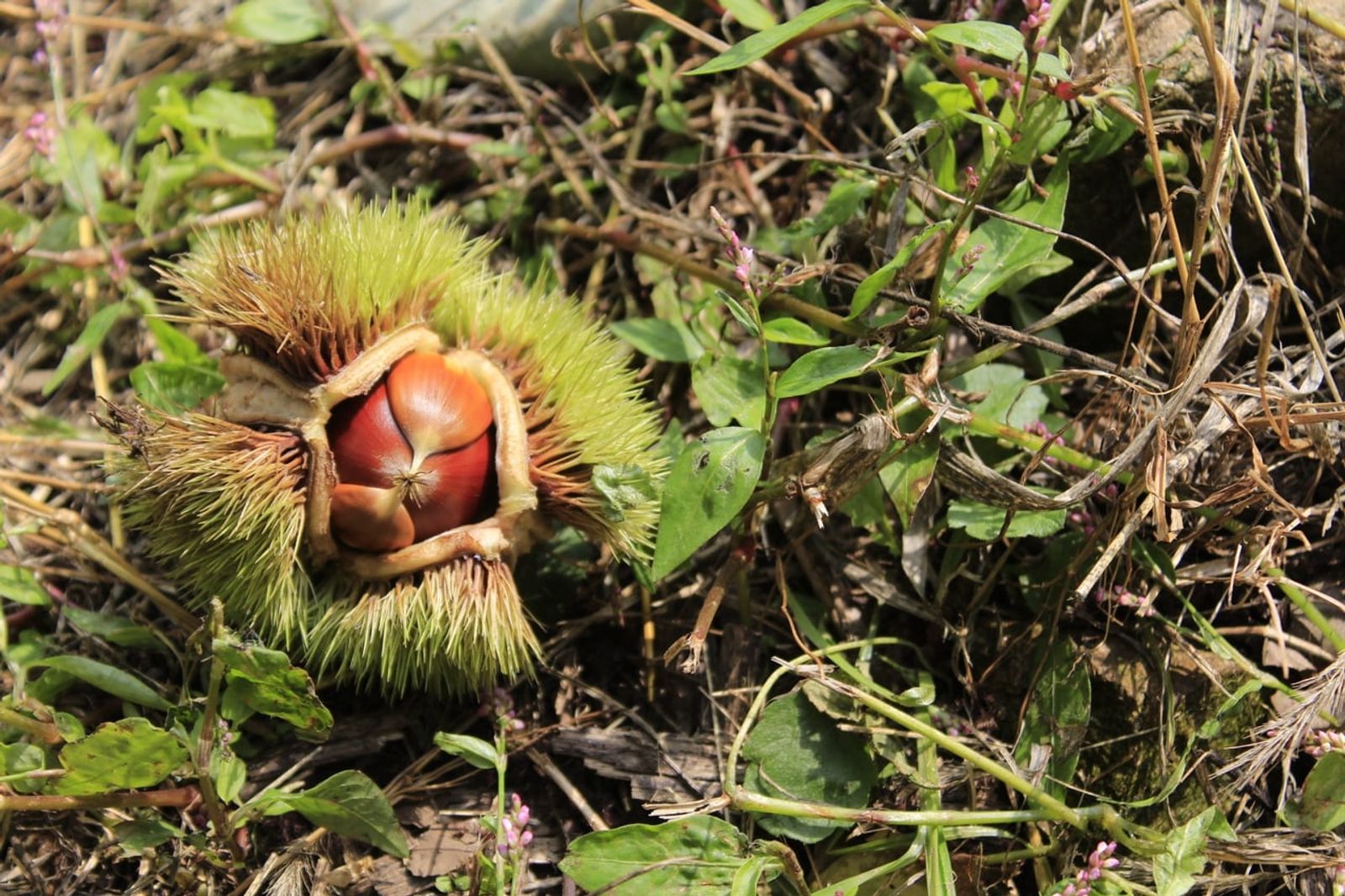
Korean chestnuts · Photo: yihyejin / CC0 (Wikimedia Commons)
 KoreaSouth Chungcheong · Gongju
Gongju Chestnuts: How Baekje's Old Capital Grows a Sixth of Korea's Chestnuts
Gongju is as famous for chestnuts as for its Baekje heritage. As Korea's largest producer, with 15 to 17 percent of the national harvest, it has its own way of picking, eating and even celebrating chestnuts in midwinter.
Korea's Biggest Chestnut Producer
Gongju was the capital of the Baekje kingdom, then called Ungjin, from 475 to 538, and sites such as Gongsanseong Fortress and the Songsan-ri tombs (now officially the Royal Tombs of King Muryeong) are part of the UNESCO-listed Baekje Historic Areas. Yet ask locals about Gongju's specialty and chestnuts come up first. Gongju is Korea's largest chestnut-growing area. A report from around 2020 put its share of national production at 15.2 percent, while more recent articles say about 17 percent. The figures vary slightly, but roughly one in six Korean chestnuts comes from Gongju. More than 2,100 farms grow them, centered on Jeongan-myeon in the north of the city, whose chestnuts are often sold under their own name, Jeongan bam.
No Shaking, Only Fallen Nuts
Gongju City credits its chestnuts to the clean air, water and soil of the Charyeong Mountains and the slopes of Gyeryongsan, plus the wide gap between day and night temperatures, which it says raises the sugar content and deepens the nutty flavor. The city also notes that Gongju chestnuts were good enough to be presented to the king in the Joseon era. The harvest method is distinctive too. Rather than shaking the trees or knocking the burrs down with poles, Gongju growers make a point of collecting only the nuts that ripen fully and fall on their own. According to the city, that means only well-matured chestnuts are gathered, so they taste better and keep longer. In autumn you will see farmers picking up fallen chestnuts under the trees around Jeongan every morning, and some farms open their groves for chestnut-picking experiences.
A Roasted Chestnut Festival in Midwinter
Chestnuts are harvested in autumn, but Gongju's most popular chestnut festival happens in the depths of winter. The Winter Gongju Roasted Chestnut Festival is held at Geumgang Singwan Park on the Geum River, and its ninth edition ran for five days in February 2026. The star attraction is roasting chestnuts yourself over giant braziers; a hot chestnut in your hand against the cold river wind is the festival in a nutshell. At the same time, the Korea Chestnut Industry Expo brings together chestnut businesses from across the country, so you can see breads, rice cakes and other chestnut products in one place. Gongju plans to grow the expo into an international event by 2028. Dates and programs change every year, so check the Gongju City website before you go.
How to Enjoy Chestnuts in Gongju
The easiest way to enjoy chestnuts in Gongju is roasted or steamed. Roasted in the shell, they are toasty outside and fluffy inside; steamed ones are split in half and scooped out with a small spoon, the Korean way. Gongju chestnuts are known for being sweet enough that they need nothing added. About 30 processing companies in Gongju turn chestnuts into everything from chestnut makgeolli to breads, cookies and rice cakes. Markets near Gongsanseong Fortress and shops at tourist sites stock plenty of snacks made with Gongju chestnuts, so stop by after walking the fortress walls. Touring Baekje tombs and fortresses and finishing with a chestnut snack is about as classic as a Gongju day gets.
Good to Know Before You Buy
Fresh chestnuts are at their best in the autumn harvest season, but according to Gongju City they store so well that they are sold year-round. Local farm cooperatives, chestnut producer groups and the chestnut distribution center often sell them in 2, 4 and 8 kg packs, which make handy souvenirs or gifts. Gongju has built chestnuts into a regional industry. Its Gongju Chestnut Special Zone was reported to have been named the best of Korea's 175 regional specialty zones, winning a presidential award, and Gongju chestnuts had won the Korea Representative Brand Award five times as of 2025. In autumn, consider a chestnut-picking experience at a farm around Jeongan; in winter, the roasted chestnut festival by the Geum River. Picking experiences vary by farm and season, so check ahead.