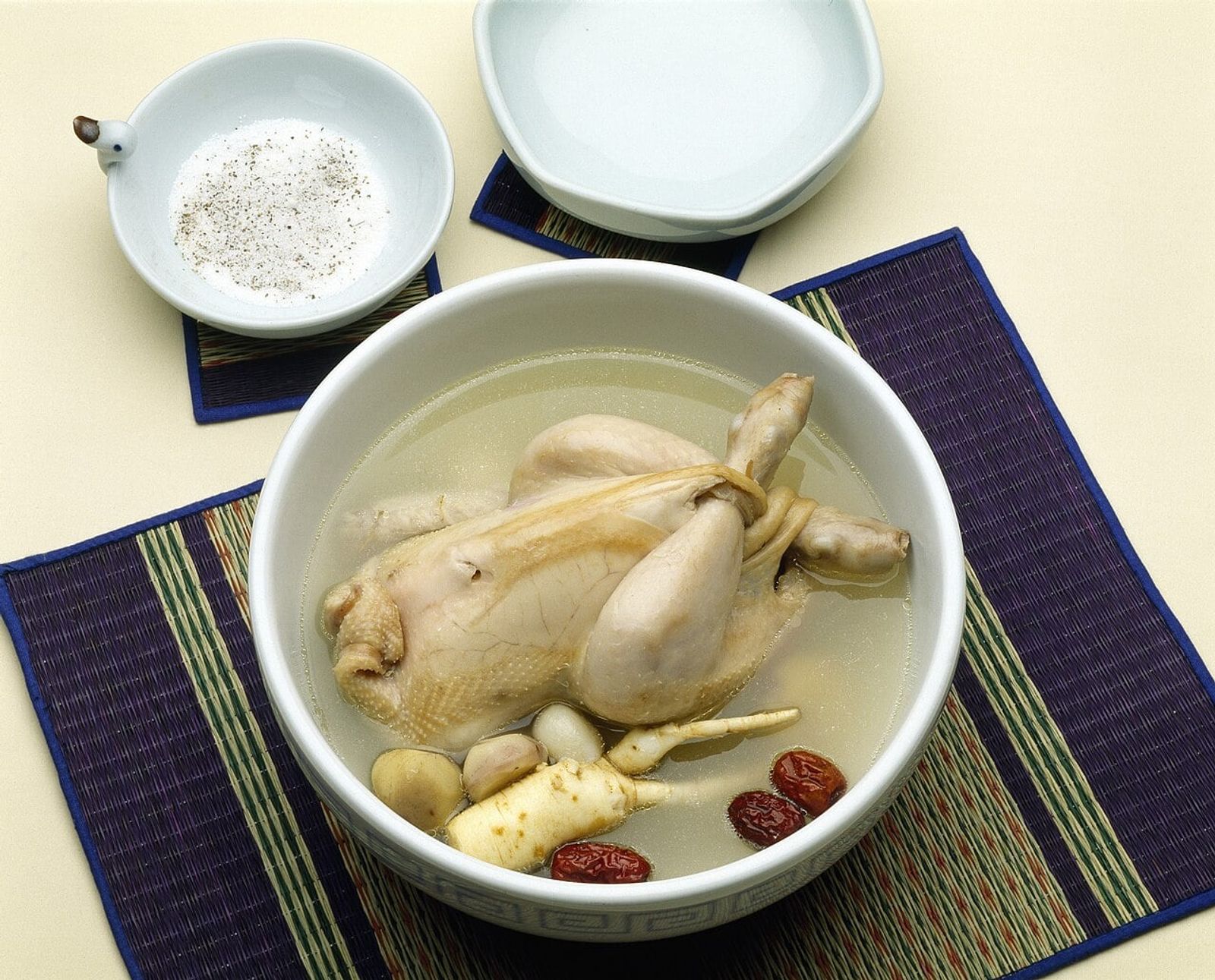
Samgyetang
Samgyetang and Boknal: Why Koreans Eat Hot Chicken Soup on the Hottest Days
In mid-July, long lines form outside samgyetang restaurants across Korea. Here is the logic of 'fighting heat with heat', what each ingredient means, how the three 'dog days' are calculated, and the right way to eat the soup.
What Samgyetang Is
Samgyetang is a whole young chicken stuffed with glutinous rice, ginseng, jujube and garlic, then simmered until tender. The name combines ginseng (sam), chicken (gye) and soup (tang). One serving is one whole bird, brought to the table still bubbling in an earthenware pot. The broth is clear and mild and comes almost unseasoned, so you add salt and pepper to taste. At 15,000 to 20,000 KRW it is on the pricey side for a single Korean meal, but reasonable considering a whole chicken and ginseng go into it. Famous Seoul restaurants such as Tosokchon, Goryeo Samgyetang and Baekje Samgyetang are well known to foreign visitors, and on summer 'boknal' days the wait can exceed an hour.
Boknal and 'Fighting Heat with Heat'
Boknal refers to the three hottest days of summer: chobok, jungbok and malbok. They fall on the third and fourth 'gyeong' days after the summer solstice and the first gyeong day after the start of autumn in the traditional calendar, landing between mid-July and mid-August at roughly ten-day intervals. Since the Joseon era these were days to escape the heat at a stream or eat restorative food. Eating hot soup on the hottest day follows 'iyeol chiyeol', the traditional-medicine idea of treating heat with heat. Sweating heavily is thought to cool the inside of the body and sap energy, so warming foods like chicken and ginseng restore the core. Sweating over a hot bowl does in fact lower body temperature afterward. That is why on boknal it is common for whole offices to order samgyetang for lunch.
What Each Ingredient Is For
Most samgyetang ingredients are ones traditional medicine considers warming and energizing. Ginseng is for fatigue recovery and immunity, jujube for calming nerves and sweetness, garlic for antibacterial strength and stamina, glutinous rice for easily digested energy, and astragalus root (hwanggi, added by many kitchens) is said to stop excess sweating and lift vitality. Some kitchens add chestnuts, ginkgo nuts and pine nuts. The bird is a small young chicken of 500 to 600 grams, about a month old, chosen for its tender meat and clear broth. Modern variations abound: abalone samgyetang, octopus samgyetang, perilla-seed samgyetang thickened with ground perilla, and black-chicken (ogolgye) samgyetang. It differs from 'baeksuk', a large whole chicken boiled and shared by a group, and from 'dakgomtang', a chicken soup without ginseng.
How to Eat Samgyetang
When it arrives, taste the broth first, then season it with a little of the salt and pepper provided. Pull the meat off the bone with chopsticks and spoon — it is cooked so soft it falls apart easily — and eat it plain or dipped in the small dish of salt. The glutinous rice inside has turned to porridge; scoop it up with the broth. The ginseng can be eaten as is, or left if you dislike the bitterness; many people also leave the jujube, which is there as a medicinal herb. The radish kimchi, kimchi, garlic, chili and ssamjang served alongside cut the richness, so alternate bites. Some restaurants offer a complimentary shot of ginseng liquor to pour into the soup or drink beforehand. Collect the bones in an empty dish. Mixing a bowl of rice into the remaining broth makes a filling finish.
Other Boknal Foods
Samgyetang is not the only boknal food. Grilled eel, salted or glazed, is the classic summer stamina dish; chueotang is a thick soup of ground loach beloved in the southern provinces; abalone porridge, duck baeksuk and spicy beef soup (yukgaejang) also appear on boknal menus. In the Joseon era the court handed out ice, and commoners ate red-bean porridge to drive away bad spirits. Others beat the heat with cold dishes. Kongguksu — noodles in chilled, thick soybean milk — is a summer specialty, and naengmyeon and patbingsu shaved ice sell well on boknal too. Around these dates convenience stores and supermarkets stock retort-pouch samgyetang in bulk, and delivery-app orders spike. If you travel to Korea in summer, check the boknal dates and get to a samgyetang restaurant a little early that day.