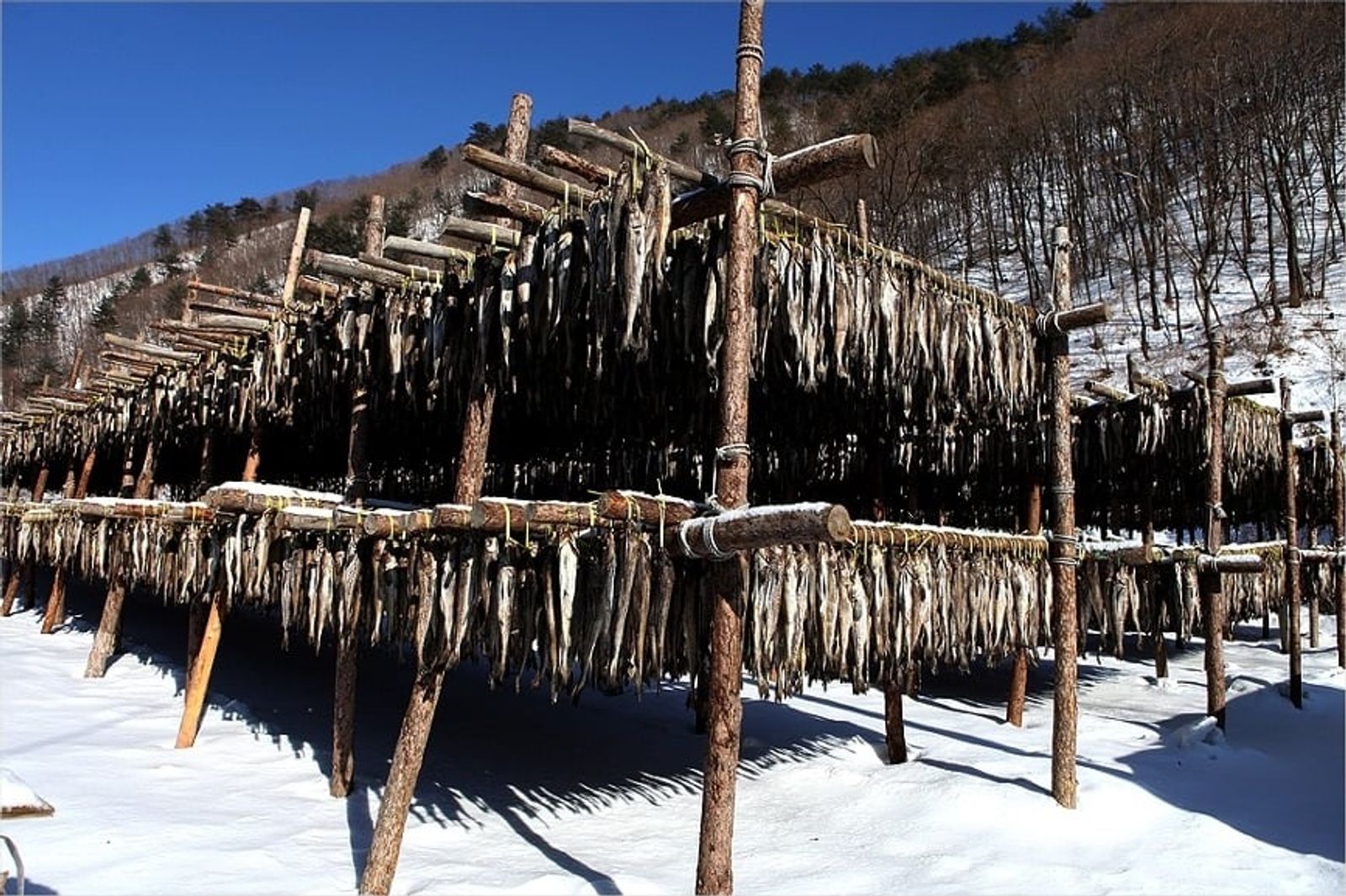
Hwangtae drying racks in the snow · Photo: sansanaiys / CC BY 2.5 (Wikimedia Commons)
 KoreaGangwon · Inje
Hwangtae of Yongdae-ri, Inje: Pollock That Freezes and Thaws Dozens of Times Until It Turns Golden
Yongdae-ri in Inje, at the gateway to Baekdamsa Temple in Seoraksan, is a hwangtae village where tens of millions of pollock hang on drying racks every winter. Here is how refugees from Hamgyeong started it, why pollock has so many names, and how to eat hwangtae soup and grilled hwangtae.
What Makes Pollock Hwangtae
Hwangtae means "yellow pollock." Pollock hung on drying racks high in the mountains in midwinter freezes at night and thaws by day, dozens of times over the season. Dried this slowly, the flesh turns yellow, the fibers puff up, and it becomes soft and nutty, quite unlike bukeo, the hard, darker pollock dried by sea wind on the coast. Few fish have as many names as pollock. Fresh, unfrozen fish is saengtae, frozen is dongtae, dried is bukeo, half-dried and strung through the nose in bunches is kodari, and dark, hard-dried fish is meoktae. Hwangtae is the most labor-intensive of them all, shaped by winter mountain wind and cold. Its original home is said to have been Hamgyeong Province in what is now North Korea.
Drying Racks Started by Refugees Below Jinburyeong Pass
Those who began making hwangtae in the South were Hamgyeong people who fled during the Korean War. Looking for the taste of home, they started drying pollock around Jinburyeong Pass, where the climate resembled their own, and the center of that became today's Yongdae-ri in Buk-myeon, Inje County. The Seoul Shinmun wrote that refugees from Wonsan built racks from around 1963, while the Segye Ilbo dated the village to the late 1960s, so sources differ slightly on timing. Yongdae-ri is now described as the largest producer, making about 70% of Korea's hwangtae. A 2019 report counted 22 drying yards in Yongdae 3-ri alone, a hamlet of some 400 people, with around 30 million pollock turned into hwangtae each year. Daegwallyeong in Pyeongchang also has large racks; the winter wind of Gangwon's mountains is practically an ingredient.
Winter on the Racks: December to April
The work usually begins in late December, when cleaned pollock are carried to the racks and hung, and runs about four to five months until around April. All that time the fish take snow and biting wind, freezing and thawing again and again. Too warm and the flesh goes soft, too little wind and it won't dry, so rack owners watch winter weather closely. One thing worth knowing is the raw fish. Pollock used to come from the East Sea, but it has all but vanished from those waters, and most pollock arriving at the Yongdae-ri racks today is Russian, so check the origin label when you buy. That is also why people say hwangtae owes its character less to the sea than to the mountain winter.
How to Eat It: Soup, Grilled and Shredded
If it is your first time, start with hwangtae haejangguk, the "hangover soup." Shredded hwangtae is stir-fried in perilla or sesame oil, then simmered with water, radish, tofu and egg into a milky broth, and as the name suggests it is especially popular the morning after drinking. It is mild and clean, so even travelers who avoid spicy food can enjoy it. Grilled hwangtae (hwangtae-gui) is usually a whole butterflied fish softened in water, brushed with gochujang sauce and grilled, though some places use soy-based sauce. The sweet-spicy glaze and tender flesh go perfectly with rice, and restaurants around Yongdae-ri commonly offer set meals with both soup and grilled fish. There is also seasoned hwangtae salad and shredded hwangtae for side dishes or drinking snacks, a popular souvenir.
Where to Eat: The Hwangtae Village at Baekdamsa's Entrance
Hwangtae restaurants and shops are concentrated in Yongdae-ri, Buk-myeon, Inje County, around the entrance road to Baekdamsa Temple in Seoraksan. It lies on the route from the Seoul area toward Sokcho, so many travelers stop for a bowl of soup at breakfast or lunch on the way to a Seoraksan hike or the east coast. To see the racks themselves, go between midwinter and early spring, when hillsides along the road are lined with hanging pollock. The yards are working sites, so admire them from the road rather than walking in. When buying shredded or whole hwangtae, check the labels for origin and drying location, and pick fish with plump, yellow flesh and a clean smell. Restaurants stay open in summer, but the racks stand empty, so time your trip if you want the scenery too.