Pohang Mulhoe
 KoreaNorth Gyeongsang · Pohang
Pohang Mulhoe: The Fisherman's Cold Raw-Fish Bowl and How to Eat It
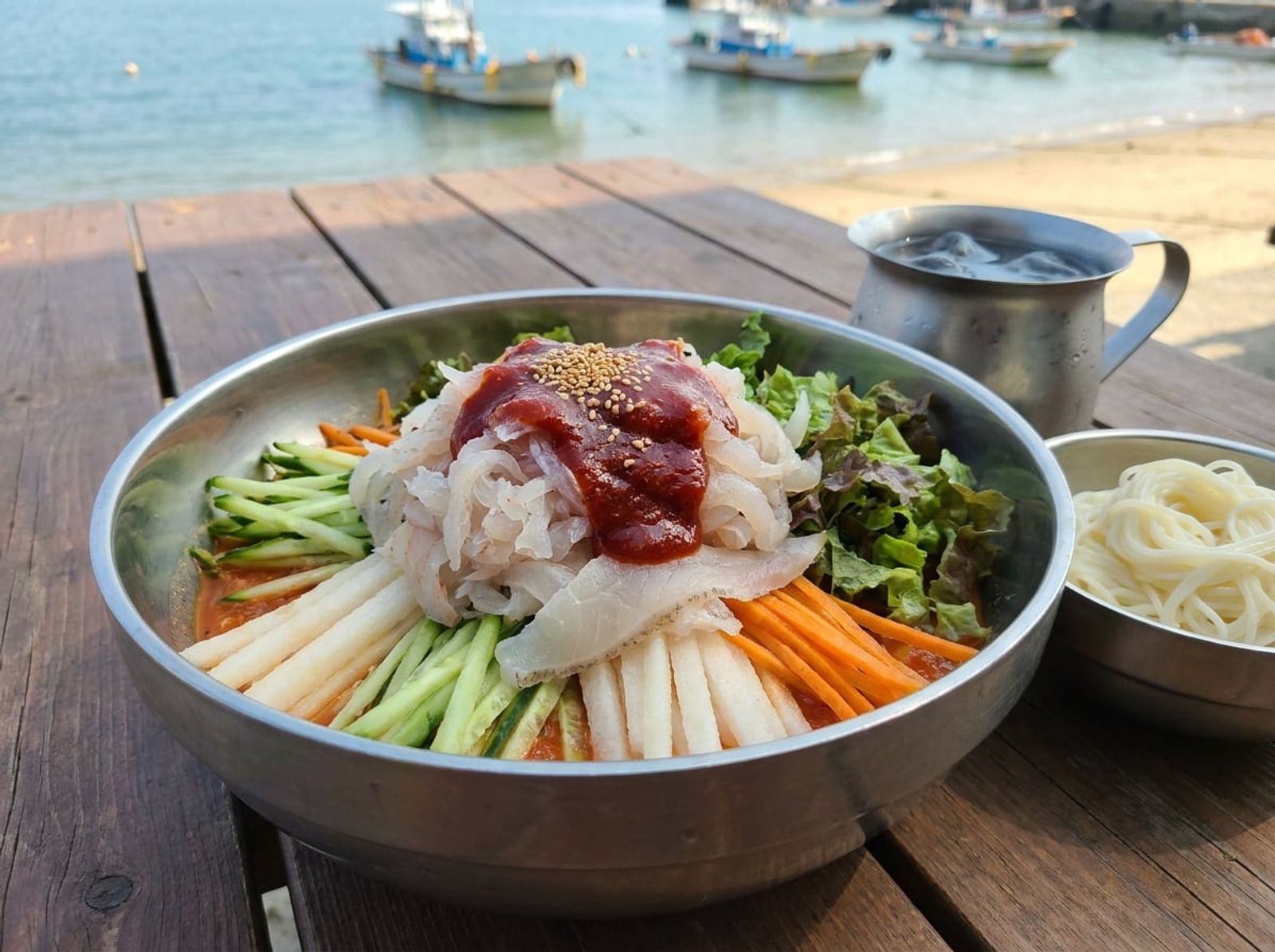
Mulhoe is Korea's chilled raw-fish dish: sliced fish, vegetables and seasoning with cold water poured over. Pohang's version is famous for being mixed with gochujang first and topped with water afterwards. Here is where it comes from, how it differs from other regions, which fish to expect and the order to eat it in.
A Bowl Born on a Fishing Boat
Mulhoe is finely sliced raw fish with vegetables and seasoning, served with cold water poured over it. The most widely told origin story belongs to Pohang's fishermen: with no time for proper meals while working, they sliced fish straight from the catch, added vegetables and gochujang, poured in water and drank it down by the bowl. Local newspapers describe it as everyday seaside food made with low-value bycatch, chopped roughly with the bones, mixed with gochujang and eaten with rice, with water poured over the leftover fish and rice at the end. It spread among locals and became known as Pohang mulhoe, and Korean Wikipedia notes it became a restaurant dish aimed at visitors from the 1960s. The fisherman story is oral tradition, though, and no document pins down exactly when it began.
The Original: Gochujang, Plain Water and No Sugar
Mulhoe changes face from region to region. According to Korean Wikipedia, North Gyeongsang mostly uses gochujang and South Gyeongsang uses doenjang, Jeju seasons damselfish or squid with doenjang, and Gangwon Province uses mostly squid and serves it with broth already poured in. The style regarded as the original Pohang mulhoe is mixed with gochujang first, with plain water added afterwards. One local columnist singles out not being sweet as the hallmark of the original, explaining that the gochujang both seasons the fish and masks any fishiness. In Sokcho and elsewhere in Gangwon, a generous helping of sweet-and-sour chilled broth usually goes in from the start and you eat it like soup, so even under the same name the experience is quite different.
Which Fish Go In
The default fish in Pohang mulhoe is flounder (gajami). Local papers also list white-fleshed fish such as halibut, stone flounder and greenling, and note that Pohang uses a lot of saury too. One columnist explains that different kinds of flounder are caught throughout the year, so the dish can be made in every season, and that in winter there are oily-fish versions with mackerel, herring or yellowtail. What they have in common is that they are whatever is plentiful that season, not luxury fish, which makes sense for a dish fishermen made from what they could not sell. So the fish varies by restaurant and by day. Some menus name the fish, such as flounder mulhoe or mixed mulhoe, and if you are curious it is fine to ask what is in today. Vegetables usually include lettuce, scallions, onion or pear, often finished with sesame and crumbled laver.
The Order: Mix, Pour, Then Add Rice or Noodles
In Pohang you usually don't flood the bowl at the start. First mix the fish and vegetables thoroughly into the gochujang sauce and taste a few bites. Then add water or broth to your liking and spoon it up cold, and finish by stirring in the rice or thin somyeon noodles served alongside. The original way, eating the fish with rice and pouring water over what was left, follows the same flow. There are plenty of new twists. Press reports note more places using sweeter broth for visitors, broth frozen into slush, or vinegared gochujang instead of plain gochujang, and locals keep arguing about which is the real thing. Plain water or broth, comparing the two for yourself is part of the fun of a Pohang trip.
Where to Eat: Markets and Seaside Raw-Fish Streets
You can find Pohang mulhoe all over the city. Local papers point to the Daesin-dong mulhoe crossroads, Jukdo Market, Pohang's best-known traditional market, the coastal road around Bukbu Beach and the raw-fish restaurant clusters in Hwanyeo-dong and Duho-dong, and it is also widely eaten around Guryongpo. Jukdo Market's seafood section, lined with fish stalls, is fun just to wander, while the seaside clusters let you eat with a sea view. Mulhoe is most popular in summer, but because the fish changes with the seasons you can eat it year-round. Spice levels vary, so if you are sensitive to heat, mix in the sauce a little at a time. With fish, rice and noodles all in one bowl, it makes a filling meal on its own.