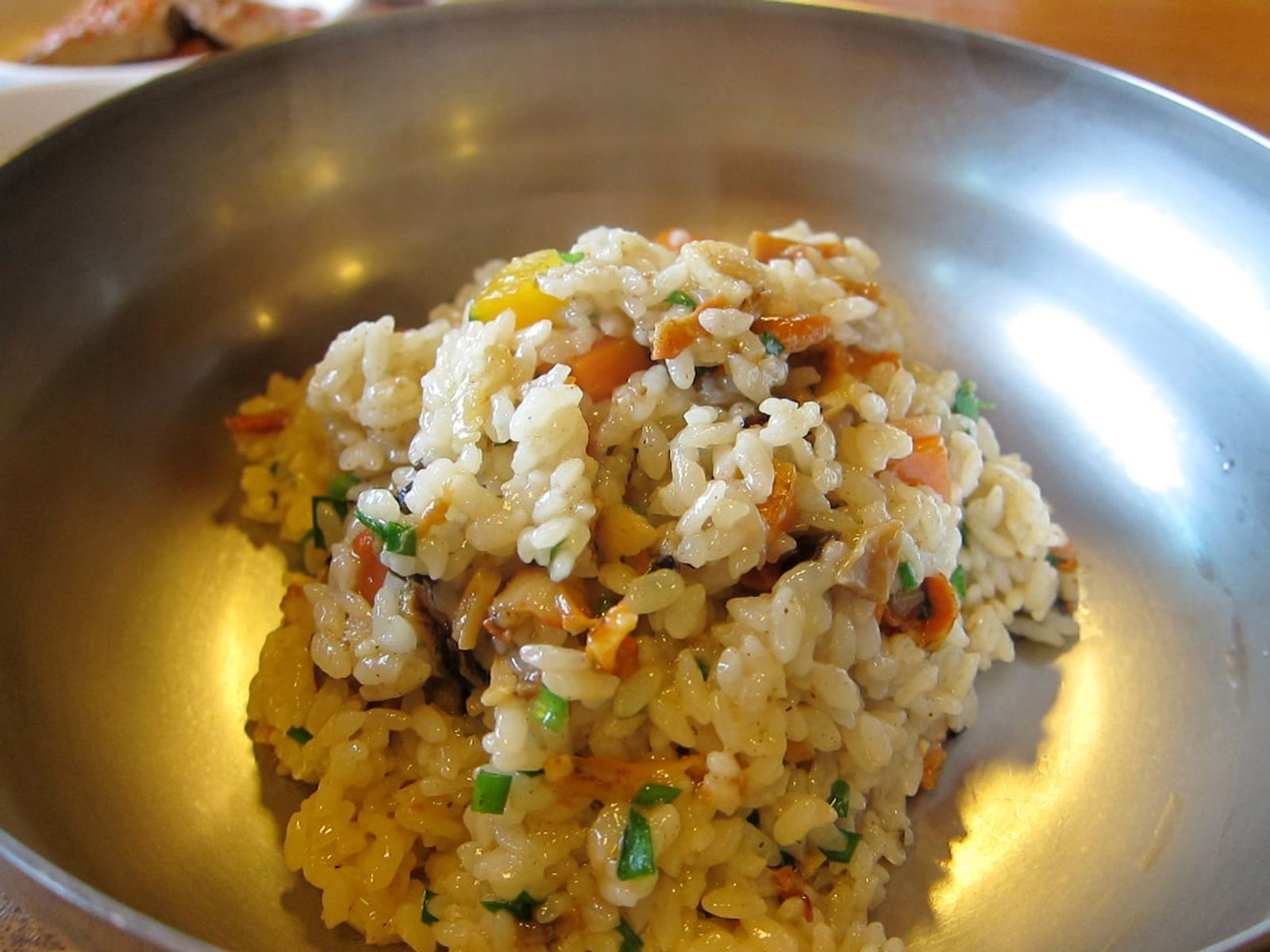
Mussel rice on Ulleungdo · Photo: Eugene Kim / CC BY 2.0 (Wikimedia Commons)
 KoreaNorth Gyeongsang · Ulleungdo
Ulleungdo's Mussel Rice and 'Barnacle' Noodle Soup: Reading an Island Table
On Ulleungdo, an island in the middle of the East Sea, nearly every restaurant lists honghap-bap (mussel rice) and ttagaebi kalguksu. Here is the story of the island's giant mussels, the 'barnacles' that are really limpets, and tips for enjoying both, down to whether to add laver flakes.
The Regulars on Every Island Menu
Ulleungdo is a volcanic island in the East Sea belonging to Ulleung County, North Gyeongsang Province. Take the ferry over, open any island menu and the same names keep appearing: ttagaebi kalguksu, ttagaebi-bap, honghap-bap and squid-innards soup. A 2019 travel essay in the Gyeongbuk Maeil newspaper noted that most restaurants on the island serve these dishes. What they share is that they are made with what comes from the waters around the island. On an island where shipping food in from the mainland was hard, people cooked rice and made broth with shellfish gathered from the rocks and the seabed. So Ulleungdo's signature foods are less fancy cuisine than everyday island home cooking. This story focuses on the two best known: mussel rice and ttagaebi noodle soup.
Ulleungdo's Face-Sized Mussels
Ulleungdo mussels are also called yeolhap or chamdamchi. According to a 2013 Seoul Shinmun article, they are far bigger than mainland mussels, some as big as a human face, with seaweed and sea creatures clinging to the shells. The meat stays chewy instead of turning soft when cooked, and when dried it turns red like gardenia fruit and takes on a deep sea aroma. Divers bring them up from more than 20 meters down. In winter rough seas make diving difficult, so mussels cleaned in late autumn are frozen in seawater for later use. That means fresh and frozen mussels are used at different times of year. If you spot dried mussels at a market or restaurant, take a look at that red color.
Mussel Rice: From Beach Picnics to Island Classic
Honghap-bap is rice cooked with finely chopped mussels. The method described in the Seoul Shinmun article mixes glutinous and regular rice, seasons it with soy sauce and sesame oil and cooks it for about 30 minutes, sometimes with chopped dried mussels. Bits of mussel are scattered through every spoonful, giving both color and texture. The same article shares the island's origin story. In summer, islanders heading to the shore to swim would bring a pot, chop up big mussels that could then be picked easily even in shallow water, and cook them with rice, boiling the smaller leftover mussels to snack on while they played. That is said to be how mussel rice began. Today it is so identified with the island that for many people Ulleungdo simply means mussel rice.
The 'Barnacle' Is Really a Limpet
The ttagaebi in ttagaebi kalguksu is not the barnacle the word normally means. According to a 2025 Gyeongbuk Maeil series, what Ulleungdo calls ttagaebi is actually a limpet. True barnacles are crustaceans that live fixed to rocks or ship hulls, while limpets are mollusks that move around, so they are completely different animals. Islanders have long turned these limpets into ttagaebi rice, noodle soup, porridge and seasoned salad. The broth takes real effort. According to the same series, the cleaned limpets are boiled until the shells open, the meat is lifted out, and the shells are simmered with more water for about five hours. Hand-cut noodles are cooked in that broth to make ttagaebi kalguksu, and the reserved meat goes back in for a pleasant chew.
Tips for Eating Well on the Island
Mussel rice usually comes with laver flakes and seasoned soy sauce. The Seoul Shinmun article suggests eating the first few spoonfuls without the laver to enjoy the mussels' own sea aroma, and adding the soy sauce a little at a time rather than pouring it all in. It is often served with seaweed soup, and in spring some people top it with fragrant wild chervil (jeonho-namul) that grows on the island. Ordering mussel rice and ttagaebi noodle soup to share lets you try both rice and broth in one sitting. Ferries to Ulleungdo change often with the weather, so leave slack in your schedule, and compare menus in the restaurant streets around Dodong and Jeodong ports. Knowing that winter is frozen-mussel season also helps you read how the island table shifts through the year.