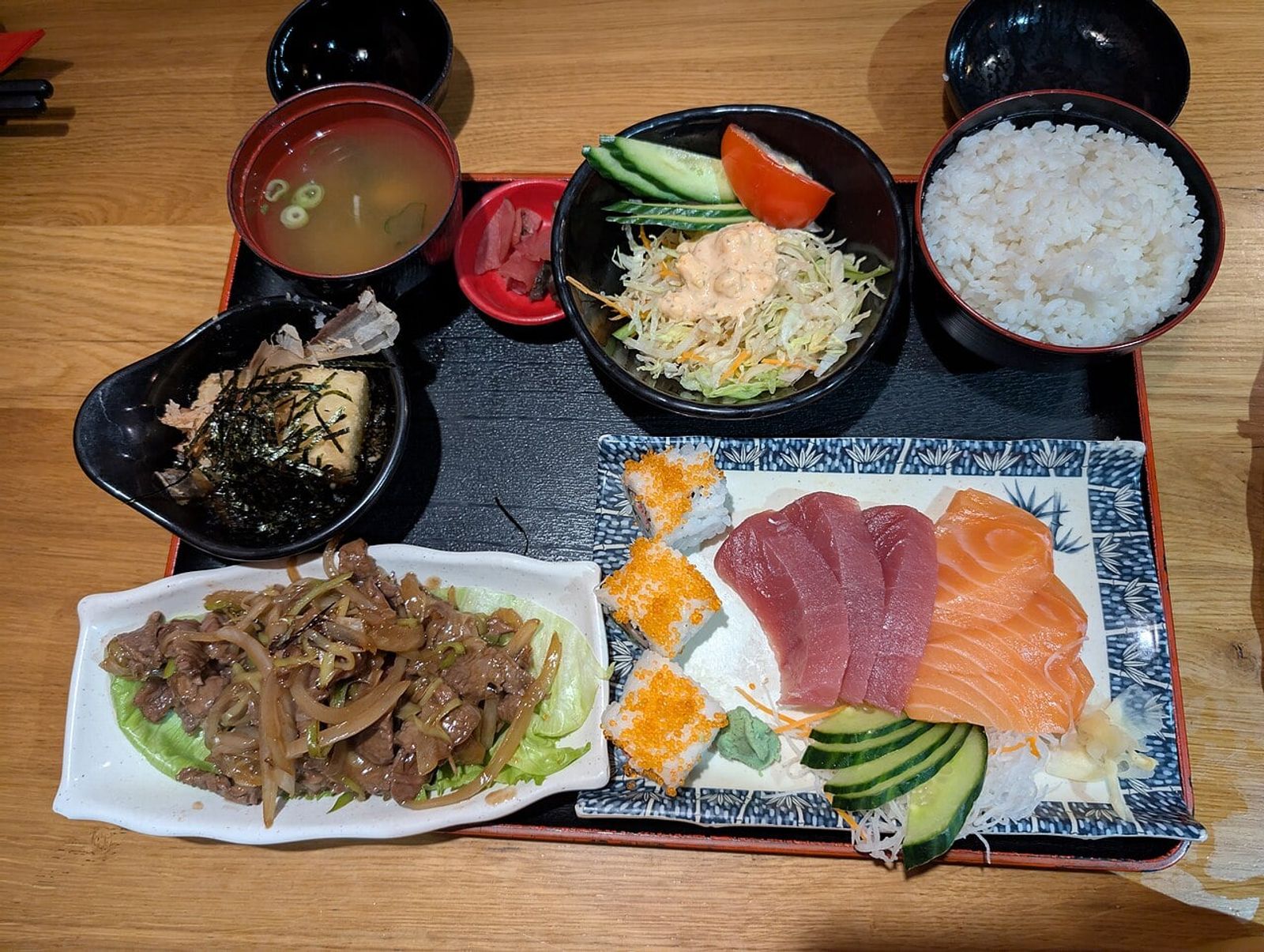
Japanese teishoku set meal
How Japanese Restaurants Work: Ticket Machines, Oshibori, Otoshi, and Why There Is No Tipping
You hear 'irasshaimase' at the door, you may need to buy a ticket before sitting, and at an izakaya a snack you did not order arrives. Here, in order, are the moments that puzzle first-time visitors to a Japanese restaurant.
Entering: Party Size and Being Seated
When you enter, staff call out 'irasshaimase' (welcome) and ask 'nan-mei-sama desu ka?' (how many?). Show the number with your fingers. Unlike in Korea, you wait to be seated rather than taking any empty table. Some places still ask 'smoking or non-smoking?'. Without a reservation you may be turned away with 'manseki desu' (we are full), so for popular restaurants booking through apps like Tabelog, Gurunavi or Hot Pepper, or by phone, is safer. Once seated, water or tea arrives along with a moist towel, 'oshibori', which is for your hands only — wiping your face or neck with it is considered poor manners. At single-diner spots such as ramen, gyudon and soba shops, you often choose your meal at a ticket machine by the door, insert money, and take the ticket to your seat. If the machine confuses you, staff will usually help.
Ordering: Sumimasen, Tablets, and Osusume
When you are ready, raise a hand and say 'sumimasen' (excuse me) or press the table bell. Ordering by tablet or by scanning a QR code on your phone has spread rapidly, and most systems offer English, Korean and Chinese. Menus have photos, and the plastic food models in the window can be pointed at. Ask 'osusume wa nan desu ka?' (what do you recommend?) and staff will name the signature dish. Order a 'teishoku' (set meal) and the main comes with rice, miso soup and pickles. Some places offer free rice refills — look for 'gohan okawari jiyu' on the menu. Water is free and constantly refilled. If you have allergies, say 'arerugi arimasu' and name the ingredient. Japanese restaurants generally serve dishes exactly as listed, so custom requests like removing an ingredient or swapping a sauce may be declined.
Izakaya Rules: Otoshi and One Drink per Person
Sit down at an izakaya and a small appetizer you did not order appears. This is 'otoshi' (called 'tsukidashi' in Kansai), effectively a seating charge of 300 to 500 yen per person. It is hard to refuse and is added to the bill automatically, so think of it as a table fee rather than a free snack and it will not catch you off guard. Tourist-area izakaya often post the otoshi charge on the menu or at the entrance. Custom is to order drinks first, the moment you sit. 'Toriaezu nama' (a draft beer to start) is the ritual opening line of any Japanese night out. Most places have a one-drink-per-person rule; if you do not drink alcohol, oolong tea or a soft drink is fine. Food comes as small plates to share, and it is natural to order a few at a time rather than everything at once. All-you-can-drink 'nomihodai' and all-you-can-eat 'tabehodai' plans usually run two hours, with last orders 30 minutes before the end.
Table Manners: Chopsticks, Bowls and Sounds
Japan uses chopsticks only; spoons come with a few dishes like curry or rice bowls. Rice and soup bowls are lifted and held while eating — the opposite of Korea, where bowls stay on the table. Miso soup is sipped from the bowl, with solids picked out by chopsticks. Sticking chopsticks upright in rice, passing food chopstick to chopstick, or dragging a dish toward you with chopsticks are taboo because they evoke funeral customs. Say 'itadakimasu' before eating and 'gochisosama deshita' after; saying 'gochisosama' to staff on your way out is appreciated. Noodles may be slurped, but other foods are eaten quietly. When taking from a shared plate, tradition is to flip your chopsticks and use the handle ends ('toribashi'), though many places now provide separate serving chopsticks. Leaving food is frowned upon, so order only what you will eat.
Paying: The Counter, Cash, and No Tipping
At most Japanese restaurants you take the bill ('denpyo') from your table to the counter near the entrance to pay. At upscale restaurants and some izakaya, saying 'okaikei onegaishimasu' (the check, please) brings it to the table. Many places will split the bill if you say 'betsu-betsu de' (separately), but some refuse, so it is easier for one person to pay and settle later. Custom is to place cash or your card on the small tray at the register. Quite a few restaurants in Japan still take cash only — especially old family-run places, ramen shops and market stalls — while chains and tourist-area restaurants generally accept cards, IC cards like Suica and QR payments. There is no tipping; service is included in the price, and only high-end ryotei add a 10 percent service charge. If you leave a tip, staff may come out to return it. Hours are typically split, such as lunch 11:30-14:00 and dinner 17:30-22:00, with many places closed in between.
Restaurant Types and a Sense of Budget
Budgets in Japan are fairly predictable by restaurant type. Gyudon beef-bowl chains (Yoshinoya, Sukiya, Matsuya) run 500 to 800 yen; ramen 900 to 1,300; teishoku set-meal restaurants and soba/udon shops 900 to 1,500; conveyor sushi 1,500 to 2,500; izakaya 3,000 to 5,000 per person; and yakiniku or sushi counters 5,000 and up. Lunch sets deliver the same dishes at about half the dinner price and are the best value going. Dining alone, gyudon, ramen and soba shops and department-store restaurant floors are comfortable, and convenience-store bento and onigiri make a fine meal. Department-store basement food halls ('depachika') discount bento and prepared dishes 30 to 50 percent in the last hour before closing — ideal for eating back at your hotel. Eating while walking down the street is frowned upon in Japan, so eat stall food on the spot and carry your trash with you.