Seongju Chamoe
 KoreaNorth Gyeongsang · Seongju
Seongju Chamoe: The County That Grows Most of Korea's Yellow Melons
The bright yellow chamoe with white stripes is Korea's signature summer fruit, and most of it comes from Seongju in North Gyeongsang. Here is why Seongju became melon country, how the varieties evolved, and how to pick and eat a good one.
Chamoe, Korea's Summer Fruit
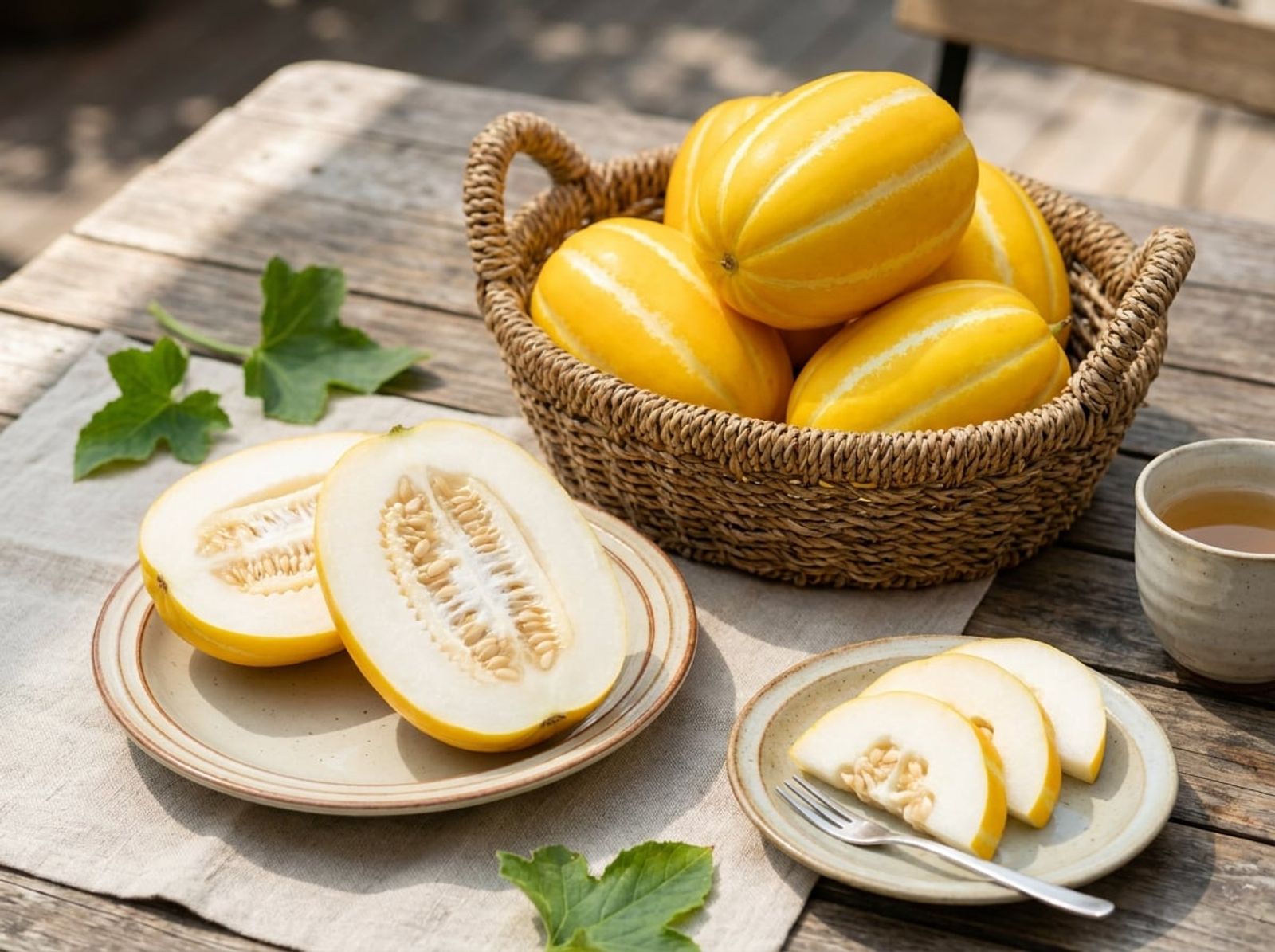
Chamoe is a small melon with yellow skin and white vertical stripes, and for Koreans it is one of the most familiar tastes of summer. It is crisp and gently sweet, and it is listed in the international Codex food standards under the name Korean melon. Press reports citing old records say it arrived via China during or even before the Three Kingdoms period. Most of it comes from Seongju County in North Gyeongsang. Figures vary by source: a 2005 figure put Seongju's share of national production at 67%, a 2018 article at about 70%, and a 2026 article at about 85%. The base years and methods differ, but clearly a large share of the chamoe eaten in Korea is grown in Seongju.
Why Seongju? Sandy Soil, Rivers and Big Temperature Swings
A 2007 Maeil Shinmun article sums up why Seongju became chamoe country. It has sandy loam well suited to farming, and with the Nakdong River to the east and the Daegacheon stream to the west, groundwater is plentiful. Mount Gaya stands like a folding screen to the west, and lots of sunshine with big day-night temperature swings produces sweet fruit. A 2026 report likewise points to well-draining decomposed-granite soil, abundant water and a favorable climate. Location helped too. About 30 km from Daegu, it was a suburban farming belt with cheaper land than around the city and good road links for shipping to a big market. Seongju was once the capital of the ancient Seongsan Gaya state, and the Joseon geographer Yi Jung-hwan's Taengniji is said to have listed it among Korea's most fertile lands.
Varieties That Changed History: From Euncheon to Geumssaragi
Seongju has been growing chamoe for well over 50 years. Local papers speak of know-how built up since the 1950s, and Seongju County dates commercial growing to 1970, when a farmer in Seongju-eup planted Euncheon melons in an open field. New varieties were the big turning points. According to the Maeil Shinmun, the Euncheon variety introduced from Japan in 1957 was sweeter than native melons and became the mainstay. In 1975 the Sin-Euncheon variety followed. Then the Geumssaragi variety, released in 1984, with its high sugar and crisp flesh, is credited with making Seongju chamoe what it is today. Today seedlings go into greenhouses in autumn, and the first melons can ship as early as January.
Geographical Indication and a 'Melon Special Zone'
Seongju chamoe is a classic case of a place name working as a quality guarantee. According to the Maeil Shinmun, it was registered as Geographical Indication No. 10 in 2005, and in 2006 Seongju was designated a special zone for the chamoe industry. The scale is large. As of 2005, about 5,400 farms grew chamoe on more than 3,200 hectares, and reports say gross income from chamoe passed 500 billion won for the first time in 2017. A 2026 article says it has brought in over 600 billion won every year since 2020, a single crop accounting for about a quarter of the county's economic output. Research into vertical farming, hydroponics and grafting robots continues, along with efforts to expand exports beyond Japan to more countries.
How to Pick One and Enjoy It
When choosing chamoe, the common advice is to look for an even, vivid yellow with crisp white stripes. Lots of green can mean it is underripe, while a deep orange cast or large brown patches may mean it is overripe. It should feel heavy and firm in the hand. Eating it is simple: chill it, peel it, cut it in half and dig in. Many people eat the seedy center too, saying it is the sweetest part, though you can scoop it out if you prefer. As the main growing region, Seongju also has products made with chamoe. Field-grown chamoe peaks in midsummer, but Seongju's greenhouses ship from winter onward, so a visit any time from spring to early autumn can mean freshly picked melons.