Mungyeong Omija
 KoreaNorth Gyeongsang · Mungyeong
Mungyeong Omija: Home of the Five-Flavor Red Berry
Omija, as its name says, is a red berry said to taste sweet, sour, bitter, salty and pungent all at once, and Mungyeong in North Gyeongsang is its biggest producer. Here is how Mungyeong became omija country, how to enjoy omija syrup and tea, and the autumn festival.
The Berry of Five Flavors
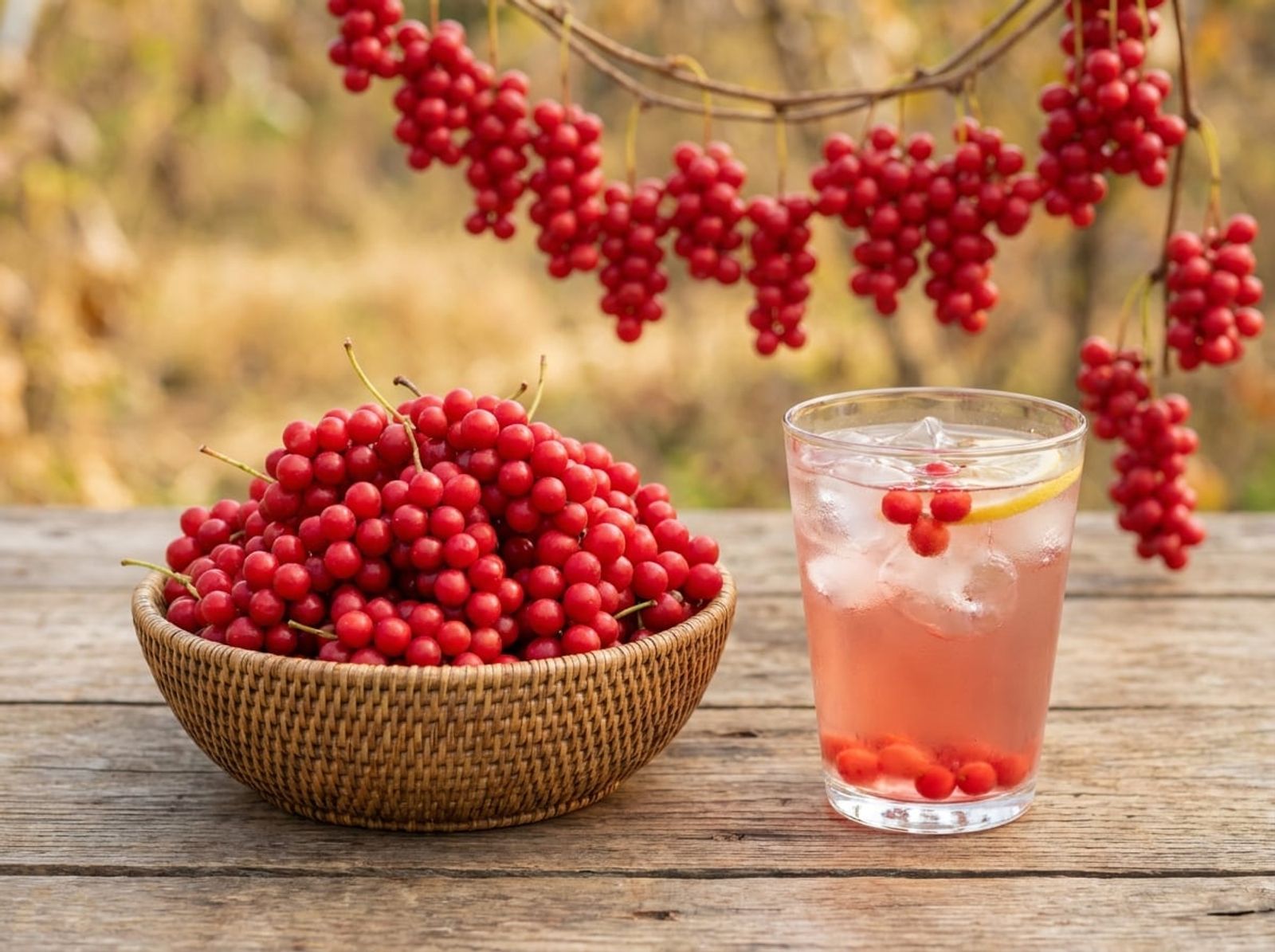
Omija (schisandra) is a small red berry that hangs from vines in clusters like grapes. The name means five flavors, because one berry is said to hold sweet, sour, bitter, salty and pungent notes. Taste one and sourness hits first, with other flavors layering in after, which makes it unlike any other fruit. Koreans rarely eat omija raw; it is usually enjoyed as cheong (a sugar-cured syrup) or steeped as tea. Its deep red color makes punches and drinks look beautiful. And the place that grows the most omija is Mungyeong in North Gyeongsang.
From Wild Mountain Vines to Korea's Top Producer
Mungyeong's omija farming history is shorter than you might think. According to a 2018 Seoul Shinmun report, serious cultivation began in 1996, when wild omija was transplanted to a demonstration plot of about 1,800 square meters. Mungyeong omija is described as descended from vines around Hwangjangsan and Daemisan mountains and grown eco-friendly in highlands 300 to 700 meters above sea level. Growth was fast after that. A 2015 Gyeongbuk Maeil article says Mungyeong is the leading producer with about 45% of national output, on roughly 1,000 hectares producing around 5,500 tonnes a year. A more recent article gives the same 45% as a share of planted area, so the basis varies by source. Either way, nearly half of Korea's omija comes from Mungyeong.
Geographical Indication and an 'Omija Special Zone'
In June 2006 the government designated Mungyeong as Korea's only omija industry special zone, and in January 2009 Mungyeong omija was registered as a geographical-indication specialty. The word Mungyeong in front of the name has become a mark of origin in itself. Mungyeong is often cited as a place that sells omija not just as fruit but adds value through processing. A 2018 report called it a success model for turning farming into a combined production, processing and tourism industry, unlike crops that faded after a passing boom. Beyond syrups and drinks, it has expanded into cosmetics and pharmaceuticals. According to a 2015 article, combined farm income and processed-product sales topped 100 billion won.
How to Enjoy Omija Syrup and Tea
The most common way to enjoy omija is as cheong. Fresh berries are cured in sugar into a red syrup, and mixed with water it becomes sweet-tart omija tea. Local papers describe it as a drink for every season, cold or hot: over ice in summer, with warm water in winter. Omija hwachae, with pear or other fruit floating in the red omija liquid, is so pretty that it often appears when guests come over. In Mungyeong's cafés, rest stops and specialty shops you can easily find omija drinks, syrup and dried berries. If it is your first time, the sourness is stronger than you might expect, so adjust the strength little by little. A cold glass of omija tea after walking the Mungyeong Saejae pass makes for a very Mungyeong kind of trip.
When to Go: The Mungyeong Omija Festival in September
Late summer to early autumn, when the berries turn red, is a good time to visit. The Mungyeong Omija Festival is held in Dongno-myeon; in 2025 it reportedly ran from September 19 to 21 around the Geumcheon riverside grounds in Dongno-myeon, with free admission. The 22nd edition was held at the same site on September 18 to 20, 2026, so it is a well-established local event. The signature program is making your own omija syrup, and many visitors come to buy freshly picked berries to cure at home. Ahead of the 2026 festival, organizers also announced the first Mungyeong omija quality competition. The roads around the festival pass fields of vines hung with red berries, great for photos. Dates change every year, so check Mungyeong City's announcements before you go.