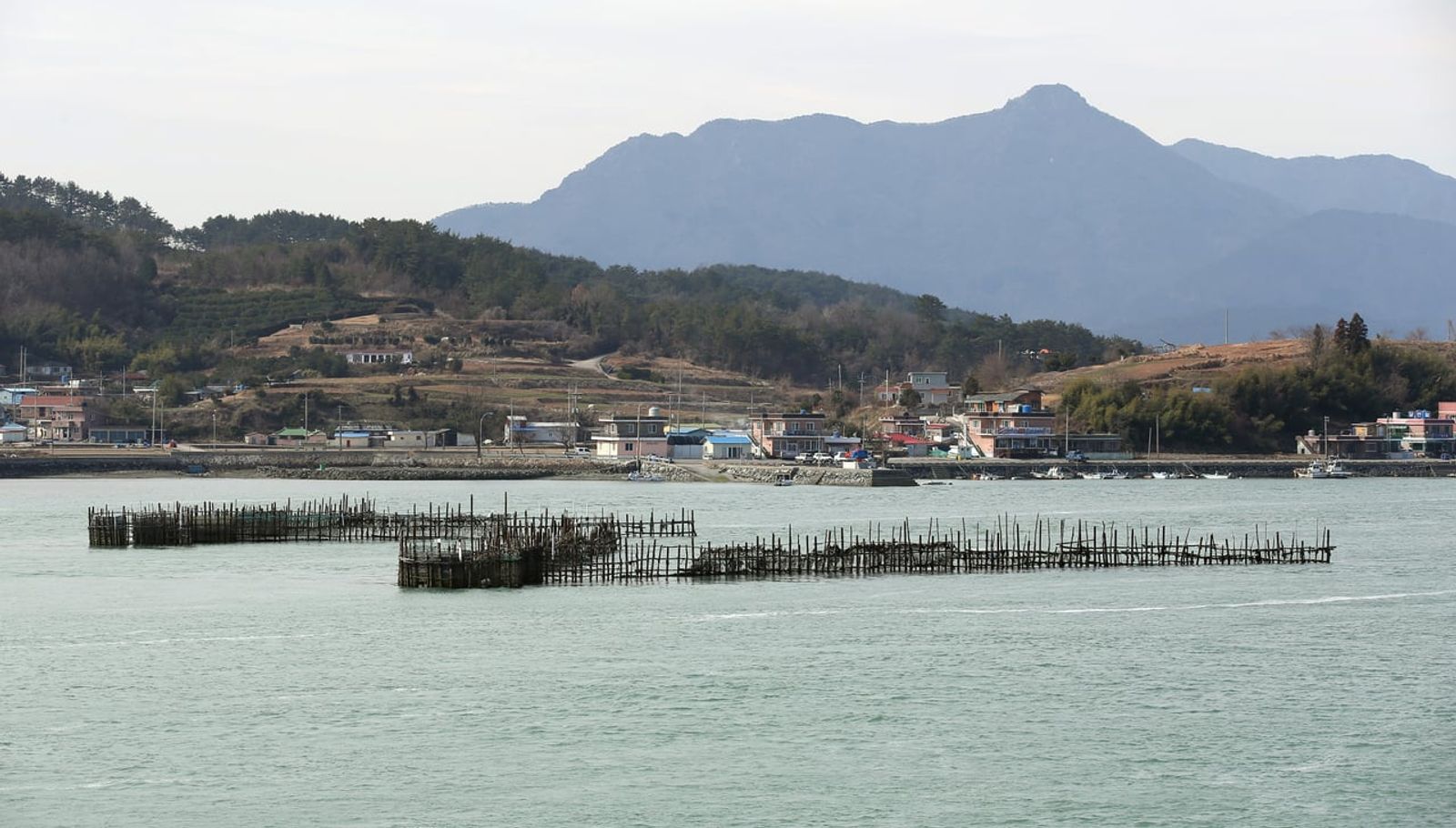
Bamboo anchovy weirs in Jijok Strait · Photo: Republic of Korea (Korea.net) / CC BY-SA 2.0 (Wikimedia Commons)
 KoreaSouth Gyeongsang · Namhae
Namhae Myeolchi Ssambap: Anchovies From 550-Year-Old Bamboo Weirs, Braised and Wrapped in Lettuce
Anchovies usually mean tiny dried fish, but in Namhae, finger-sized fresh anchovies are braised whole and wrapped in lettuce. Here is what makes Namhae anchovies special, how the bamboo weirs of Jijok Strait work, and how to eat myeolchi ssambap and anchovy salad.
What Makes Namhae Anchovies Special
Namhae County in South Gyeongsang is one of Korea's leading anchovy regions. According to press reports, the anchovy season starts in late April and runs until November. Spring and autumn anchovies are considered the tastiest, and May anchovies in particular are praised for soft bones and firm, springy flesh. Anchovies are caught in several ways, including boat seines, drift nets and set nets. Large anchovies are mixed with salt and aged for over a year into the fish sauce used in kimchi, while small ones are boiled and dried right on the boats to become the dried anchovies served as side dishes. And Namhae still keeps a very old method rarely seen elsewhere: the bamboo weirs of Jijok Strait.
Jukbangnyeom: Bamboo Weirs That Let the Tide Do the Work
Jijok Strait, a narrow channel about 350 meters wide between Namhaedo and Changseondo islands, is known for its fast currents. In this channel, oak stakes are driven into the seabed in a V shape and lined with woven bamboo screens to form a jukbangnyeom. At the point of the V is a round enclosure; anchovies swept in on the rising tide cannot escape as the tide falls, and fishermen scoop them out with hand nets once the water drops. Because the fish are not dragged through nets, weir anchovies are known for their good condition, and since the catch is small they cost more than anchovies caught by ordinary methods. The method is said to date back about 500 to 550 years, and 23 weirs remain in the strait. They were designated a national scenic site (2010) and a National Important Fisheries Heritage (2015), and in July 2025 were listed as a Globally Important Agricultural Heritage System by the UN's FAO.
What Is Myeolchi Ssambap?
Myeolchi ssambap is Namhae's signature meal: a stew-like dish of braised fresh anchovies served with rice and leafy greens for wrapping. In the method described in press reports, dried cabbage leaves are laid in the pot, doenjang (soybean paste) and finger-sized whole fresh anchovies go on top, and everything is seasoned with soy sauce and anchovy fish sauce and braised until the liquid reduces. Though fresh anchovies are used, properly cooked they are said to have hardly any fishy smell. The dish is said to have been first served at a restaurant around the Jijok junction in Samdong-myeon, near Jijok Strait; in a 2018 report it was described as having cooked anchovy dishes for over 40 years. Today many restaurants across Namhae serve it, especially around Jijok and Mijo harbor, each with its own level of spice and amount of broth.
How to Wrap It, Plus Anchovy Salad
As the name says, you eat it as a wrap (ssam). Spread a lettuce leaf on your palm, add a little rice, top with braised anchovies and cabbage, add garlic or chili if you like and eat it in one bite. The anchovies are soft enough to eat bones and all, so there is little need to pick them apart. Many people also mix the leftover broth into their rice. A popular side order is myeolchi hoe-muchim, anchovy salad. Fresh anchovy fillets, with heads and bones removed, are rinsed in makgeolli to reduce fishiness and tossed with vegetables like water dropwort and perilla leaves in a sweet-sour chili sauce. Because fresh anchovies spoil quickly, people say they are best eaten where the catch comes in. For two people, sharing one order of ssambap and one of anchovy salad is a safe choice.
Where and When: Jijok Strait and Mijo Harbor
If you are going for myeolchi ssambap, remember two places. One is the Jijok Strait area, where you can look down on the weirs from Changseon Bridge or the shore and see the V-shaped lines of bamboo screens; group experiences are reportedly offered in some seasons. The other is Mijo harbor at Namhae's southern tip. From spring to autumn you can watch fishermen shaking anchovies out of their nets on the boats, a scene counted among Namhae's top sights. A spring festival themed on anchovies and seafood has been held around Mijo harbor every year. Visit in spring, especially April and May, when fresh anchovies are said to be at their best, and you can enjoy ssambap and anchovy salad in season. Festival dates change every year, so check Namhae County's announcements.