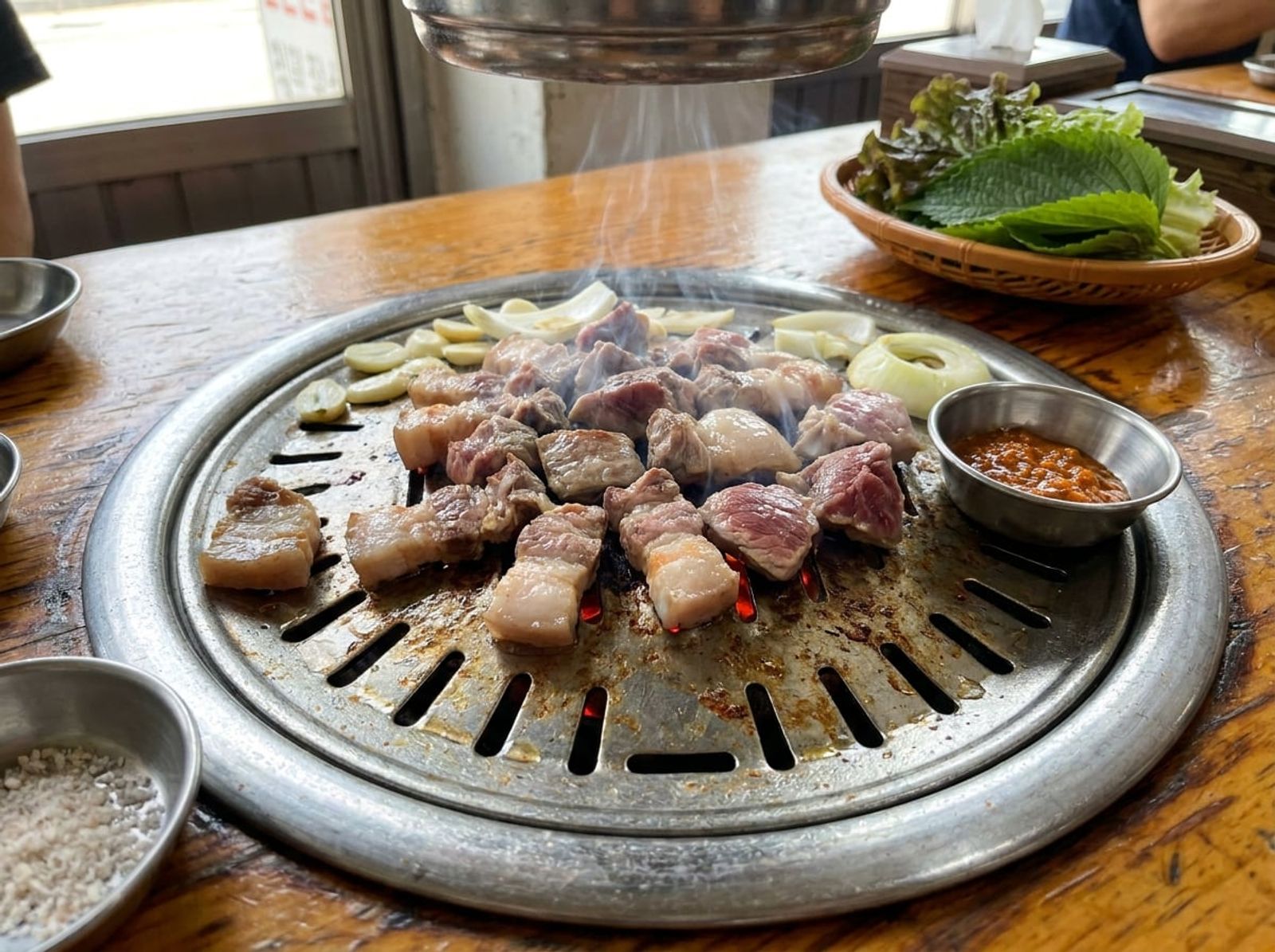
Gimhae Dwitgogi
 KoreaSouth Gyeongsang · Gimhae
Gimhae Dwitgogi: How 'Back-Door' Pork Became a City's Signature Taste
In Gimhae, many people reach for dwitgogi before pork belly. Here is where the name of this grill-it-yourself mix of leftover pork cuts comes from, why Gimhae is its home, and how to enjoy it on the city's designated dwitgogi street.
A Name That Means Sold Out the Back
Dwitgogi is not the name of a particular cut. It refers to the trimmings left over after the marketable cuts have been taken from a pig. There is no exact record of how it got its name, only stories. The most common one is that butchers set aside the leftover parts and sold them "out the back" (dwi) to people looking for cheap meat. A 2025 report relates the story that, in the 1980s, slaughterhouse workers either quietly ate the trimmings themselves or sold them cheaply through the back door to customers who were struggling financially. Accounts differ on timing and details, but everyone agrees on one thing: it is cheap and it tastes good. Gimhae is known as the "birthplace of dwitgogi."
Gimhae, a City of Livestock
There is a reason dwitgogi started in Gimhae. The city has a well-developed livestock industry and is considered the hub of farming and meat processing in South Gyeongsang. In Jucheon-myeon, Gimhae, there is a livestock distribution center that a 2023 report called the largest in Korea, able to process 4,500 pigs a day. The large volume of pork offcuts coming out of this facility is said to be why dwitgogi took root here. According to the same report, the center can process about 5 tons of dwitgogi a day, enough to supply around 100 dwitgogi restaurants across Gimhae. Each pig yields only a little of this meat, which once made it hard to distribute, but a city with so much slaughtering could gather enough to support specialist restaurants. Gimhae City now promotes dwitgogi as one of its signature foods.
Many Cuts on One Plate
A plate of dwitgogi is mostly a mix of cuts from around the pig's head. Reports list parts such as the meat around the eyes, cheek, tongue, jowl (hangjeongsal) and the back of the neck. Each pig yields only a small amount of these, in irregular shapes, so they were hard to sell as separate products. As a result, the texture varies from piece to piece on the same plate. Some bites are chewy, others tender with a good amount of fat. Many people describe the meat as springy with a deep pork flavor. If you expect large, even slices like pork belly it may seem unfamiliar, but tasting a little of many cuts is part of the fun. Each restaurant mixes different cuts in different proportions, so dwitgogi tastes a little different everywhere.
The Dwitgogi Street and Festival
In April 2023, Gimhae City designated a stretch of about 600 meters in Buwon-dong and Bonghwang-dong near City Hall as the "Dwitgogi Street." Around ten dwitgogi restaurants are clustered here, and it is described as easy to reach by light rail and bus. There are also plenty of dwitgogi restaurants elsewhere in Gimhae, so you can find it easily outside the street too. Since 2024, a dwitgogi street festival has been held in the Buwon-dong area. According to reports, about 4,000 people came in the first year, and at the second festival in early November 2025, booths sold 120 grams of dwitgogi for 5,000 won, with free tastings, a barbecue zone and performances. The festival is organized by the local residents' association, so dates and programs may change each year; check Gimhae City news before you go.
How to Eat It and Ordering Tips
Dwitgogi is usually grilled at the table like other Korean pork barbecue. The pieces are small and vary in thickness, so some cook fast and some take longer; it is better to grill a few at a time and eat them right away than to load the whole plate. Wrap them in lettuce or eat them with salt, ssamjang and garlic. The biggest draw is the price. Reports describe it as excellent value for money, and it tends to cost less than pork belly, so it is good for groups ordering plenty. If it is your first time, order a few portions to see which cuts come out, then order more. Some places also serve individual cuts such as cheek or jowl separately rather than mixed. Finishing with doenjang stew or cold noodles after the meat is a common combination.