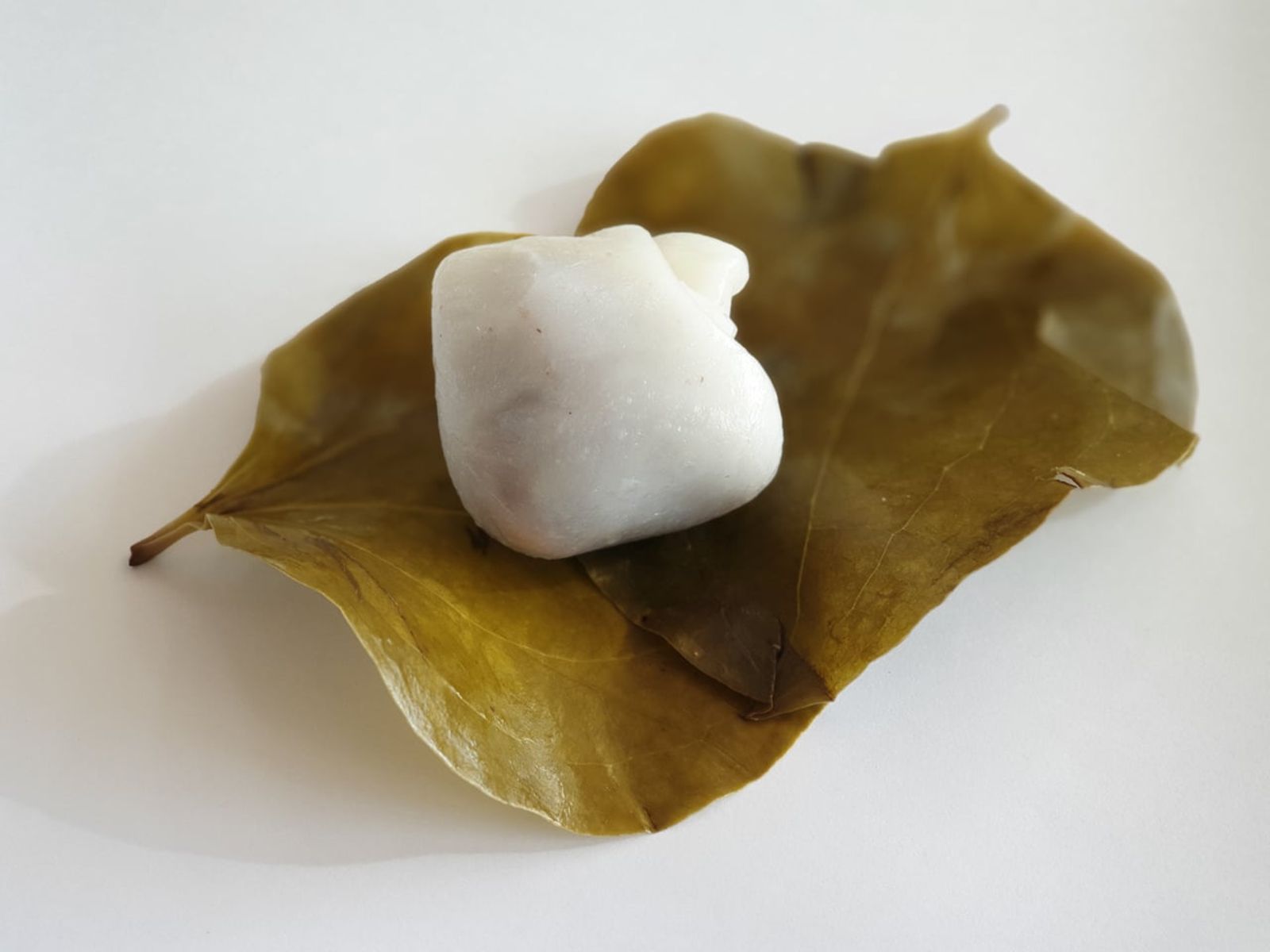
Manggae-tteok on a greenbrier leaf · Photo: Liante44 / CC BY-SA 4.0 (Wikimedia Commons)
 KoreaSouth Gyeongsang · Uiryeong
Uiryeong Manggae-tteok: Rice Cakes Wrapped in Greenbrier Leaves, Korea's First Rice Cake With a Geographical Indication
A white rice cake tucked between two green leaves, manggae-tteok is the signature food of Uiryeong in South Gyeongsang. Here is what the leaves do, the legends tying it to the Gaya kingdom and righteous armies, its pioneering geographical indication, and tips for buying it in Uiryeong.
What Is Manggae-tteok?
Manggae-tteok is a rice cake made from non-glutinous rice dough filled with sweet red-bean paste, wrapped in greenbrier (Smilax china) leaves and steamed. In the Gyeongsang dialect this common mountain vine is called manggae-namu, so a rice cake wrapped in its leaves became manggae-tteok. In Uiryeong it is usually a small square of rice dough, smaller than your palm, filled with red-bean paste and sandwiched between two round greenbrier leaves. According to press reports, the rice is soaked and ground into flour, steamed, kneaded many times, then rolled flat and cut into pieces of about 6 cm. The cake is soft and chewy, with a faint grassy scent from the leaves.
Three Origin Stories: Gaya, Righteous Armies and the Colonial Era
There is no exact record of when manggae-tteok appeared, only a handful of stories. The first says it was a wedding gift food sent to the groom's family in the Gaya period, or a wedding present sent from Gaya to the kingdom of Baekje. The second says righteous army fighters ate it during the Imjin War (the Japanese invasions of 1592 to 1598) because it did not spoil easily. Uiryeong is known as the place where Gwak Jae-u raised his righteous army during that war, so this story comes up especially often. The third suggests it arrived in Uiryeong during the Japanese colonial period, noting its resemblance to Japan's kashiwa-mochi, which is wrapped in oak leaves. With accounts this varied, none can be called the definitive answer. One producer has said his family began making and selling it in its current form in the mid-1950s.
What the Leaves Do
The leaves are not just decoration. Wrapped in them, the rice cakes do not stick together and stay moist longer, so they harden more slowly. Compounds in the leaves are said to slow spoilage, keeping the cakes relatively fresh even in summer, which fits the stories of it being food for soldiers and refugees. The leaves also lend a subtle aroma to the rice cake. The leaves are picked every midsummer, roughly between June and August, and leaves that are too large, too small or too tender are hard to use. In the past, picked leaves were frozen and used until winter, but once a method of preserving them in salt was developed, manggae-tteok could be made all year round. Sources differ on when this salting method was perfected, with some saying 1984 and others the early 1990s.
The First Rice Cake With a Geographical Indication
Uiryeong manggae-tteok was registered as Geographical Indication No. 74 in March 2011, which reports say was the first geographical indication for a rice cake. The system protects the use of a place name on farm and processed products whose quality depends on that region's natural conditions and traditions. Since then Uiryeong County has called itself "manggae-tteok's No. 1 address." From 2010 to 2012 the county ran a premium branding project, registering a collective mark and improving packaging and storage so that shelf life grew from about a day at room temperature to 3 days refrigerated and 6 months frozen. As of a 2022 report, nine businesses in Uiryeong specialized in manggae-tteok, and several had formed an association that manages quality under a shared brand.
Buying and Eating It in Uiryeong
Rice cake shops selling manggae-tteok can be found around the traditional market in Uiryeong-eup and elsewhere in the county, making it an easy stop on a trip. Reports mention that a village near the town runs manggae-tteok making experiences, so check Uiryeong County's tourism information if you are interested. To eat it, hold it by the leaves and peel them off top and bottom as you eat the rice cake; the leaves themselves are not eaten. It is said to be chewiest on the day it is made, so try it right after buying if you can. Refrigerated and frozen shelf life has been extended since the branding project, but if you are buying gifts, always ask the shop about storage and how long they keep, as methods differ from shop to shop. Small and simple, they make a nice snack with a cup of tea.