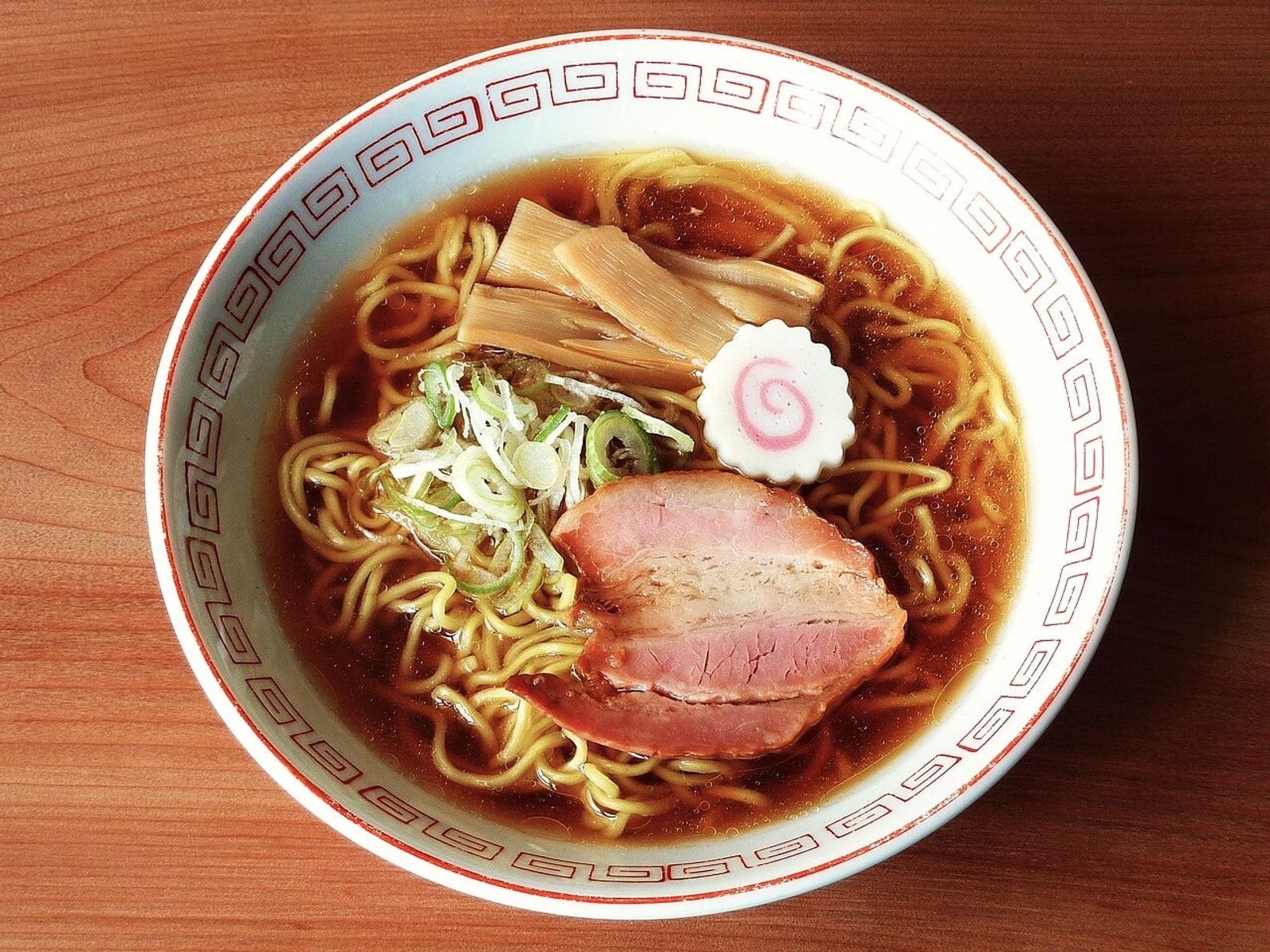
Tokyo shoyu ramen
The Lineage of Ramen: How a Chinese Noodle Became Japan's National Dish, and the Four Regional Styles
Sapporo miso, Hakata tonkotsu, Tokyo shoyu, Kitakata shio. Discover how regional broths emerged in ramen's roughly 100-year history, how to use the ticket machine, and what 'kaedama' means.
The Anatomy of Ramen: Broth, Tare, Noodles, Toppings
A bowl of ramen has four parts: the 'soup' simmered from pork bones, chicken bones, dried sardines or kelp; the 'tare', a concentrated seasoning placed in the bowl first that sets the saltiness; the 'chuka-men', wheat noodles kneaded with alkaline water (kansui) that gives them a yellow tint and springy bite; and 'toppings' such as chashu braised pork, menma bamboo shoots, scallion, nori and a soft-boiled egg. Ramen is often classified by the tare rather than the soup. Shoyu (soy), shio (salt) and miso are types of tare, while tonkotsu (pork bone) describes the soup, which is why you see combinations like 'tonkotsu shoyu'. Noodles vary regionally from thin and straight to thick and wavy: Hakata uses thin noodles, Sapporo thick curly ones.
1910, Rairaiken: Chinese Noodles Land in Japan
Ramen's roots lie in Chinese lamian and soup noodles. It began in the late 19th century with 'Nankin soba' sold by Chinese cooks in the Chinatowns of Yokohama, Kobe and Nagasaki, and in 1910 Rairaiken in Asakusa, Tokyo, became hugely popular selling soy-broth noodles adjusted to Japanese tastes. It is considered Japan's first ramen shop. At the time the dish was called 'shina soba' or 'chuka soba'; the word 'ramen' only became widespread after the war. When Momofuku Ando of Nissin invented the world's first instant noodles, 'Chicken Ramen', in 1958, the name spread across Japan. Postwar American flour aid and black-market street stalls made ramen a working-class staple, and today Japan has roughly 25,000 ramen shops.
Sapporo Miso and Hakata Tonkotsu
Miso ramen is said to have been created in 1955 at Aji no Sanpei in Sapporo when owner Morito Omiya answered a customer's request to put noodles in miso soup. Miso tare is stirred into pork-bone broth and topped with bean sprouts, onion and ground pork stir-fried in lard, sometimes with corn and butter. The layer of fat keeps the soup hot in Hokkaido's cold. Ramen Yokocho (Ramen Alley) in Sapporo's Susukino district is the landmark. Tonkotsu ramen comes from Fukuoka (Hakata) and Kurume. Pork bones boiled hard for hours yield a milky, rich broth served with thin straight noodles. It began in 1937 at the Nankin Senryo stall in Kurume and spread to Hakata, where the riverside stalls of Nakasu are an iconic sight. You choose the noodle firmness — barikata (very firm), kata (firm), futsu (regular), yawa (soft) — and 'kaedama', an extra serving of noodles added to the remaining soup, is a Hakata-born custom. Ippudo and Ichiran, the chains that took ramen global, both serve tonkotsu.
Tokyo Shoyu, Kitakata Shio, and Tsukemen
Tokyo's baseline is shoyu ramen: a clear broth of chicken bones, dried sardines and kelp seasoned with soy tare. The old-style 'chuka soba' — medium wavy noodles with chashu, menma, scallion and naruto fish cake — is the archetype, and neighborhoods like Ogikubo and Ebisu each have their institutions. Since the 2010s Tokyo has produced ultra-clear 'tanrei' chicken broths and Michelin-starred ramen shops, making it the frontier of ramen worldwide. Kitakata in Fukushima Prefecture has Japan's highest number of ramen shops per capita, known for flat, chewy 'hirauchi' noodles in a light pork-and-sardine shio or shoyu broth, and for a morning-ramen culture. Tsukemen, where noodles are served separately and dipped into a concentrated broth, began at Taishoken in Tokyo in 1961 and boomed in the 2000s; abura soba, brothless noodles tossed in oil and tare, and the mountainous vegetable-topped bowls of the Jiro school show how Tokyo keeps inventing new genres.
How a Ramen Shop Works: Tickets, Counters and Slurping
More than half of Japan's ramen shops use a ticket machine at the entrance. Many still accept only cash (coins and 1,000-yen notes), so carry change. The basic ramen button is usually at the top left, with separate buttons for toppings such as ajitama (seasoned soft-boiled egg), extra chashu or kaedama. Place the ticket on the counter and staff will collect it; if asked about noodle firmness or broth strength, 'futsu' (regular) is a safe answer. Seating is mostly counter and solo diners are the norm, making ramen shops the easiest Japanese restaurants to enter alone. Slurping loudly is not rude — eating quickly before the noodles soften is considered good manners. Some shops offer aprons or paper napkins against splashes. You need not finish the broth, and when done, lift your bowl onto the counter. Popular shops have long lines around lunch, but turnover is fast and a meal takes 15 to 20 minutes. Expect 900 to 1,300 yen a bowl.