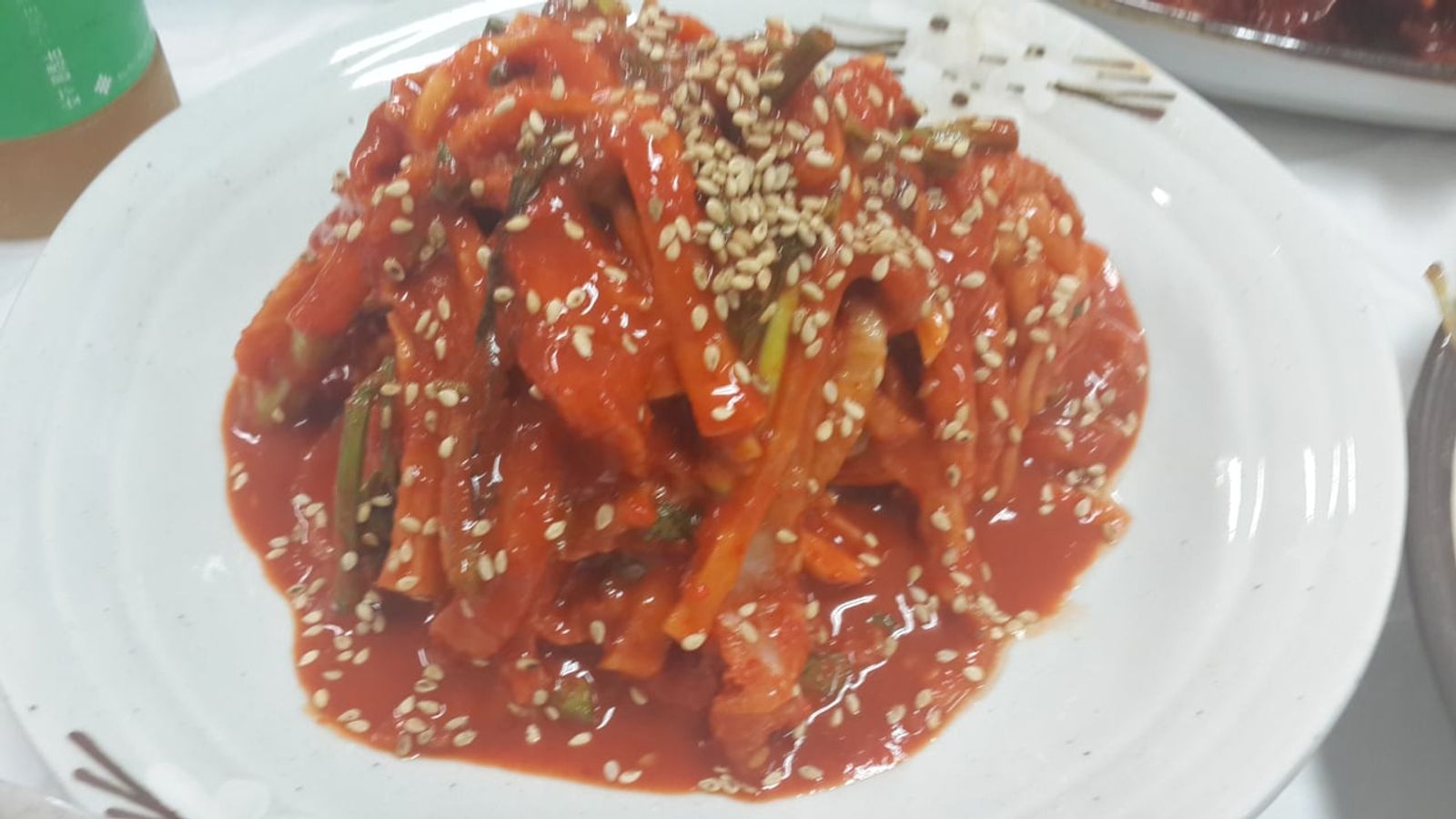
Seodae-hoe muchim in Yeosu · Photo: Mar del Este / CC BY-SA 4.0 (Wikimedia Commons)
 KoreaSouth Jeolla · Yeosu
Yeosu's Two Table Stars: Seodae-hoe in Makgeolli Vinegar and Dolgejang Rice Sets
Ask what to eat in Yeosu and two answers always come up: seodae-hoe and gejang baekban. Here is what makes the tongue-sole salad dressed with year-aged makgeolli vinegar and the rice sets of small, hard-shelled stone crab special, how to eat them and what to know before ordering.
A Table Set by the Sea
Yeosu in South Jeolla Province is a port city on the south coast, ringed by islands such as Dolsando and by inner bays like Yeojaman, so the seafood changes with every season. Most of what people call Yeosu food comes from the sea: mustard-leaf kimchi made with gat from Dolsan, grilled eel and eel soup, and sashimi or shabu-shabu of daggertooth pike conger, a summer stamina food caught mostly from May to November. The two dishes travelers look for first are seodae-hoe muchim and gejang baekban. Seodae-hoe is hard to find outside Yeosu, while gejang baekban, rice with marinated crab, shows the generosity of a southern Korean table. Both are served at many restaurants at reasonable prices, so it is easy to try one at a meal each day while exploring the old downtown.
Seodae-hoe: The Taste of Year-Aged Makgeolli Vinegar
Seodae is a flat, elongated sea fish shaped like a tongue, a type of tongue sole, caught mainly off Yeosu and in Yeojaman Bay. It is available all year, but the biggest catches come in May and June. Seodae-hoe muchim is sliced seodae tossed in a sweet, sour and spicy dressing. It is said to have been a dish for honored guests and even to have reached the royal table. The key is the vinegar. Restaurants known for seodae-hoe make their own makgeolli vinegar: the makgeolli is left to settle, the clear liquor on top is fermented for a full year, and it is used as vinegar the following year. This natural vinegar is said to cut any fishy smell and soften the flavor. The dressing combines it with gochujang, grain syrup, radish, garlic chives, garlic and ginger.
Seodae-hoe Is Best Mixed Into Rice
You can eat seodae-hoe muchim straight from the plate, but in Yeosu the usual way is to mix it into rice. If a large bowl comes with it, put in your rice, pile on the seodae-hoe, add seaweed flakes and sesame oil and mix. Many people also stir in the namul side dishes, eating it like bibimbap. The tang comes first, followed by the sweetness and heat of the gochujang, so even people who are not keen on raw fish often find it easy to enjoy. The seodae flesh is mild and pleasantly chewy, which suits the dressing. Restaurants serving seodae-hoe sometimes also offer braised or grilled hairtail, so if there are two or more of you, sharing seodae-hoe plus one fish dish works well. The vinegar is fairly assertive, so you can hold back a little of the dressing when you first mix it.
Gejang Baekban: Small, Hard-Shelled Stone Crab
The star of Yeosu's gejang baekban is not blue crab but dolgae, stone crab. It is smaller than blue crab, with a harder shell and less meat, but the flavor is rich and nutty. Order gejang baekban and you usually get both ganjang gejang, marinated in soy sauce, and yangnyeom gejang, coated in a red pepper sauce, along with soybean-paste soup or stew and southern side dishes. Yeosu gejang has a reputation for being neither too sweet nor too salty, with deep savory flavor. The side dishes differ a little from place to place. The restaurants are especially concentrated in Bongsan-dong in the old downtown, known as Bongsan-dong Gejang Street.
Ordering Tips and Where to Eat
Gejang baekban is usually ordered one portion per person. Many places will bring more crab if you ask, but how many refills you get and whether it applies to soy-marinated or spicy crab varies, so ask first. Stone crab shells are hard, so rather than biting down, suck out the meat and roe, then mix your rice into the leftover soy marinade, the classic Yeosu finish. Some places sell seodae-hoe per person and others by the plate, so check the menu. Both seodae-hoe and gejang restaurants are concentrated in old downtown Yeosu, around Yi Sun-sin Square and in Bongsan-dong, so they fit well with a waterfront walk or an evening by the sea. Visit from late spring to early summer, when seodae is plentiful, or in summer, when pike conger is in season, to taste more of Yeosu's seasonal sea.