Gwangyang Bulgogi
 KoreaSouth Jeolla · Gwangyang
Gwangyang Bulgogi: Thin Beef Seasoned at the Last Minute and Grilled Over Oak Charcoal
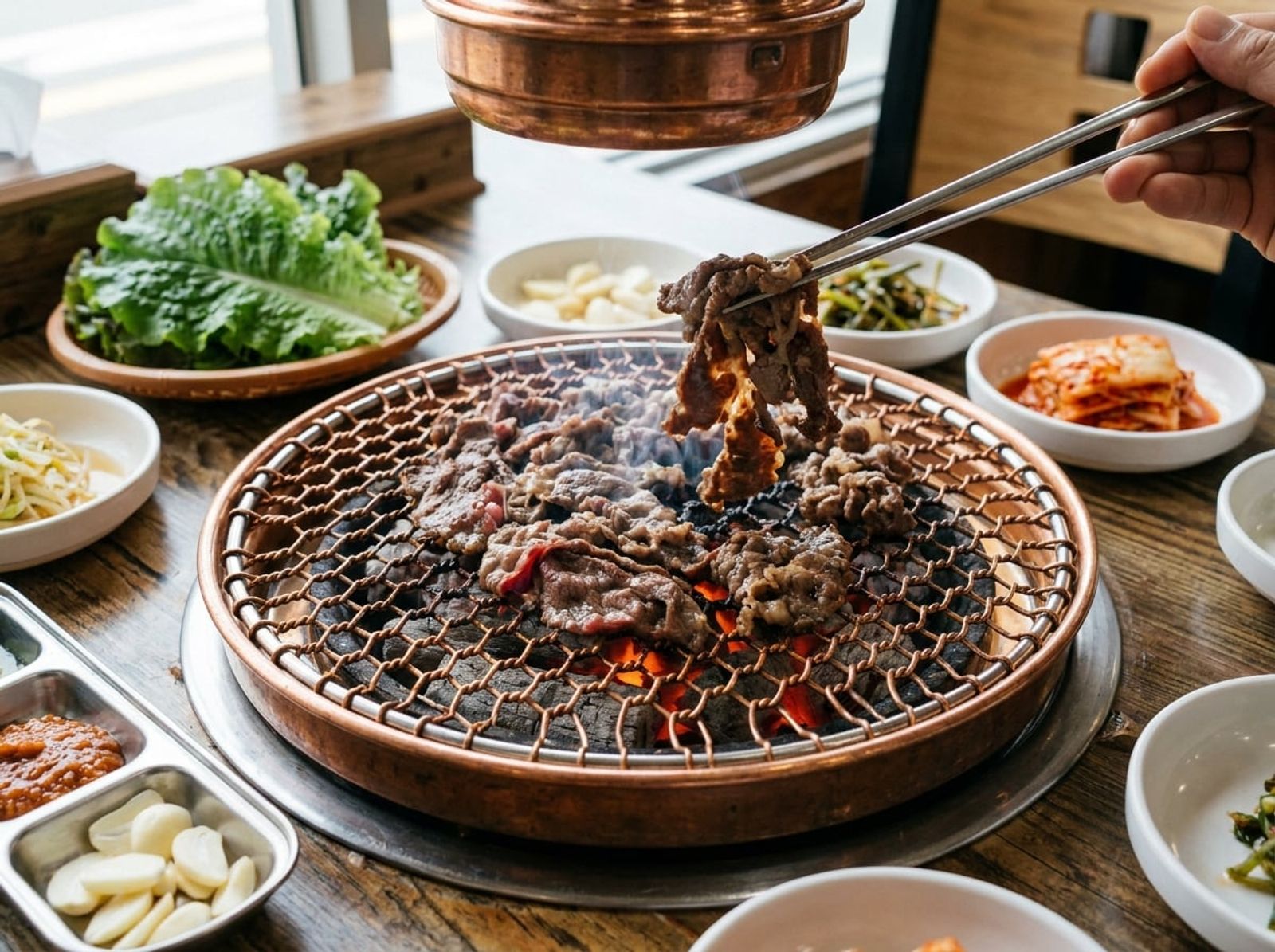
Gwangyang bulgogi is thinly sliced Korean beef tossed in seasoning just before cooking and seared quickly on a copper grill over oak charcoal. Here is how it differs from marinated bulgogi and how to enjoy it on the Seocheon riverside bulgogi street.
The Nickname "Cheonha Ilmi Maro Hwajeok"
Gwangyang in South Jeolla Province is best known as a steel town, home to a huge steelworks, but when it comes to food, bulgogi comes first. The local style carries the nickname cheonha ilmi maro hwajeok (天下一味 馬老火炙). Maro is an old name for Gwangyang and hwajeok means meat grilled over fire, so the phrase means roughly "Gwangyang's grilled meat, the finest taste under heaven." A legend explains it. In the Joseon era a couple of the Gimhae Kim clan, who lived outside the Gwangyang town walls, wanted to thank exiled scholars who were teaching the local children. They seasoned tender meat from a young calf or heifer and grilled it on a copper grill over oak charcoal. When one scholar was pardoned and returned to Seoul, he missed the taste so much that he called it the finest dish under heaven. No names or dates survive, but the story shows how proud Gwangyang is of its bulgogi.
What Makes It Different: Seasoned on the Spot
The bulgogi most people picture is marinated for hours before it is grilled or cooked in a pan with its juices. Eonyang bulgogi from Ulsan is also seasoned and then rested before grilling. Gwangyang does the opposite: nothing is marinated in advance. The seasoning is mixed into the meat right when it is time to cook, and it goes straight onto the grill. The beef is Korean hanwoo, and many places are described as using striploin, lean and tender, sliced as thin as possible. The seasoning is kept mild and minimal, with almost no vegetables mixed in. It supports the flavor of the beef rather than covering it, so the meat itself and the charcoal smoke take center stage. That is why bulgogi in Gwangyang means charcoal-grilled meat from a rack, not the brothy pan bulgogi found elsewhere.
Oak Charcoal, a Copper Grill and High Heat
The other star of Gwangyang bulgogi is the fire. It is traditionally described as grilled on a copper rack over oak charcoal in a brazier, and Gwangyang takes pride in using charcoal made from oak grown on nearby Baegunsan Mountain. The gentle smoke of burning oak charcoal seeps into the meat and gives it a lightly smoked flavor. The technique is different too. Thin slices cook almost instantly, so they are flipped a few times, almost stir-fried on the rack, and grilled only briefly. Searing fast over high heat keeps the juices in. Leave the meat too long and the thin slices dry out and toughen, so the trick is to eat each piece as soon as it changes color. Charcoal grilling is so rooted here that Gwangyang's charcoal-grilled chicken is also counted among local specialties.
The Seocheon Riverside Bulgogi Street and Festival
To eat Gwangyang bulgogi, head to the Seocheon riverside in Gwangyang-eup. A designated bulgogi street runs along the stream with specialist restaurants side by side, and the city promotes it as its signature food spot. Remember that it is in the old town of Gwangyang-eup, not the newer Jungma-dong district, and you will not get lost. The Seocheon riverside has also hosted the Gwangyang Traditional Charcoal Grill Festival. In 2015 it was held for the 14th time along the riverside in autumn, with events centered on bulgogi and charcoal grilling. Dates and formats can change from year to year, so check the city's tourism information before you go. If you visit in spring, many travelers combine a bulgogi meal with Gwangyang's other big draw, the plum blossom festival.
Tips for Ordering and Eating
At a Gwangyang bulgogi restaurant you usually order meat by the number of people; the seasoned beef arrives and a charcoal burner with a grill is set at your table. Rather than piling it all on at once, spread out a few slices at a time and eat them right away. Some places have staff do the grilling, so if it is your first time, ask how they like it cooked. Taste the first pieces plain, then wrap them in lettuce and other greens or eat them with side dishes. Depending on the restaurant, a soup such as kimchi broth may come on the side. Because it is hanwoo beef, prices run higher than a pork barbecue and vary widely, so check the per-portion price and weight on the menu before ordering.