Daegu's Dongin-dong Jjimgalbi
 KoreaDaegu
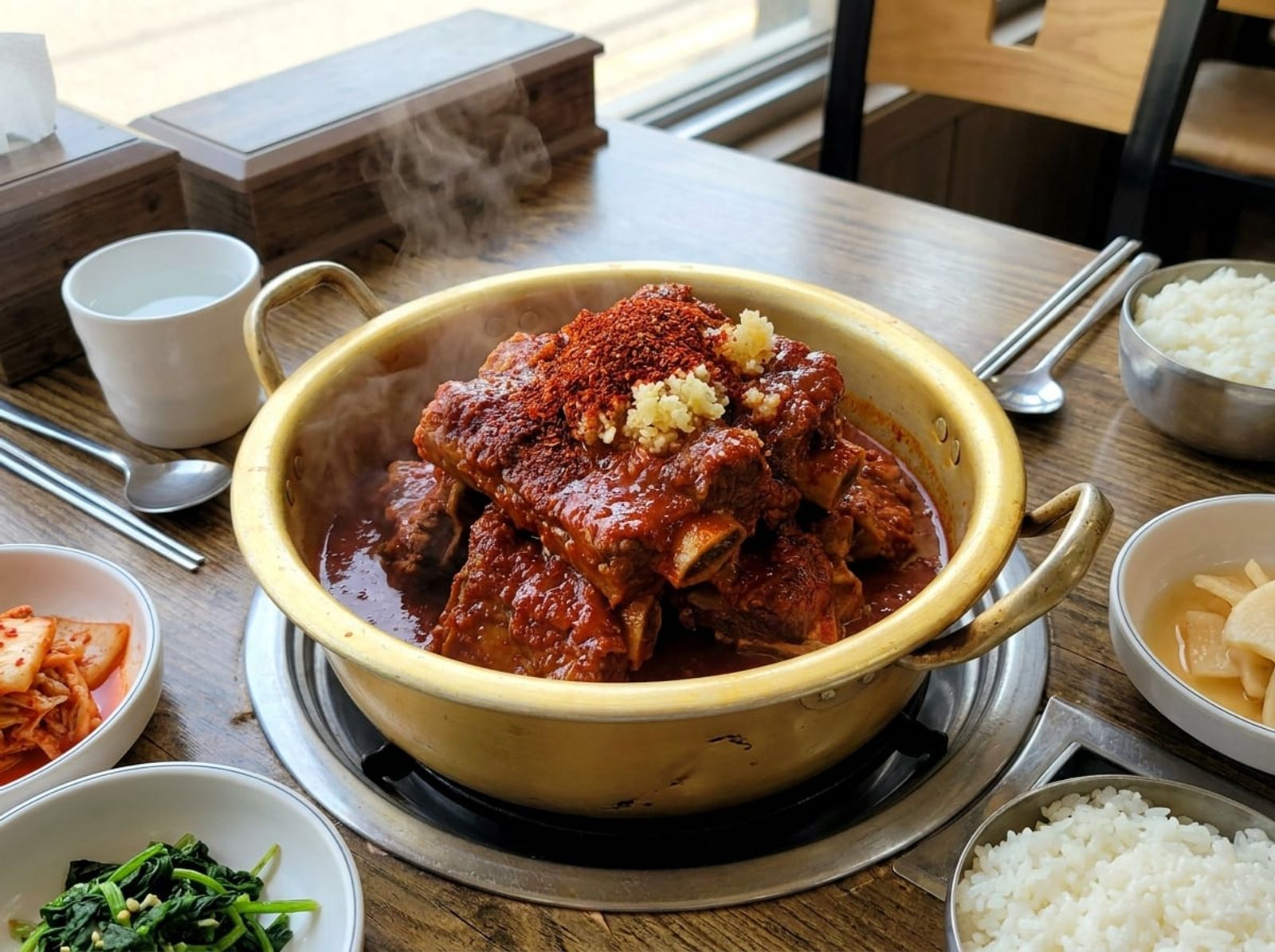
Daegu's Dongin-dong Jjimgalbi: Garlicky, Fiery Braised Ribs Served in a Battered Aluminium Pot
In Dongin-dong, central Daegu, an alley of restaurants serves red-hot beef ribs in dented aluminium pots. Here is how jjimgalbi, one of Daegu's '10 Flavours,' came about, how it differs from sweet soy-braised galbi-jjim, and how to finish every last bit of sauce.
Born in a Dongin-dong Side Street
Dongin-dong in Daegu's Jung-gu district is considered jjimgalbi's home turf, and the dish is one of the city's official '10 Flavours of Daegu.' The Maeil Shinmun explains that Daegu went through a boom in galbi and bulgogi in the late 1960s and that jjimgalbi grew out of it; another article in the same paper says the alley's oldest restaurant opened in 1968. Back then Dongin-dong was a residential area of narrow, unpaved lanes. Once the road was paved around 1975, restaurants moved in one by one, more of them began serving jjimgalbi as their main dish instead of stews, and an alley of jjimgalbi houses formed. It was never a planned food street; it simply grew on its own. Opening dates and the alley's timeline vary slightly between articles, so think of it as a dish that settled in between the late 1960s and mid-1970s.
Galbi-jjim and Jjimgalbi Are Not the Same Dish
The names look like a simple word swap, but galbi-jjim and jjimgalbi taste completely different. According to the Maeil Shinmun, the big difference is the seasoning. The familiar galbi-jjim is braised in soy sauce and sugar until salty-sweet, while Dongin-dong jjimgalbi is loaded with minced garlic and red pepper powder for a hot, slightly sweet flavour. The ingredients are simple: beef short ribs, onion, minced garlic, soy sauce and red pepper powder. The broth the ribs were boiled in goes in too, and no MSG is added, according to the paper. The heat is enough to wake up your appetite with a touch of sweetness behind it, and the clean taste of the beef meets a big hit of garlic. Plenty of people say it is addictive.
Why the Battered Aluminium Pot?
The symbol of Dongin-dong jjimgalbi is the dented aluminium pot, which has earned it teasing nicknames such as 'the dish with no pedigree' and 'dog-bowl galbi.' But there is a reason for it. According to the Maeil Shinmun, the meat and sauce must cook quickly together; ceramic is too slow and stainless steel scorches the sauce. Aluminium, which conducts heat fast, suited the dish best. Since it started out as a drinking snack, a cheap, easy-to-handle pot was the natural choice rather than anything formal. The dents from years of going on and off the flame are now part of the alley's character, though in 2011 some restaurants reportedly began switching to stainless-steel pots after complaints about their looks, so the pot you get may vary by restaurant.
How to Eat Jjimgalbi
You can eat jjimgalbi as it is or wrapped in lettuce. The spicy sauce is soaked right into the meat, and leafy greens soften the heat nicely. Many people pick the ribs up and gnaw the meat off the bone, so keep a wet towel handy. The real finale is the sauce. Spoon the garlic-and-chilli sauce left in the pot over rice and mix it, or tip rice into the pot and fry it until it just starts to stick to the bottom; both are popular. Because it began as a drinking snack rather than a side dish, it pairs well with soju or beer. In a group, the easy order is meat first, fried rice to finish.
Where to Go, and More of Daegu's 10 Flavours
The jjimgalbi alley is in Dongin-dong, Jung-gu, inside central Daegu, so it is easy to fit into a city itinerary, and with restaurants lining both sides you can find it just by following the signs. Each place balances heat, sweetness and garlic a little differently, so regulars have their favourites. If you struggle with spice, ask about the heat level when ordering. After jjimgalbi, it is worth exploring the rest of the 10 Flavours. The city's list includes ttaro-gukbap, Dongin-dong jjimgalbi, grilled makchang, paddy-catfish spicy stew, muchim-hoe, flat dumplings (napjak-mandu), blowfish bulgogi, yakki-udon, mungtigi and nureun-guksu. Daegu even ran a '10 Flavours Day' promotion in 2025. On a one-day trip, try jjimgalbi for lunch and makchang or mungtigi for dinner.