Ganghwa Turnips
 KoreaIncheon
Ganghwa Turnips: The Peppery Purple Root Locals Say Loses Its Flavour Off the Island
On Ganghwa Island in Incheon you see round turnips, purple on top and white below, and the kimchi made from them everywhere. Here is where the Ganghwa turnip came from, why locals say it only tastes right grown on the island, and where to try turnip kimchi and other turnip dishes.
A Purple Root That Is Neither Radish nor Cabbage
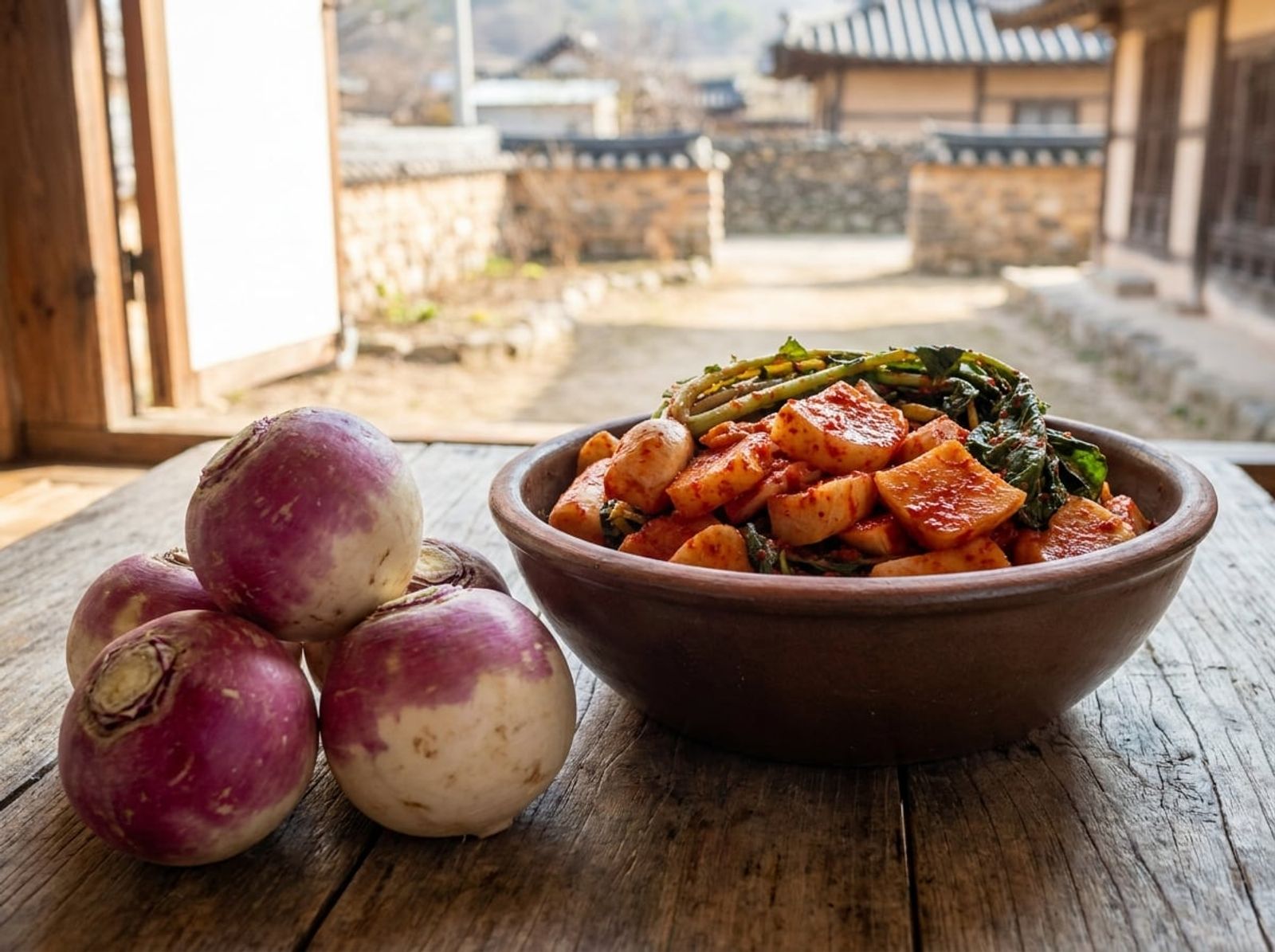
The Ganghwa turnip is round like a spinning top, deep purple on top and white underneath, with dark green leaves that look like mustard greens. According to the Korea Tourism Organization's VisitKorea, it tastes sharp like mustard yet refreshing, with notes of both radish and cabbage root, which is why it is often described as having 'mustard aroma and ginseng flavour.' Its Korean name, sunmu, contains the word for radish, but botanically it is closer to napa cabbage; the same article notes the turnip has the same number of chromosomes as cabbage. Ganghwa has plenty of specialities, from hwamunseok sedge mats to yellow-fleshed sweet potatoes and mugwort, but in autumn the turnip is the island's star crop, easy to spot in fields and markets all over.
From the Mediterranean to Ganghwa, With Seeds From a British Instructor
The turnip is believed to originate on Europe's Mediterranean coast. It is said to have reached Korea via China and been grown since the Three Kingdoms period, and accounts say records show turnips were grown on Ganghwa and sent to the king as tribute from the mid-Joseon period. Today's Ganghwa turnip also carries a modern story. In 1893 a British naval instructor, Callwell, was sent to the naval school King Gojong set up on Ganghwa to train a modern navy. Purple turnip seeds he brought are said to have spread on the island and crossed with the native turnips already grown there, producing the Ganghwa turnip we know. These origin stories are repeated in many sources, but the original documents are hard to verify, so treat them as tradition.
Why It Has to Be Grown on Ganghwa
Ganghwa people say that if you plant the turnip across the bridge on the mainland, the root grows long and loses the Ganghwa flavour. VisitKorea attributes this to the island's environment, its good soil and strong sea winds. Hence the firm belief that a Ganghwa turnip has to be grown on Ganghwa. Field turnips are grown twice a year: sown in spring and harvested around June, then sown again in July and harvested in October and November. Greenhouse turnips come later; they grow bigger than field-grown ones but are said to taste slightly weaker. The leaves are too tough to dry like radish greens, so only the tender ones go into kimchi. An autumn trip to Ganghwa is the time to meet freshly harvested turnips.
Ganghwa-Style Turnip Kimchi
The most common way to taste Ganghwa turnip is sunmu-kimchi, or sunmu-seokbakji. It is a local staple found all over the island, made with the basic seasonings of red pepper powder, garlic, ginger and salted shrimp plus onion, chives, mustard greens and tender turnip leaves, around eight ingredients in all. Its hallmark is a broth made from fresh shrimp, dried pollack, kelp and anchovies, added because the turnip holds so little water that without it the kimchi tastes flat and will not ferment properly. Freshly made, it is crunchy with a strong peppery bite; fully fermented, it hits its stride. There are seasonal versions too: in May it is made with baendaengi, a small local fish, and in October young turnips go into a kimchi resembling chonggak radish kimchi. Well-fermented turnip kimchi goes great with ramyeon, and its juice is good mixed into rice.
Where to Taste and Buy: Ganghwa Pungmul Market
For turnips and turnip kimchi, Ganghwa Pungmul Market in Ganghwa-eup is the easy choice. Every vendor has a different seasoning and recipe, so taste a little at several stalls and pick your favourite. The market also sells salted fish such as baendaengi and shrimp jeotgal plus dried seafood, and the second-floor food court serves Ganghwa specialities like spicy baendaengi salad. A five-day market sets up around it on dates ending in 2 and 7. The turnip goes well beyond kimchi: there is sunmu-jeon, thin slices pan-fried, and sunmu-muk, a jelly made from turnip juice and starch, while 'Ganghwa samhap' combines turnip kimchi, turnip jelly and pork. Heo Jun's Dongui Bogam records the turnip as warming and sweet, good for the organs and digestion. Turnip kimchi can be pungent, so pack it tightly if you carry it on your travels.