Incheon's Baendaengi
 KoreaIncheon
Incheon's Baendaengi: The 'Narrow-Hearted' Little Fish Eaten Raw in Early Summer
Koreans call a petty person 'as narrow-hearted as a baendaengi,' yet on Ganghwa and in Incheon this little fish is an early-summer treat people wait for. Here is the story behind the name, its royal history, how to eat it as sashimi, spicy salad or salted fish, and where the baendaengi streets are.
Why 'Narrow-Hearted as a Baendaengi'?
In Korea a petty, ungenerous person is teased as having 'a baendaengi's guts,' and this little fish is the one meant. The Uri Munhwa Sinmun explains that its innards are so tiny they barely seem to exist, hence 'narrow-hearted,' and that once caught in a net or on a line it thrashes and dies almost at once, which made it a byword for pettiness. A Ganghwa fisherman put it simply: its belly holds hardly any guts. The fish really does die quickly out of water, so it is hard to eat alive. Fishing villages pack it in ice the moment it is landed, and locals say it tastes best eaten right where it is caught. Its reputation for a short temper has turned into its charm: a fish you have to travel to the coast to enjoy.
Is Ganghwa's Baendaengi Really a 'Banji'?
Interestingly, the fish Ganghwa and Incheon call baendaengi and eat raw is, biologically, said to be banji, a member of the anchovy family. Island-food researcher Kim Jun wrote in a Seoul Shinmun column that the baendaengi people love in Ganghwa and Sorae in Incheon from spring to summer is often banji. The two are hard to tell apart by shape or colour; banji has the longer upper jaw, baendaengi the longer lower jaw. On Ganghwa, pul-banji, pul-bandaengi and banji are all called baendaengi, and although dictionaries separate them, everyday speech mixes them up. Meanwhile, the dictionary's 'standard' baendaengi is a herring-family fish, which many sources say is the one dried and used for stock as dipori. For travellers it is enough to know that baendaengi-hoe in Ganghwa and Incheon means sashimi of a small local fish caught in early summer.
A Fish the Joseon Court Kept on Ice
Though a common people's fish, baendaengi also got special treatment from the Joseon court. Under the royal kitchen office, the Saongwon, there was a separate Soeo-so, an office just for baendaengi, which was set up in Ansan in Gyeonggi. In the peak season of the fifth and sixth lunar months, the office is said to have kept the fish fresh with ice. King Jeongjo reportedly gave baendaengi to scholars of the royal library and to military officers, a gift recorded in the collected writings of Yi Deok-mu, and Admiral Yi Sun-sin is said to have sent baendaengi to his mother from the battlefield. A story also says an office handling tribute baendaengi once stood near Hupo Port on Ganghwa, but that is best taken as local lore.
Sashimi, Spicy Salad, Salted: How to Eat It
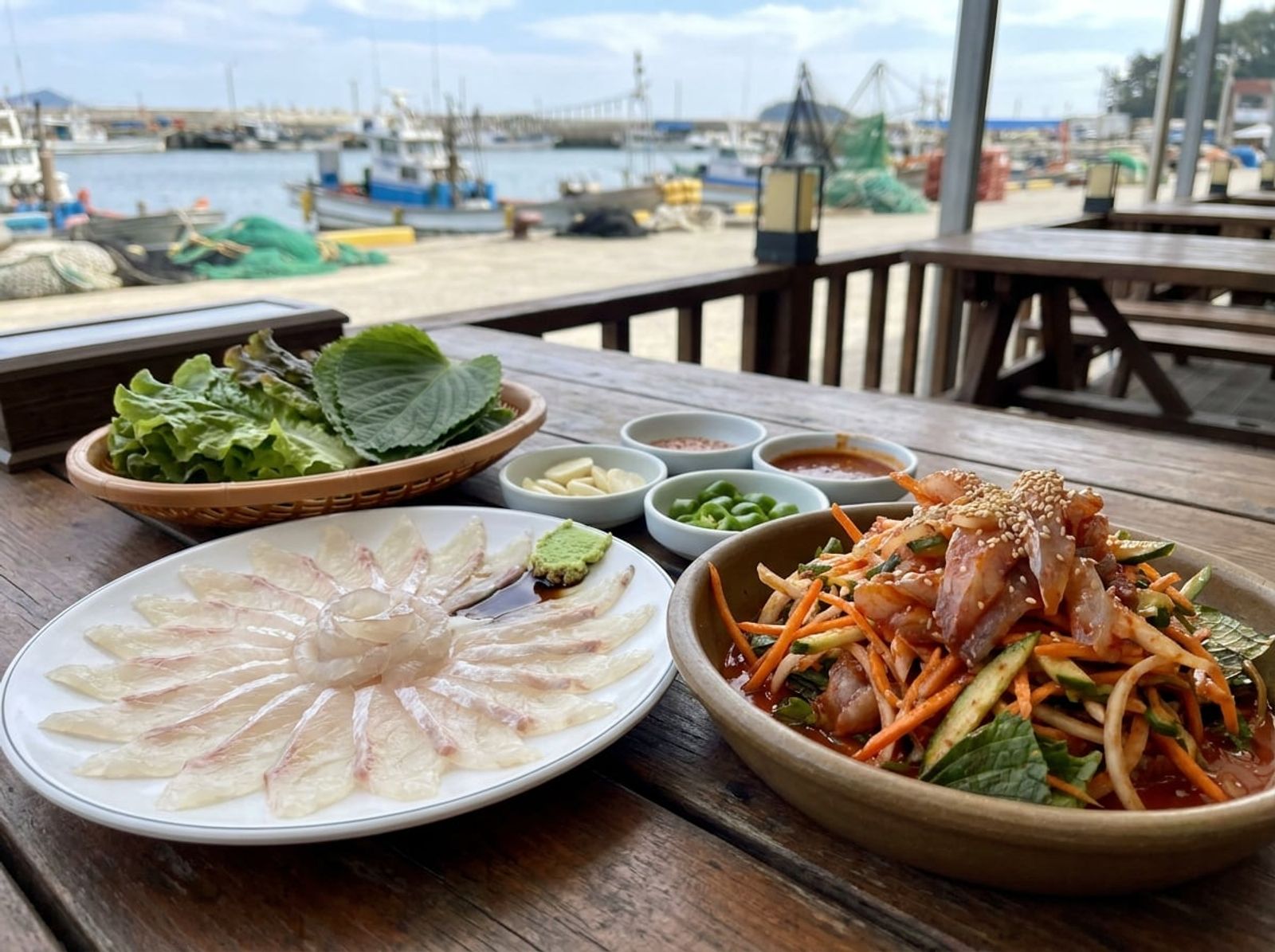
There are three classic ways to enjoy baendaengi. The first is sashimi. In season the flesh plumps up and turns rich and oily, and some compare it favourably with prized fish. The second is hoe-muchim, spicy raw fish salad. Sliced baendaengi is tossed with vegetables in a sweet-sour chilli dressing, and many people mix it into warm rice with a little sesame oil. Incheon's Yeonan Pier has a whole street of restaurants serving it. The third is salted fish: baendaengi-jeot is sold everywhere in Ganghwa markets and even goes into Ganghwa's turnip kimchi. It is also eaten grilled. It is often noted as a good source of calcium and iron.
When and Where
The season is usually given as the fifth and sixth months, roughly May and June, though some sources stretch it from May to early July, when the fish fattens before spawning. Locals tend to rate the fish from the Ganghwa coast, where the Han River's fresh water meets the Yellow Sea, as the best. There are two main spots. One is Hupo Port in Hwado-myeon on Ganghwa's south side, also called Seonsu Port, with a baendaengi street nearby; many restaurants are run by boat owners, so the fish is landed and served fresh. The other is the baendaengi hoe-muchim street at the entrance to Yeonan Pier in Incheon's Jemulpo-gu (part of Jung-gu until the July 2026 district reorganisation), where baendaengi restaurants cluster in a shopping building, easy to find and with a view of boats coming and going. Crowds pour in during the season, so go early on weekends.