Gwangju Yukjeon
 KoreaGwangju
Gwangju Yukjeon: The Festive Beef Pancake Fried Fresh at Your Table
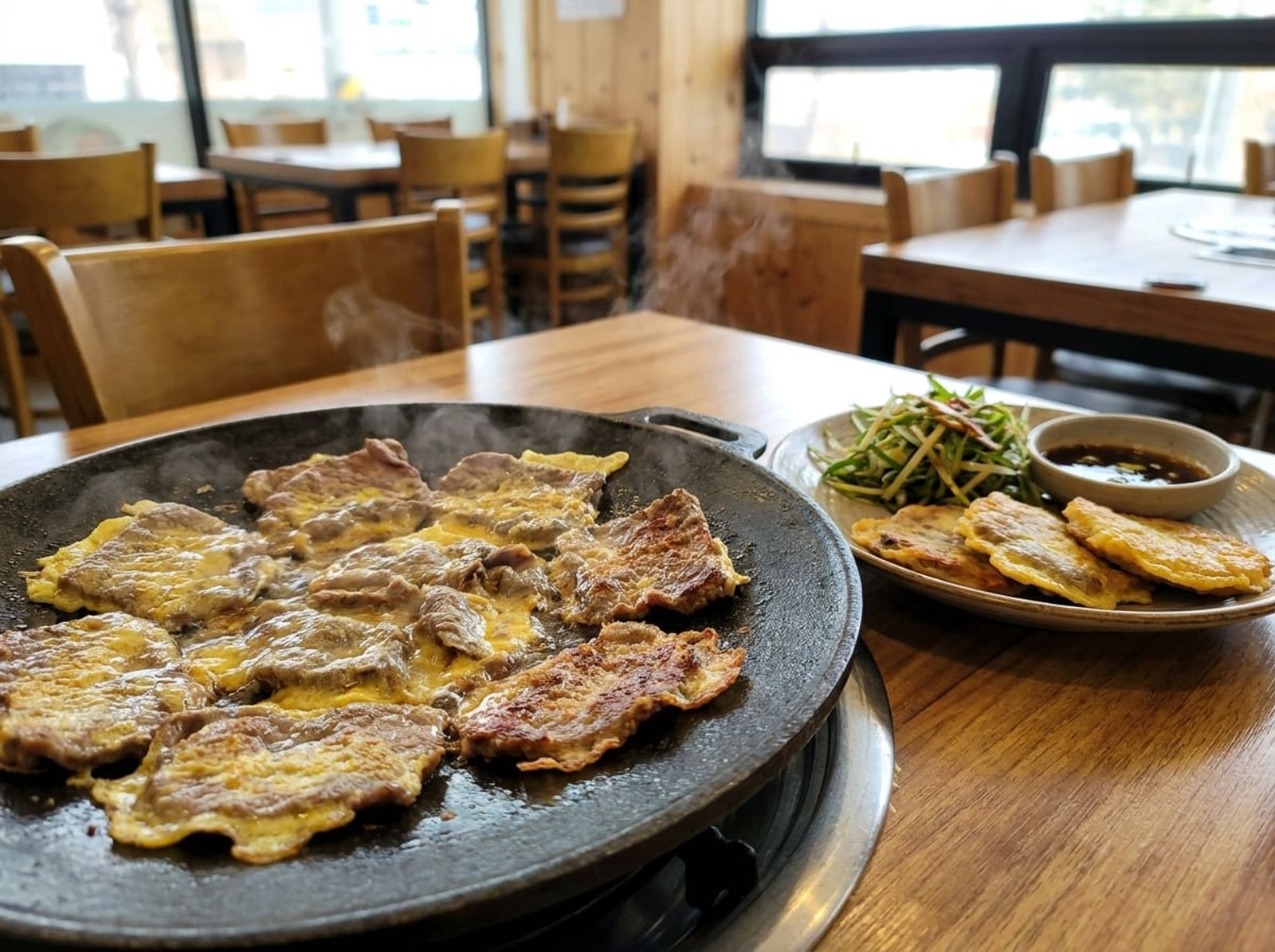
In Gwangju's yukjeon restaurants, staff coat slices of Korean beef shank in egg and fry them right beside your table. Here is how a dish once reserved for family occasions became a Gwangju signature, which cut is used, what to dip it in and what to know when ordering.
A Pancake for Special Days
Jeon are thin slices of meat, fish or vegetables dusted with flour or starch, dipped in beaten egg and pan-fried. VisitKorea explains that jeon used to be a luxury eaten only on big family occasions such as an elder's birthday, holidays, ancestral rites and funerals, because flour, oil and eggs were all scarce; when there was no oil, people even rendered pork fat. Yukjeon is the beef version, made from thinly sliced beef. According to Gwangju's tourism site, it is said to come from Hwanghae Province; at court it was served on the royal table as jeonyuhwa, while ordinary people called it jeonyua, jeonya or jeonnya. Ingredients are easy to get now, but it still carries the image of food for honoured guests. In Jinju, in South Gyeongsang, strips of yukjeon even top cold noodles.
Why Yukjeon Means Gwangju
You can buy jeon in markets all over Korea, but restaurants that specialise in yukjeon and fry it to order are concentrated in Gwangju. VisitKorea credits the cooking style itself: frying it fresh in a pan right in front of you, so you can see the ingredients and the process and eat each piece at its warmest. Gwangju's tourism site notes that the city has a strong culture of eating raw beef, and that in the 1980s a Gwangju restaurant's complimentary yukjeon proved so popular that it became a menu item in its own right. When the city picked new signature dishes in 2019, yukjeon was among them. Repeated appearances on TV travel shows are also said to have cemented the idea that yukjeon means Gwangju.
Aronsatae: Four Pieces Per Cow
Gwangju yukjeon is mostly made from aronsatae, a special part of Korean beef shank. According to VisitKorea, a 700 kg steer yields only about four 600 to 700 g pieces of it. It is lean and juicy, and sliced thin and fried, it turns tender. Gwangju's tourism site describes the method: slice the beef thin into bite-size pieces, season with salt and pepper, dust with frying mix and shake off the excess, coat in beaten egg, then fry only until the egg sets so the meat does not toughen. Leave it too long and the beef firms up, so staff time it to the moment it turns golden and slide it straight onto your plate. Given the cut, a plate costs more than other jeon.
What to Dip It In
Yukjeon is best eaten hot, straight from the pan, and the accompaniments vary by restaurant. The most common is pajeori, a spicy scallion salad that cuts through the richness. To taste the beef itself, many recommend just a touch of salt. Gwangju's tourism site also suggests dipping it in perilla seed powder, topping it with seasoned scallions, wrapping it in greens, or dipping it in salted hairtail innards (galchi-sokjeot). Some places serve tohajeot, salted freshwater shrimp, and others suggest wrapping it in leaves with aged kimchi fried in perilla oil. The same yukjeon tastes quite different depending on what you pair it with, so try several combinations on one plate.
Ordering Tips and Good Pairings
Yukjeon is usually ordered by the plate, and staff fry it a little at a time beside the table, adding pieces as you go. Fried all at once it would go cold and lose its charm, so frying to your eating pace is the Gwangju way. No need to rush; enjoy the rhythm of one warm piece at a time. Many yukjeon houses also sell other jeon, such as octopus, croaker or oyster, so a group can share several. Afterwards, many finish with maesaengi tteokguk, rice cake soup with fine seaweed, to clear the palate. Some serve Jeolla-style side dishes too, so it can feel like a full spread. Yukjeon restaurants are scattered around Gwangju, including the Sangmu district; given the premium cut, check prices beforehand.