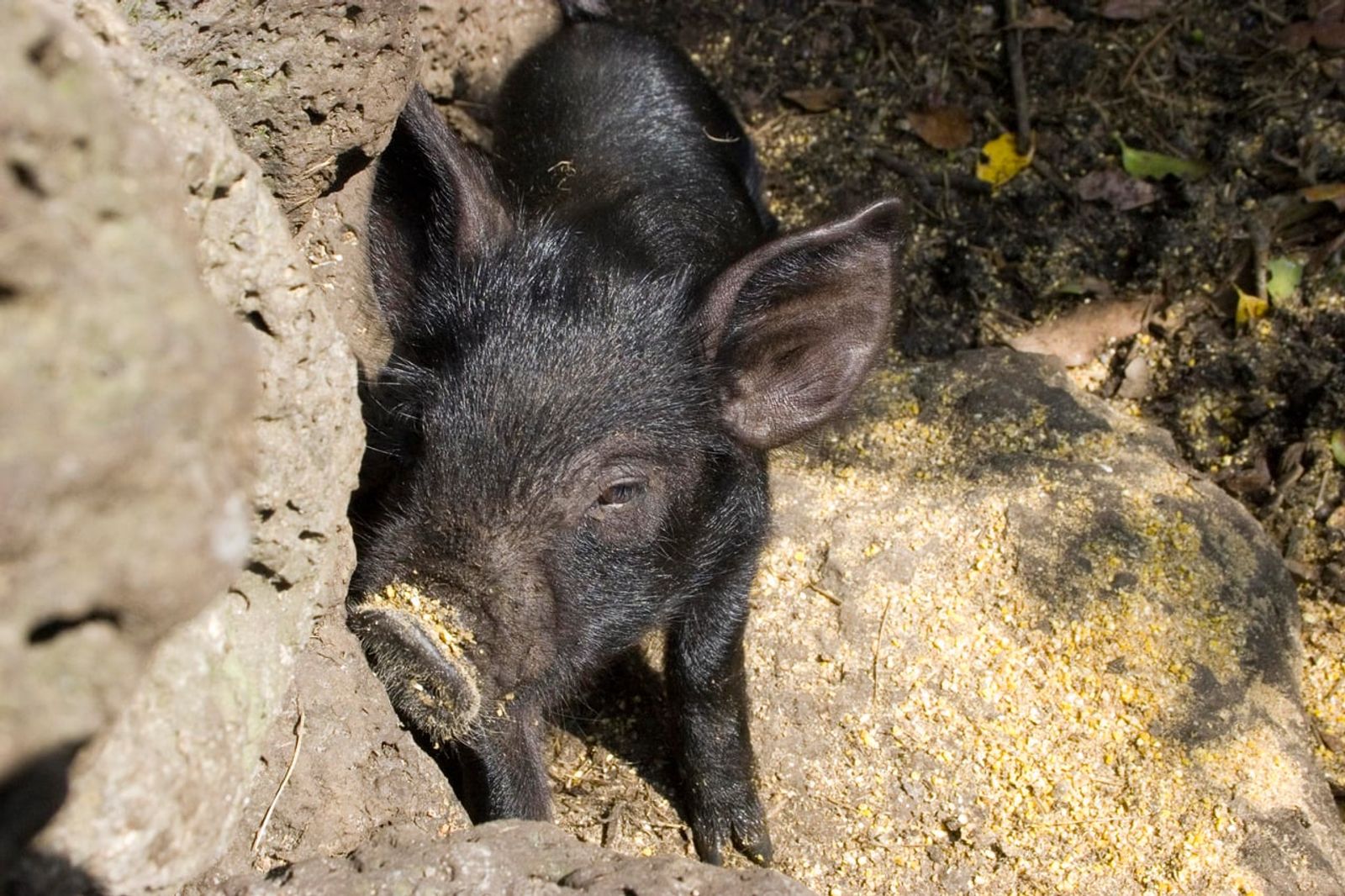
A Jeju black pig · Photo: A____ R__ (Flickr) / CC BY-SA 2.0 (Wikimedia Commons)
 KoreaJeju
Jeju Black Pork: From Toilet-Side Pigsties to a Natural Monument, Grilled Thick and Dipped in Anchovy Sauce
Grilled black pork is a must on any Jeju trip. From the days of the dottongsi, pigsties built under outhouses, to near-extinction and protection as a natural monument, here is what the black pork in restaurants actually is and how to eat it Jeju-style with meljeot anchovy sauce.
A Pig Raised With Care on the Island
Jeju black pigs are a small, black-haired native breed. According to sources compiled on Wikipedia, they are said to descend from wild boar on Hallasan and its grasslands that were domesticated around the 2nd to 5th centuries, and old texts such as the Records of the Three Kingdoms and the Tamna-ji mention pig keeping on Jeju. VisitKorea describes the island's circumstances: a 1629 ban on leaving the island kept Jeju people from travelling to the mainland for some 200 years, and its volcanic basalt meant dry-field farming rather than rice paddies. Because pig feed competed with human food, families could keep only one or two pigs each. Black pork was therefore a precious meat, slaughtered for occasions such as weddings and shared with the whole village, a custom of communal sharing known as chuuryeom.
Dottongsi: The Pigsty Under the Outhouse
No account of Jeju black pork skips the dottongsi. Pigs were kept beneath stone-walled outhouses, which is why Jeju pigs were once nicknamed 'dung pigs.' VisitKorea notes that human waste was used as pig feed, and that traces of toilets built over pigsties remain across the island. It sounds startling today, but on a food-poor island it was a sensible cycle. According to sources compiled on Wikipedia, the dottong disposed of human waste and food scraps, produced compost and even kept snakes away. The practice vanished with a campaign against traditional outhouses in the late 1970s, and black pigs are now raised on hygienic farms. You can see a reconstructed dottong at Seongeup Folk Village in Pyoseon-myeon, Seogwipo.
From Near-Extinction to Natural Monument
Jeju's native black pig faced a serious crisis in the modern era. Foreign breeds arrived, Yorkshires in 1903 and Berkshires in 1905, and repeated crossbreeding left so few purebred native pigs that the line faced extinction. Restoration began in 1986, when the Jeju livestock institute obtained five native pigs from outlying islands such as Udo and remote areas and started purebred breeding. In January 2015 the Cultural Heritage Administration announced plans to designate the Jeju black pig a natural monument, and it was designated Natural Monument No. 550 on 17 March 2015. The key point is that the designation covers only the conservation herd at the institute, about 260 animals as of March 2015, recognised as a distinct lineage genetically separate from mainland native pigs.
What You Actually Eat in Restaurants
The natural-monument pigs are a seed-conservation herd and are not sold to restaurants. Native black pigs are small, so farms mainly raise black pigs crossed with breeds such as Berkshire for meat, and VisitKorea notes that most black pork served in Jeju is from improved breeds. The flavour is still distinctive. According to a Seoul Shinmun series with the Rural Development Administration, black pork has more fat than ordinary pork, tasting rich and chewy, with firm white fat. VisitKorea adds that the fat holds less water than white pork so it is springy, the lean has fine muscle fibres that give a pleasant chew, and its many red muscle fibres make it unusually red. A longer rearing period is also cited as a reason, though sources and breeds give different figures for how long.
Grill It Thick, Dip It in Meljeot
Jeju-style black pork's partner is meljeot. Mel is Jeju dialect for anchovy, and meljeot is salted, fermented anchovy. Restaurants often set a small dish of it on the edge of the grill to bubble, then you dip thick slices of grilled pork into it. Salty and sharp, it cuts the fattiness and deepens the savouriness. To taste the meat itself, a light dip in salt works well, or wrap it in leaves. Black pork comes in other forms too: dombae-gogi, boiled pork served on its wooden cutting board; jeopjjak-ppyeo-guk, a thick soup of long-simmered meat and bones with buckwheat flour; and Jeju-style sundae with buckwheat and blood. Jeju City has a Black Pork Street lined with specialists, and Dongmun Market in Jeju City and Maeil Olle Market in Seogwipo sell black pork snacks.