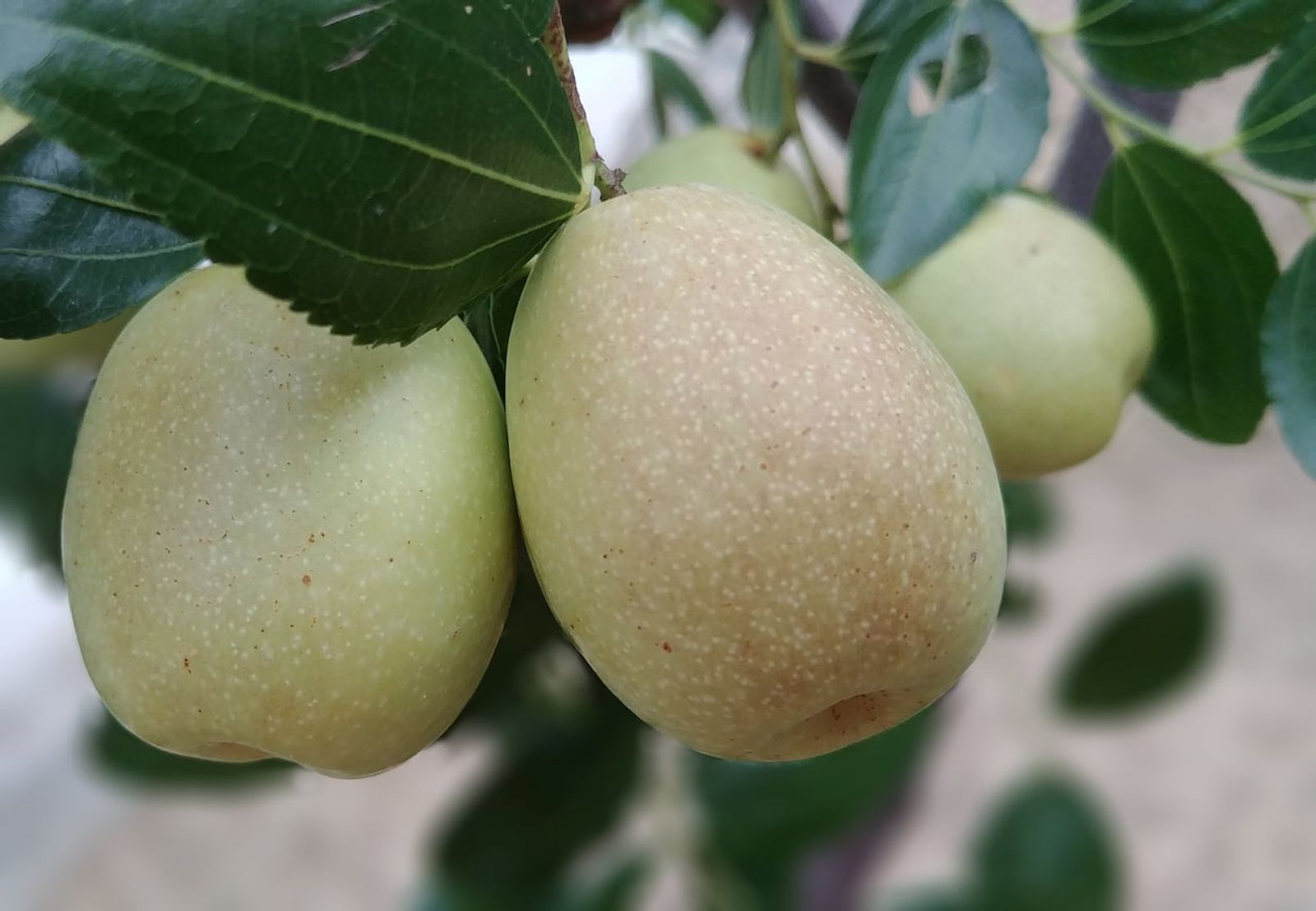
Large, ripe red jujubes · Photo: Choe Yongwoo / CC0 (Wikimedia Commons)
 KoreaNorth Chungcheong · Boeun
Boeun Jujubes: The County Where Midsummer Rain Was Bad News
Boeun, at the foot of Songnisan in North Chungcheong, is known for jujubes once sent to the royal court. Here is the old saying about midsummer rain, how the fruit went from dried medicine to crisp fresh snack in the 2000s, why harvests swing with the weather, and how to enjoy them at the autumn festival.
A Jujube County Below Songnisan
Boeun County, home to Songnisan National Park in the south of North Chungcheong Province, is famous for the jujubes that ripen red every autumn. The county and its festival describe Boeun jujubes as a specialty once presented to the king. In sheer volume, though, growing areas in North Gyeongsang Province such as Gyeongsan, Cheongdo and Gunwi account for a large share. So why is Boeun the name people know? Forestry outlook reports from the Korea Rural Economic Institute note that, unlike other major growing areas, Boeun sells a high share of its jujubes fresh, mostly direct to customers, while other regions focus more on dried fruit. Korean media usually list Boeun alongside Gyeongsan in North Gyeongsang as the two main jujube regions.
"If It Rains on Boknal, Boeun's Maidens Weep"
Boeun jujubes come with a memorable proverb. Rain that falls during the hottest days of summer, the three boknal days, is called sambokbi. In South Jeolla it was welcomed as good for the crops, but in Boeun people believed it would ruin the jujube harvest. Hence the saying: "If it rains on boknal, the maidens of Boeun weep." You can read it as a picture of a time when jujubes decided a family's income for the year, and a whole village worried over a single summer shower. It is also interesting that the very same rain brought opposite reactions in different regions. The proverb still turns up whenever Boeun jujubes are introduced, and as the next sections show, the crop is still very sensitive to the weather today.
From Dried Jujubes to Crisp Fresh Ones
For a long time jujubes were something you dried: tucked into samgyetang or yaksik, or simmered as a herbal medicine. A 2020 paper in the Korean Journal of Plant Resources explains that jujubes turned into a fresh fruit when growers "began cultivating fresh jujubes in the 2000s, centered on Boeun in North Chungcheong." Since then the jujube has drawn attention as a high-value crop. Fresh jujubes sell best when they are big and crunchy, so competition over varieties is fierce. According to a 2025 report, a variety called Taedong, developed by a farmer in Boeun-eup, weighs about 27.5 g per fruit with 30.5 Brix of sugar, larger and sweeter than the older Bokjo variety (18.5 g, 27.6 Brix), and the county's agricultural technology center has started trial distribution. A jujube you bite into like an apple has become Boeun's new face.
Orchards at the Mercy of the Weather
Fresh jujubes are especially sensitive to rain and heat. According to a 2025 report citing county figures, Boeun's harvest topped 2,600 tons in 2018 and 2019, then fell to 1,147 tons in 2022 and 994 tons in 2023, the lowest in ten years. The cause was cracking fruit brought on by heat and other weather conditions. For 2025 the county expected about 1,982 tons of fresh jujubes from 640 hectares, up 27% from the year before, which counts as a bumper crop. The county also covers half of what farmers spend on saplings, support poles and fertilizer. With the harvest making local news every year, the worry in that old boknal-rain proverb lives on in a new form.
The Festival and How to Enjoy Them
The Boeun Jujube Festival has been held every year since 2007. In 2026 it is scheduled for October 16 to 25 at Baetdeul Park in Boeun-eup and around Songnisan, with free admission. There are stalls for jujubes and other local produce, performances and hands-on programs. On the strength of its 2025 edition, it was named one of North Chungcheong Province's top designated festivals for 2026. Fresh jujubes taste best simply washed and eaten whole, for their crisp bite and gentle sweetness. Dried ones are great simmered into tea or made into jujube syrup. Pair a walk around Songnisan and Beopjusa Temple in autumn foliage season with a bag of just-picked jujubes from the festival, and you have tasted a Boeun autumn properly.