Dangjin's Janggohang Silchi
 KoreaSouth Chungcheong · Dangjin
Dangjin's Janggohang Silchi: A Thread-Thin Fish You Can Only Eat Two Months a Year
Every spring, Janggohang Port in Seongmun-myeon, Dangjin, fills with people who come to eat silchi, a thread-thin, translucent baby fish. Here is what silchi actually is, its short March-to-May season, why you can only eat it raw near the port, the spicy salad and soup made with it, how it becomes dried fish sheets, and the Janggohang Silchi Festival.
What Is Silchi?
Silchi is, as its name suggests, a thread-thin fish with a see-through body. According to the Seoul Shinmun (2014), silchi are the fry of the blenny-like beodorachi (gunnel); they are often called baengeo, but in Dangjin people call them silchi. In other words, what you eat is not a grown fish but newly hatched young. The same article names Janggohang Port in Seongmun-myeon as the main source. The Kyunghyang Shinmun (2018) reported that people first began eating silchi in Janggohang village, that it caught on with food lovers about ten years earlier, and that it now counts among the "Nine Flavors of Dangjin." The Seoul Shinmun adds that silchi is rich in calcium and phosphorus and is seen as healthy food. A heap of translucent silchi looks like a skein of white thread, a beloved spring treat on the Yellow Sea coast.
A Short Season, Late March to Mid-May
The season is short. The Kyunghyang Shinmun (2018) said silchi are caught in the Yellow Sea from around late March and can be eaten for about two months until mid-May, while the Seoul Shinmun (2014) gave mid-March to mid-May, so sources differ slightly on the start. It is safest to assume it shifts with sea conditions each year. How it is eaten also changes through the season. A Dangjin City official told the Kyunghyang Shinmun that the first silchi of March are too soft to eat raw, and that the catch from early April is just right for hoe (raw dishes). According to the Seoul Shinmun (2015), after mid-May the bones thicken and they can no longer be eaten raw, so they go into dried baengeopo sheets, and by the end of May the catch stops altogether. If raw silchi is your goal, April to early May is the best window.
Why You Eat It Raw Only at Janggohang
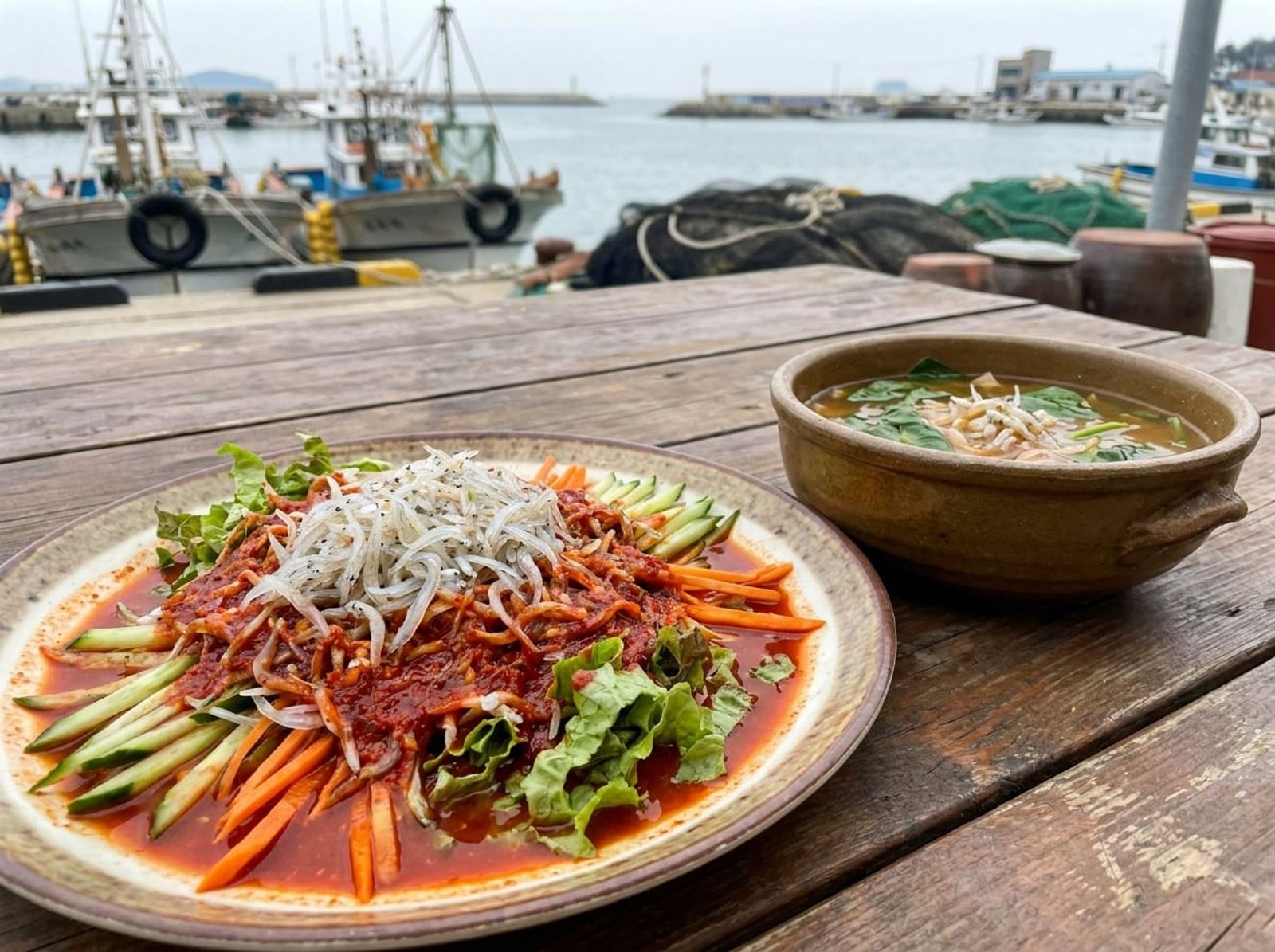
There is a reason you rarely see raw silchi in big-city seafood restaurants. Both the Seoul Shinmun (2014) and the Kyunghyang Shinmun (2018) explain that silchi die within an hour of being caught in the net, so it is hard to eat them raw anywhere but where they are landed. That makes raw silchi a dish you have to travel for. At Janggohang, village boats send the day's catch straight to the restaurants by the port. The Seoul Shinmun (2015) reported that some 20 boats went out daily to supply about 40 raw-fish restaurants, and quoted the festival committee chair saying thousands of visitors came on weekends. Freshness is everything, so eating the day's catch right at the port is the best way to enjoy it.
Silchi Salad, Silchi Soup and Dried Sheets
The most popular dish at Janggohang is silchi hoe-muchim, a raw silchi salad. As the Seoul Shinmun (2014) describes it, freshly caught silchi are tossed with cucumber, carrot, Korean pear, perilla leaves and water parsley, sesame oil and vinegared gochujang. The tangy, sweet dressing brings out the fish's soft texture, and it works both with rice and with drinks. Another treat is silchi soup. The same article recommends silchi doenjang-guk, a soybean-paste soup made with spinach or mallow, as an excellent hangover soup. After mid-May, when their bones thicken, silchi are dried into baengeopo: they are spread into thin sheets and dried, then brushed with seasoning and grilled or steamed. If you miss the season, a pack of baengeopo makes a good souvenir.
The Janggohang Silchi Festival and Nearby Sights
In spring, when silchi are at their peak, a silchi festival is held around Janggohang in Seongmun-myeon, organized by the Janggohang Silchi Festival Committee. It ran on 28 and 29 April in 2018 and on 2 and 3 May in 2015, with free silchi tastings, baengeopo-making and seafood auctions. Dates depend on the catch each year, so check Dangjin City or the committee's notices before you go. Outside the festival you can still eat silchi at the port restaurants in season; prices depend on how much came in that day, so ask before ordering. Nearby Waemok Village is known as the west-coast village where you can see both sunrise and sunset; the Seoul Shinmun (2014) reported that about 100,000 people crowd in every year on New Year's Eve and New Year's Day. A plate of silchi in the spring sea breeze is the best way to taste Dangjin's spring.