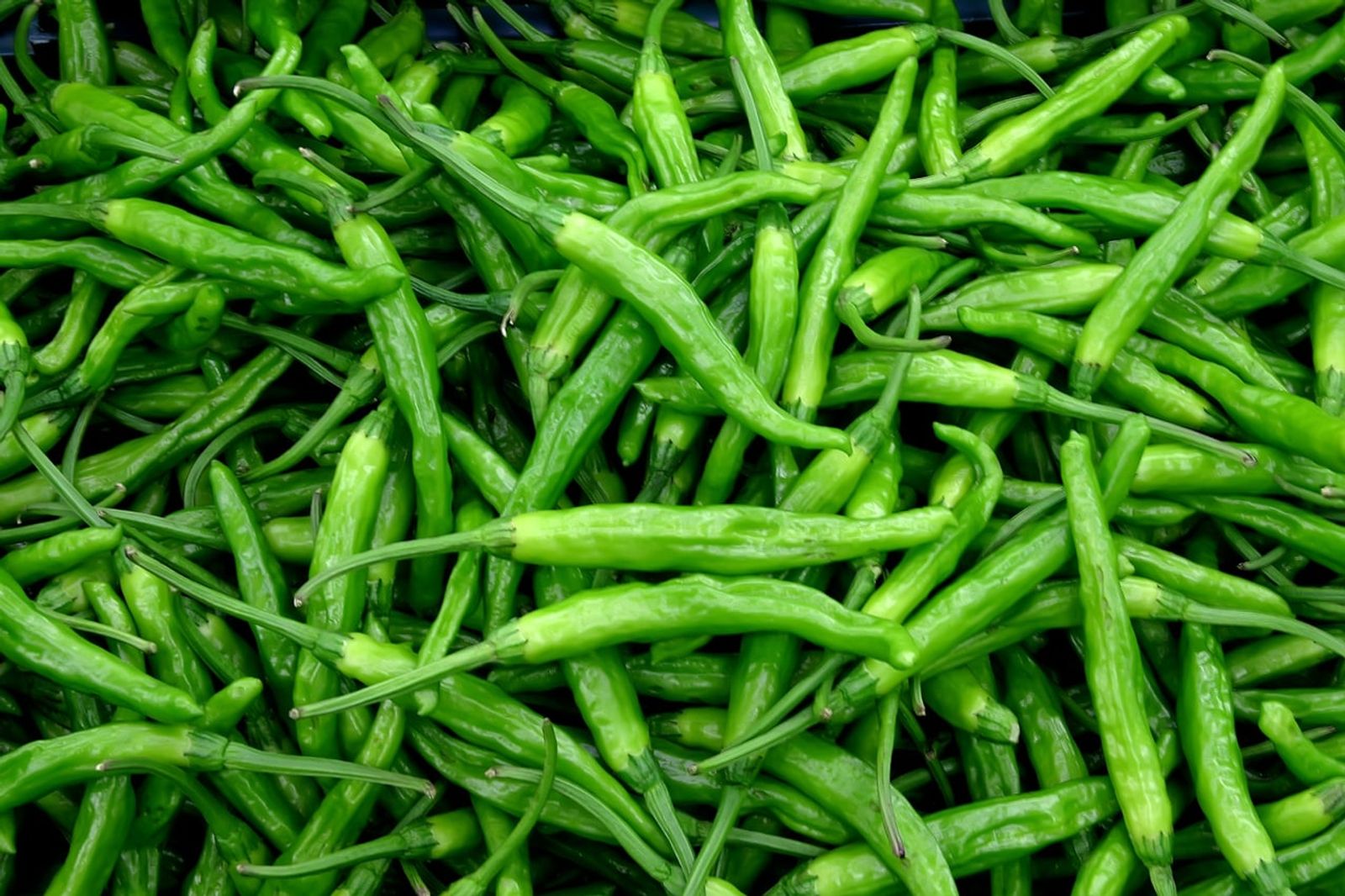
Cheongyang chilies · Photo: Y-h Kim / CC0 (Wikimedia Commons)
 KoreaSouth Chungcheong · Cheongyang
Cheongyang Chili and Cheongyang Goji: From a Naming Dispute to Two Local Specialties
To Koreans, Cheongyang chili is the byword for spicy. Yet whether the variety's name really comes from Cheongyang County in South Chungcheong has long been disputed. Here is how the variety was born in 1983, the two competing explanations of its name, actual chili farming in Cheongyang, and the county's other pride, goji berries.
1983: The Birth of a Hot Chili Variety
Cheongyang chili is not an heirloom pepper but a bred variety. According to Korean Wikipedia, it was developed in 1983 by the seed company Jungang Seed, and Dr. Yu Il-ung, registered with the national seed agency as its developer, told the press he crossed a Jeju pepper with a Thai one. Its original purpose is a surprise. A Rural Development Administration report cited on Wikipedia says the variety was developed at a food company's request as a pepper for extracting capsaicin, and only took off as a fresh green chili in the hands of farmers who grew it on trial. Its heat is given as 4,000 to 12,000 Scoville units. Since then "Cheongyang chili" has come to mean any very hot pepper, beyond the variety name. The chili you slice into a pot of doenjang-jjigae started here.
From Cheongsong and Yeongyang, or From Cheongyang?
There are two explanations for the name. According to Korean Wikipedia, one holds that at the request of trial farmers in Cheongsong and Yeongyang counties in North Gyeongsang, one syllable was taken from each place name to make "Cheongyang." This account matches the national seed agency's records, the developer's interviews and a Seoul National University Press study, and Jungang Seed itself once indicated in a company post that the name had nothing to do with Cheongyang County. Cheongyang County in South Chungcheong, on the other hand, says the name comes from the county, and in 2009 announced that a study it commissioned with county funds had found Cheongyang to be the origin. In a 2015 Seoul Shinmun article a county official said, "Seed dealers just backed Cheongsong and Yeongyang because they grow more peppers; the original is ours." Sources disagree, so as a traveler it is enough to know both stories.
Chili Farming in Cheongyang Today
Naming dispute aside, Cheongyang really is a busy chili-growing county. According to the Seoul Shinmun (2015), about 4,000 farm households produce some 3,000 tonnes of chilies a year. That is only about 2.5% of the national total, but a county official proudly said prices set at the annual chili festival strongly influence chili prices nationwide. The local cooperative's processing plant turns the crop into chili powder sold under a local brand, and it is also sold at the chili market in Cheongyang-eup. One thing to know: "Cheongyang chili powder" means powder made from chilies grown in Cheongyang, which is not necessarily as fiery as the Cheongyang variety. Ask the shop how hot it is to be sure. In autumn, before kimchi-making season, many people come to buy chili powder.
Cheongyang's Other Pride: Goji Berries
What Cheongyang is as proud of as its chilies is gugija, goji berries, the red fruit of the goji shrub, long used in Korea for tea and traditional medicine. In 2004 the Seoul Shinmun wrote that in Cheongyang itself goji is even more famous than chili, and that more than 40% of Korea's goji crop is grown there. According to Aju Business Daily (2015), Cheongyang goji was registered in 2007 as the Korea Forest Service's Geographical Indication No. 11, and in 2015 it won the goji category of the National Brand Awards. Besides whole dried berries, it is sold as goji extract, tea bags, goji wine and traditional confections. The same 2004 article also introduced Cheongyang's traditional gugiju, a wine brewed with goji and other herbs. Light and long-keeping, dried goji makes a good souvenir.
How to Enjoy Them in Cheongyang
To enjoy both specialties at once, aim for the Cheongyang Chili and Goji Culture Festival, held between late summer and early autumn. In 2023 it opened on 1 September, and the farmers who grew the year's best chilies and goji were named "Chili King" and "Goji King" and honored at the opening ceremony. Dates change each year, so check Cheongyang County's notices. Restaurants serve stews and stir-fries generously laced with chili, and anything with Cheongyang chili can be far hotter than you expect. If you are not used to spicy food, ask for it "less spicy" (deol maepge) or keep a bowl of rice close and eat slowly. Cheongyang is also a mountain county cradling Chilgapsan. After exploring its peaks and valleys, take home a bag of chili powder and a bag of dried goji, and you can keep tasting Cheongyang for a while.