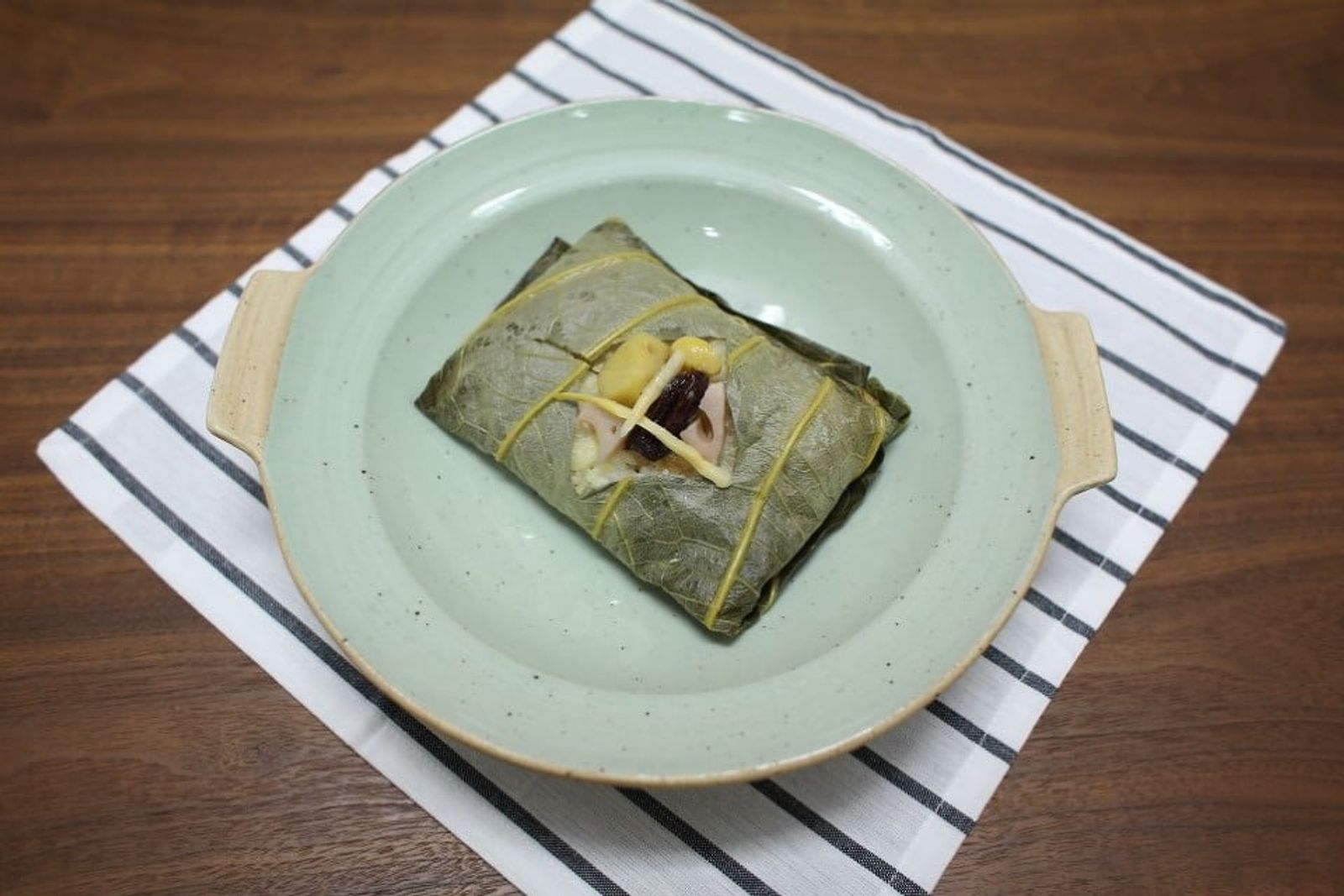
Lotus leaf rice with the leaf unfolded · Photo: Dr 방원장 / CC BY 4.0 (Wikimedia Commons)
 KoreaSouth Chungcheong · Buyeo
Buyeo Lotus Leaf Rice: Baekje's Gungnamji Pond and a Meal Scented With Lotus
Buyeo, the last capital of Baekje, turns pink with lotus blossoms at Gungnamji Pond every summer. Korea's Rural Development Administration describes Buyeo as a main producer of lotus flowers and lotus root, and a set meal of yeonnip-bap, glutinous rice and nuts steamed in a lotus leaf, turns up again and again in travel stories about Gungnamji. Here is the story of the pond and how to enjoy lotus leaf rice.
Gungnamji, the Pond Built by King Mu of Baekje
Buyeo's lotus story begins at Gungnamji. The Samguk sagi records that in the 35th year of King Mu of Baekje (634), a pond was dug south of the palace, water was brought in from more than 20 ri (about 8 km) away, willows were planted around it and an island was built in the middle. The Rural Development Administration's webzine and many travel articles describe Gungnamji as Korea's first artificial pond, and some say its landscaping techniques influenced Japanese gardens. According to Lady Kyunghyang (2014), lotuses did not originally grow around the pond; they were planted on a large scale because the name of Princess Seonhwa, heroine of the Seodong legend, carries the meaning of lotus. The webzine names August, when the lotuses peak, as Buyeo's most beautiful season, and notes that after sunset the lights come on and the pond takes on a different look.
A Land of Lotus Flowers and Lotus Root
In Buyeo, lotus is both a flower to admire and a crop to eat. The Rural Development Administration's webzine calls Buyeo a main producer of lotus flowers and lotus root. Every part of the plant is used, from the flower to the root to the broad leaves, and the fragrant leaves are ideal for wrapping food to steam. Every summer the Buyeo Seodong Lotus Festival takes place around Gungnamji. The 22nd festival in 2024 ran for three days from 5 July at Seodong Park (Gungnamji), with canoe rides among the lotuses and hands-on booths such as making lotus-leaf ice cream mochi. Seodong is known as the childhood name of King Mu of Baekje, famous from the Seodongyo legend of his romance with Princess Seonhwa of Silla. Dates shift a little each year, so check Buyeo County's notices.
What Is Lotus Leaf Rice?
Yeonnip-bap is exactly what the name says: rice wrapped in a lotus leaf and steamed. Glutinous rice is usually mixed with chestnuts, jujubes, ginkgo nuts and the like, folded into a square parcel in a broad lotus leaf and steamed. As it cooks, the leaf's fragrance seeps into the rice, and when you open it a soft, grassy aroma rises with the steam. The Rural Development Administration's webzine describes a Buyeo meal of braised short ribs generously loaded with lotus root, served with lotus leaf rice filled with ginkgo, lotus root and kabocha squash. Fillings vary from kitchen to kitchen, and lotus root adds a crunch that suits the "home of the lotus." Chewy and filling from the glutinous rice yet light on oil, it makes a natural centerpiece for a set meal with meat dishes and plenty of side dishes.
Lotus Leaf Rice Set Meals in Buyeo
In Buyeo, lotus leaf rice usually comes as part of a yeonnip-bap jeongsik, a set meal, rather than on its own. Lady Kyunghyang (2014) described Buyeo's lotus leaf rice set as coming with a generous spread of side dishes, and in July 2026 Sports Kyunghyang reported on a TV program that tried a lotus leaf rice set with ten side dishes near Gungnamji. The Rural Development Administration's webzine also introduced a Buyeo restaurant serving lotus-leaf tteokgalbi (grilled patties) with lotus leaf rice and seasonal sides. Rather than one particular restaurant, search for "lotus leaf rice set in Buyeo-eup" and you will have plenty of choice; prices and what is included vary, so check before you go. To eat it, open the leaf with your chopsticks and scoop out the rice; the tough leaf itself is usually not eaten. Don't miss the aroma that rises when you first unfold it.
A Day With Baekje Heritage
From 538 until Baekje fell in 660, Buyeo was home to Sabi, the kingdom's last capital. In 2015 Buyeo's Gwanbuk-ri site and Busosanseong Fortress, Jeongnimsa Temple site, the Neungsan-ri tombs and the Naseong city wall were inscribed with sites in Gongju and Iksan as the UNESCO World Heritage "Baekje Historic Areas." A lotus leaf rice lunch fits neatly into a heritage day. Visit the five-story stone pagoda at Jeongnimsa and Busosanseong in the morning, fill up on a lotus leaf rice set at lunch, then head to Gungnamji at dusk for the lotuses and the lights. The Rural Development Administration's webzine recommends shady, leafy Busosanseong as a pleasant walk even in hot August. The lotuses are at their showiest in summer, but many places serve lotus leaf rice sets year-round.