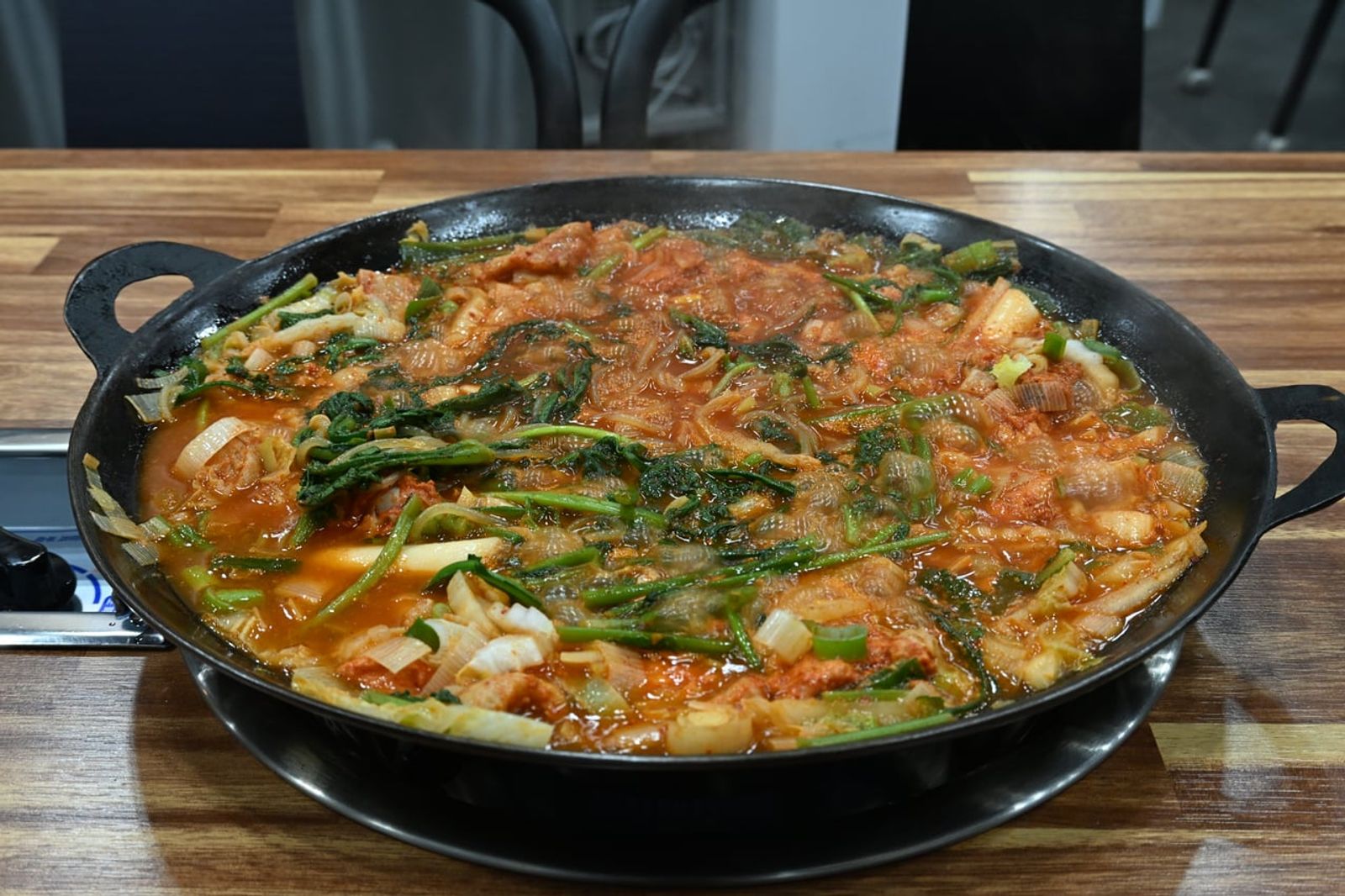
Mul-dakgalbi simmering in broth · Photo: Kjoonlee / CC BY 4.0 (Wikimedia Commons)
 KoreaGangwon · Taebaek
Taebaek Mul-Dakgalbi: Why a Coal-Mining Town Poured Broth Over Its Chicken
Dakgalbi usually means Chuncheon-style chicken stir-fried on an iron plate, but in the high-altitude coal town of Taebaek it is simmered in broth. Here is the story of mul-dakgalbi, said to come from miners' tables, and how to eat it Taebaek-style with plenty of shepherd's purse.
Taebaek, a City Built on Coal
Taebaek in Gangwon Province is almost a symbol of Korea's coal industry. According to the news outlet Pressian, the opening of the Jangseong mine in 1936 marked the town's start as a mining center, and after the Korea Coal Corporation was founded in 1950, mines opened one after another in Jangseong, Dongjeom, Hwangji, Hwajeon, Sodo and Tongni. When Taebaek became a city in 1981 by merging two towns of Samcheok County, it had 17,812 miners and produced more than 6 million tonnes of anthracite a year. Miners who spent their days deep underground needed hearty food. The Maeil Shinmun reports that they favored pork and chicken to get through the hard labor. Mul-dakgalbi, now considered Taebaek's signature dish, is said to have taken shape at the tables of that mining era.
It Started With “Add a Little Water”
According to the Maeil Shinmun, Taebaek-style dakgalbi began in the 1970s, when the coal industry was booming. At first the chicken was grilled or stir-fried, but miners coming up from the pits found dry food hard to swallow. The story goes that someone said, “The dakgalbi won't go down, so pour in some water,” and that is how broth entered the dish. Another story says miners wanted a spicy broth to wash the coal dust from their throats. These origin stories are local lore, though, and no official record shows exactly who first made it or when. What is certain is that in Taebaek, dakgalbi changed from a stir-fried dish into a simmered one, and that it spread quickly because it filled miners up and suited their taste.
It's All in the Broth: What Makes Taebaek Style Different
Chuncheon-style dakgalbi is stir-fried with vegetables on a wide iron plate. Taebaek style puts seasoned chicken in a shallow pot, piles vegetables on top and pours in broth to simmer. The Maeil Shinmun says “the broth is everything,” describing a stock made from chicken feet and bones and a sauce of about ten ingredients including soy sauce, chili flakes and garlic. It starts out soupy and reduces as it cooks until only a thick sauce is left, but it is still called mul (water) dakgalbi. The vegetables are distinctly Taebaek. Seasonal greens such as perilla leaves, napa cabbage, crown daisy and young cabbage go in with garlic chives and mountain greens like gomchwi and chwinamul, and from October to April it is known for being topped with heaps of naengi (shepherd's purse). Mugwort and water parsley are said to be avoided because their strong scent would overpower the chicken. The result is lean and clean-tasting, with a spicy kick.
Boom Years in Hwangji-dong, and After
With its flavor, heartiness and generous portions, mul-dakgalbi spread fast. According to the Maeil Shinmun, its heyday was the 1980s, when specialty restaurants clustered around the inn alley of Hwangji-dong and every one of them was packed. Stories from that time describe miners in work clothes ending their shifts around a shared pot. Change came at the end of the decade. After the government's coal industry rationalization policy, mines began closing from around 1989, Taebaek's population fell quickly and some of the restaurants regarded as the originals shut their doors. Mul-dakgalbi did not disappear, though. Today it is a local dish that travelers make a point of trying, and dakgalbi restaurants around town carry on the taste, each with its own broth.
How to Eat It, Step by Step
Mul-dakgalbi usually comes in a pot for two or more and is cooked on a burner at the table. At first the vegetables are piled high, so wait until the broth boils and the greens wilt, then stir everything together. Once the chicken is cooked, eat it with the vegetables, and while there is still plenty of broth, add noodles such as ramyeon, udon or chewy jjolmyeon. Finish by frying rice in the reduced sauce. Visit between late autumn and spring, during shepherd's purse season, and its scent seeps into the broth for an even more Taebaek flavor. Taebaek sits high enough to stay cool in summer, drawing visitors escaping the heat, and in winter many hikers warm up with a pot after a snowy climb on Taebaeksan. Eat it after touring the Taebaek Coal Museum and you will understand why this dish was born.