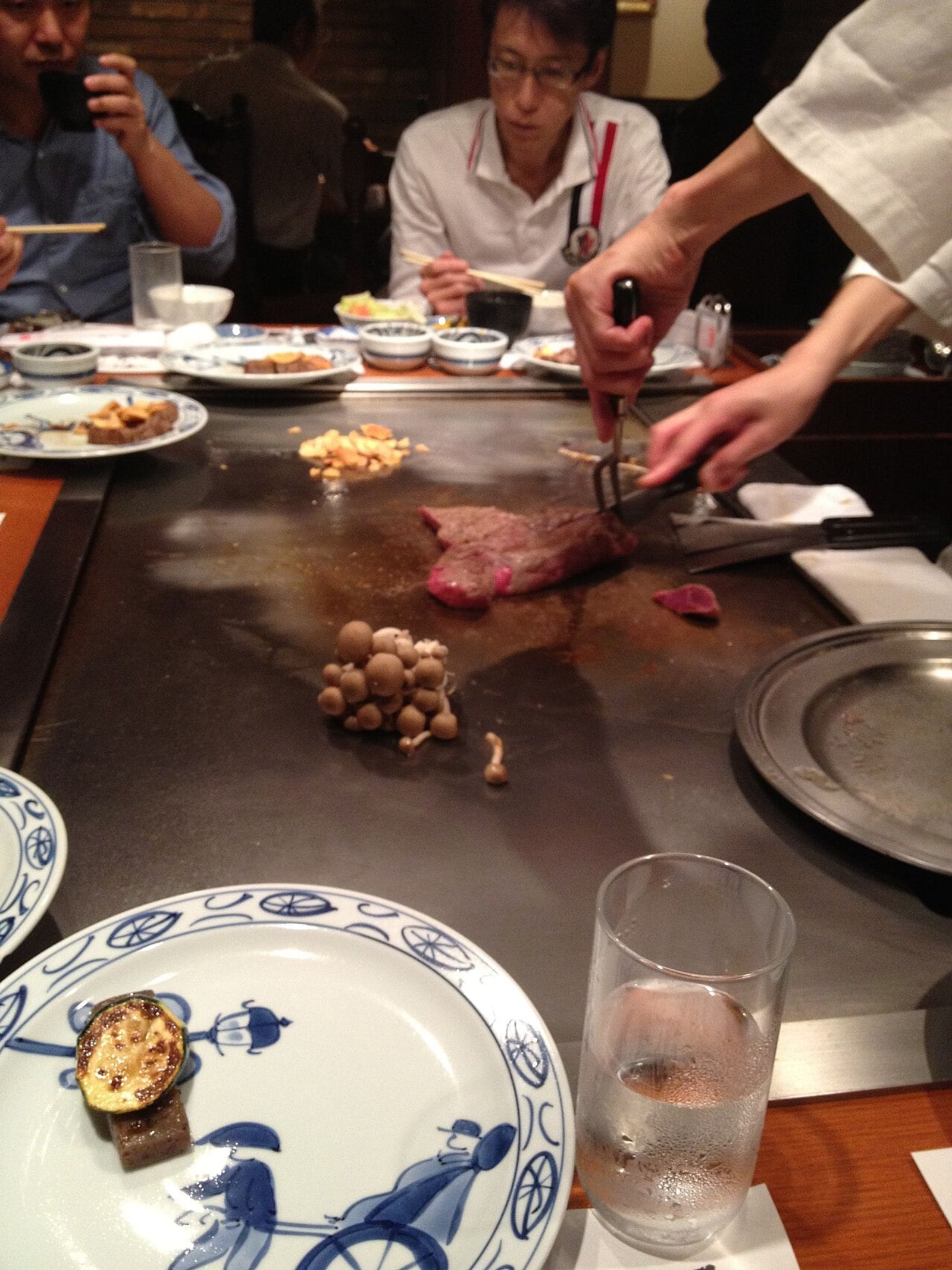
Kobe beef teppanyaki
Reading Wagyu: What A5 Really Means, and How Kobe, Matsusaka and Omi Beef Differ
'A5 wagyu' is not a guarantee of taste but a yield and marbling score. Learn the four wagyu breeds, what the grading chart means, how the big three brands differ, and whether to choose yakiniku, sukiyaki or shabu-shabu.
What Wagyu Is: A Breed, Not a Brand
Wagyu literally means 'Japanese cattle', but not every cow raised in Japan is wagyu. The term covers only four breeds — Japanese Black (kuroge washu), Japanese Brown (akage washu), Japanese Shorthorn and Japanese Polled — and their crosses, with Japanese Black making up more than 90 percent. Other breeds born and raised in Japan, such as Holstein, are called 'kokusan-gyu' (domestic beef) and are not wagyu. Wagyu's hallmark is 'shimofuri', the fine web of fat marbled through the muscle. This fat has a low melting point, creating the melt-in-the-mouth texture, and is high in oleic acid, which gives the nutty aroma. Until the Meiji era, Buddhist influence meant Japan ate almost no beef and cattle were used for farm work. After 1868 native cattle were crossed with foreign breeds, the 'wagyu' breeds were fixed in 1944, and nearly a century of pedigree management since then produced today's marbling.
What A5 Means: Decoding the Grade
Japanese beef grades have two parts. The letter A, B or C is the 'yield grade' — how much usable meat the carcass produces, with A the highest. The number 1 to 5 is the 'quality grade', assessed on four items: marbling (BMS), meat color, firmness/texture, and fat color and quality, with the lowest of the four scores applied. So A5 means 'high yield and top-class marbling', not 'the most delicious'. The marbling score BMS runs 1 to 12, and grade 5 covers BMS 8 to 12. Two A5 steaks at BMS 8 and BMS 12 differ greatly in fat, and the fattier the beef, the sooner it becomes overwhelming. That is why Japanese beef lovers often prefer A4 or BMS 8 to 9 when eating a full steak or a yakiniku dinner. As a visitor, choose by cut, cooking method and your own taste — rich fat versus beefy flavor — rather than by the 'A5 = best' advertising.
The Big Three: Kobe, Matsusaka, Omi
Japan has more than 300 regional 'brand wagyu'. The 'big three' most often named are Kobe, Matsusaka and Omi (Yonezawa is sometimes included). A brand is not a breed: it is a certification with rules on origin, bloodline, feeding period and grade, so even Japanese Black cattle can carry the name only if they pass the criteria. Kobe beef is limited to Tajima cattle from Hyogo Prefecture that meet strict standards such as BMS 6 or above; only about 5,000 to 6,000 head qualify per year, which makes it the rarest and most famous. Matsusaka beef from Mie Prefecture comes from virgin heifers raised for an extended period and is prized for exceptionally soft fat and aroma. Omi beef from Shiga Prefecture is the oldest brand, with 400 years of history, known for fine texture and deep umami. Hokkaido, Miyazaki and Kagoshima are large producers whose beef is high quality and comparatively affordable.
How to Eat It: Yakiniku, Sukiyaki, Shabu-shabu, Steak
Wagyu changes character with the cooking method. Yakiniku — bite-size pieces grilled over charcoal or a tabletop roaster and dipped in tare (soy-based sauce) or salt — began in the Korean community in Japan and became a national favorite. You can order by cut, which makes it ideal for sampling, at about 5,000 to 10,000 yen per person. Popular cuts are karubi (short rib), rosu (loin), harami (skirt) and tan (tongue). Sukiyaki simmers thin slices with vegetables and tofu in a soy-sugar-mirin sauce (warishita) and dips them in raw egg, which best brings out the sweetness of fatty wagyu. Shabu-shabu swishes the meat in boiling dashi for seconds before dipping in ponzu or sesame sauce, the lightest way to enjoy it. Steak is grilled by a chef in front of you on a teppan, and heavily marbled wagyu is usually cut thin and served medium-rare rather than thick. For a first time, yakiniku lets you compare cuts and sukiyaki showcases the sweetness — both are good choices.
The Truth About Prices and How to Choose Wisely
A 150-gram Kobe beef steak costs 15,000 to 30,000 yen at a specialist in Kobe, and a Matsusaka sukiyaki course starts at 15,000 yen per person. Unbranded A4 Japanese Black, on the other hand, can be enjoyed at a yakiniku restaurant for 6,000 to 8,000 yen per person, or bought at a department-store basement or supermarket for 1,500 to 3,000 yen per 100 grams to cook at your lodging. Lunchtime wagyu steak sets and wagyu hamburg steak teishoku at 2,000 to 4,000 yen are easy on the wallet. Tourist-area stalls selling 'wagyu skewers' or 'wagyu sushi' sometimes use low-grade or fat-injected reformed meat, so value can be poor. If you want genuine Kobe beef, look for a designated retailer displaying the Kobe Beef Association's bronze statue mark. Finally, wagyu is so rich that a small portion fills you quickly — 100 to 150 grams per person is plenty. Eating a little of a good cut with salt and wasabi, rather than a lot, is the way to truly appreciate it.