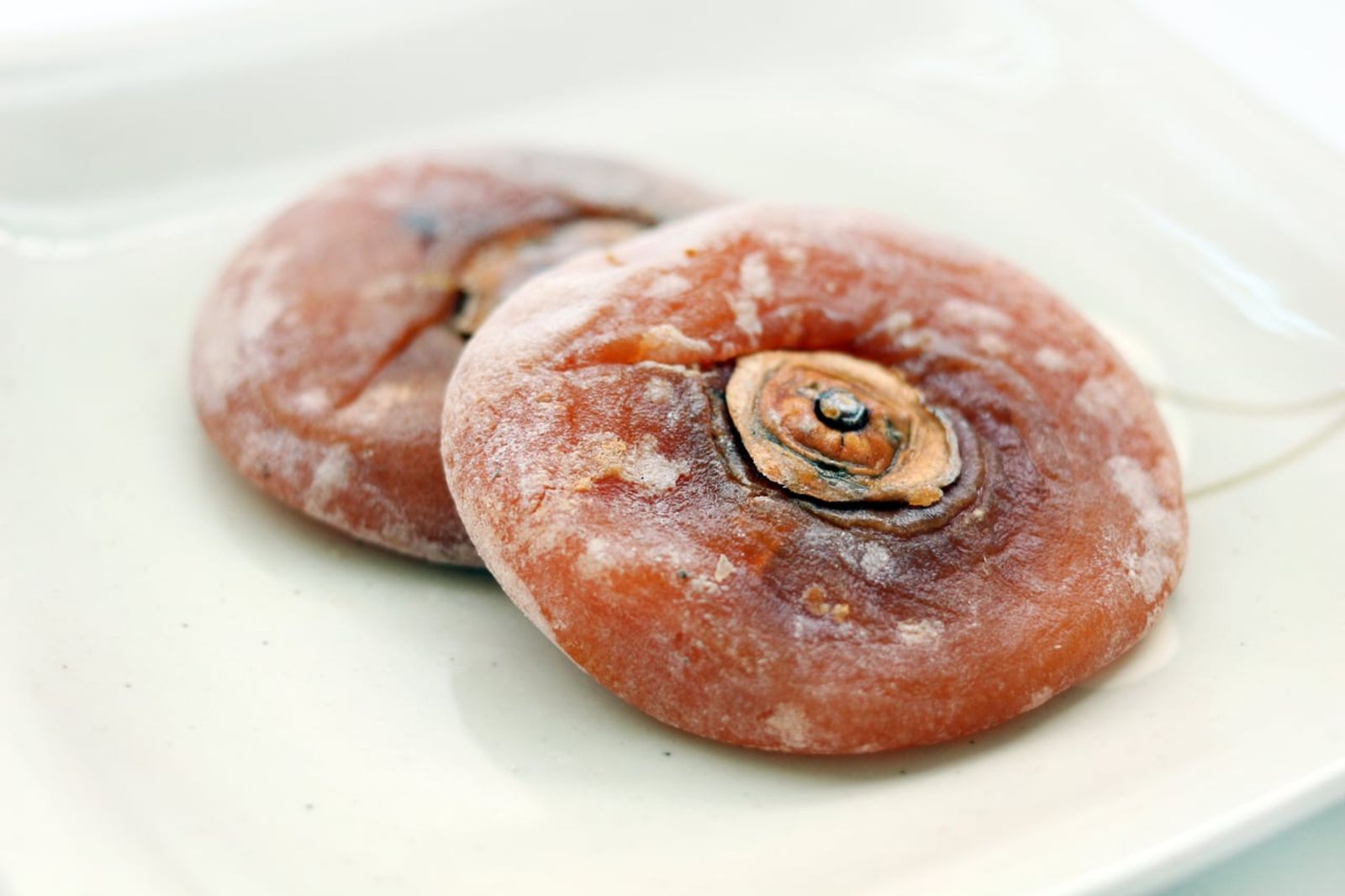
Gotgam (dried persimmons) · Photo: Hyeon-Jeong Suk / CC BY 2.0 (Wikimedia Commons)
 KoreaNorth Gyeongsang · Sangju
Sangju Gotgam: The Town Behind 60% of Korea's Dried Persimmons
Sangju in North Gyeongsang Province makes roughly 60% of Korea's gotgam, or dried persimmons. Here is the story of royal tribute records, a 750-year-old persimmon tree, a farming tradition listed as a National Important Agricultural Heritage, the gotgam villages, and the winter festival.
Dried Persimmons Mean Sangju
Sangju, in the northwest of North Gyeongsang Province, has long been known for its dried persimmons, alongside rice and silk cocoons. Local media have reported for years that Sangju produces about 60% of Korea's gotgam, and the city uses the same figure to promote its festival. Figures for farms and output vary by source: a 2020 local news report cited about 5,000 households producing over 12,000 tons, while a 2026 farm magazine cited some 3,500 households and about 19,000 tons. As autumn deepens, drying sheds hung with rows of orange persimmons appear all over Sangju's villages. Many roads are lined with persimmon trees, so if you pass through in October or November, whole villages seem to glow orange. For local farmers, gotgam is also the industry that carries them through the winter.
Royal Tribute and a 750-Year-Old Tree
Sangju's gotgam history is on record. According to local press, the Annals of the Joseon Dynasty note that in 1468, the year King Yejong took the throne, Sangju gotgam was designated as a tribute item for the court. The annual Sangju Gotgam Festival even re-enacts the local magistrate presenting dried persimmons to the king. In Soeun-ri, Oenam-myeon, stands a persimmon tree said to be about 750 years old. Nicknamed the "first persimmon tree under heaven," it still bears 3,000 to 4,000 persimmons a year even though its trunk has split in two. The area around it has been turned into a persimmon park, where you can see the roots of Sangju's gotgam tradition for yourself.
Dungsi Persimmons and Cold Wind
Sangju gotgam is made from an astringent persimmon called Sangju dungsi, named for its round shape and registered as a variety with the Korea Forest Service. Fresh, it is too astringent to eat, but once peeled and dried the astringency disappears and a deep sweetness remains. Local media have cited studies finding that gotgam made from dungsi is far sweeter than other persimmons. Peeling usually starts in mid-October and runs until mid-November. The peeled fruit is hung in shaded, airy drying sheds. Drying times vary a little by source, but semi-dried bangeonsi is said to take roughly 45 to 60 days, and fully dried geonsi 60 days or more. That is why locals say Sangju's clear, cold late-autumn wind is what gives the gotgam its flavor.
A Farming Tradition Recognized as National Heritage
In November 2019, the Ministry of Agriculture, Food and Rural Affairs designated Sangju's traditional gotgam farming as National Important Agricultural Heritage No. 15. The decision recognized persimmon-grafting skills handed down through generations, the preservation of the native dungsi variety, and the traditional method of drying fruit in natural wind. Sangju dungsi trees are still raised the traditional way, grafted onto wild date-plum (goyom) rootstock. Before the designation, inspectors visited the persimmon park and the 750-year-old tree in Soeun-ri, along with the persimmon villages around Namjang-dong. In other words, what was recognized is not just a product but a whole village way of life: growing, peeling and drying persimmons. Walk through one of these villages in season and you will see why it counts as heritage. Namjang-dong and Oeseo-myeon had already been designated a special gotgam zone back in 2005.
Enjoying Sangju in Gotgam Season
When Sangju gotgam reaches the market depends on how long it is dried. According to local media, soft, moist bangeonsi mostly comes out before Christmas, while chewy, fully dried geonsi arrives around Lunar New Year. One farm magazine put it this way: Sangju keeps its identity with geonsi and widens its appeal with bangeonsi, which more and more shoppers now prefer. The Sangju Gotgam Festival used to be held in December but moved to just before Lunar New Year, when demand peaks. It now runs for three days in January around Gyeongsang Gamyeong Park in central Sangju. The 2026 festival included an exhibition on the gotgam farming tradition recognized as national agricultural heritage, and the 2027 edition is set for January 22 to 24. Visit the persimmon villages of Namjang-dong or Oenam-myeon during peeling season, from mid-October to mid-November, and you will see a different scene: drying racks hung with freshly peeled orange fruit.